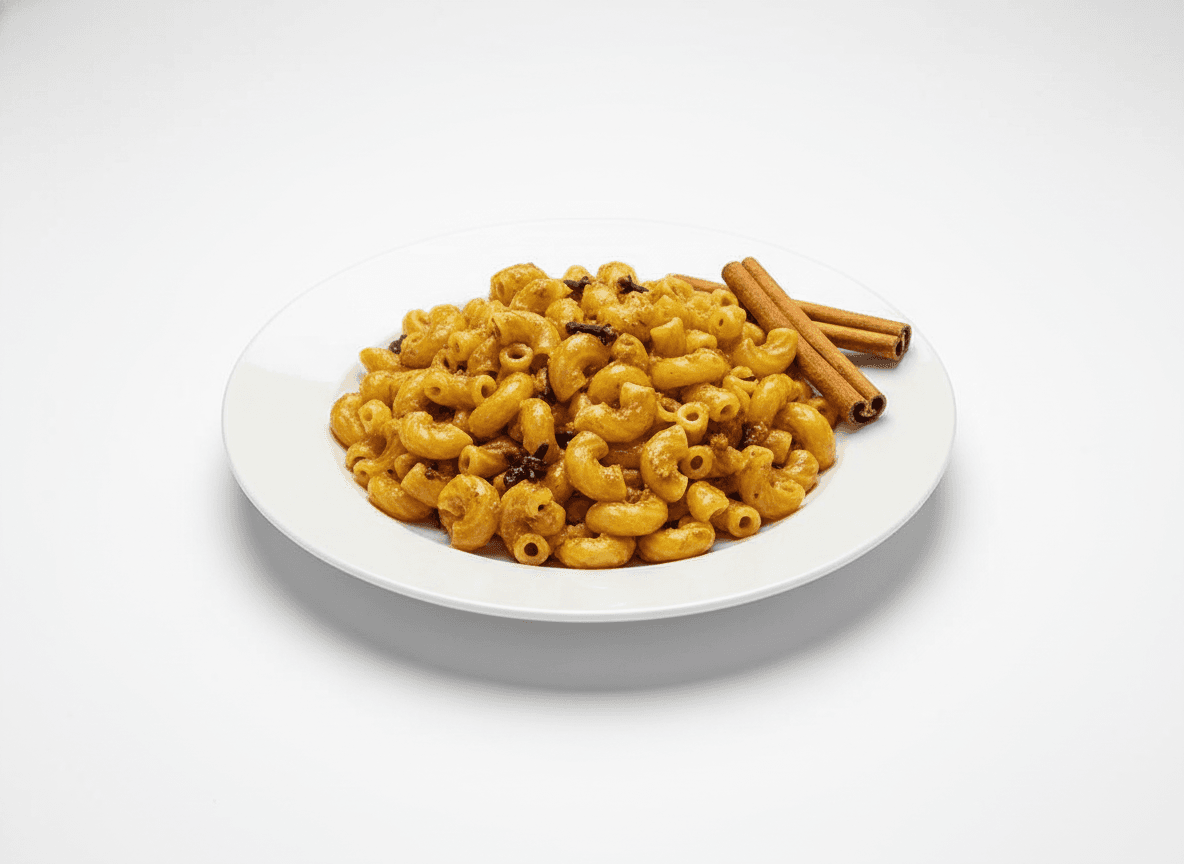
Ye'Niter Kibbeh Macaroni
መኮረኒ በስልስ·(mekoreni besels)
The Blended Table: First-Generation Holidays
Growing up in the American suburbs, macaroni was the ultimate childhood comfort food. But when Habesha mothers and grandmothers made it, it didn’t come from a sad blue box with fluorescent cheese powder. It was bathed in a fiery, deeply savory, rust-red sils, smelling of roasted cardamom, ginger, and the intoxicating, uncompromising aroma of Niter Kibbeh. This dish is the star of the holiday potluck and the graduation party—the absolute real taste of home. To make it work on a Tuesday night without spending an hour hand-mincing onions, we’re utilizing the ultimate first-generation kitchen hack: the food processor. It honors the grandmotherly intent to break down the alliums entirely, but spares you the grueling labor.
Before you start
Make a batch of Niter Kibbeh on a Sunday to keep in the fridge.
Melt 1 lb unsalted butter in a heavy saucepan over medium-low heat, skimming off the rising white foam. Once clear, add 1/4 cup chopped red onion, 3 smashed garlic cloves, 1 inch sliced ginger, 1 cinnamon stick, 1 tsp fenugreek seeds, 1/2 tsp cumin seeds, 1 tsp dried oregano, 3 pods Indian black cardamom, and 1/4 tsp ground turmeric. Simmer on the lowest possible heat for 45 minutes. Strain through cheesecloth into a jar and store in the fridge.
Ingredients
- red onions2 large
- neutral oil3 tbsp
- Berbere spice blend1 1/2 tbsp
- garlic4 clove
- fresh ginger1 tbsp
- tomato paste2 tbsp
- fresh tomato1 large
- water or vegetable broth1/2 cup
- salt1 tsp
- elbow macaroni1 lb
- Niter Kibbeh4 tbsp
Method
- 01
Purée the onions in a food processor.
Toss the quartered red onions into the bowl and pulse until they are reduced to a fine, wet purée. This entirely replaces the traditional thirty minutes of precise hand-mincing and instantly accelerates the breakdown of the alliums.
- 02
Dry-sweat the onion purée.
Transfer the onions to a large, dry heavy-bottomed pot over medium-high heat. Do not add oil yet. Cover and let them cook in their own juices for 5 to 8 minutes, stirring frequently, until the raw, sharp smell dissipates and the excess water steams away into a thick paste.
- 03
Fry the paste and bloom the spices.
Reduce the heat to medium and add the neutral oil. Sauté the onion paste for 5 to 10 minutes until it takes on a deep golden-brown color. Stir in the minced garlic, grated ginger, and Berbere, cooking for 2 minutes to toast the spices and release their oils.
- 04
Build and simmer the sils.
Add the tomato paste and fresh diced tomato, stirring vigorously for 3 minutes to caramelize the paste. Pour in the water or broth to deglaze the pan, scraping up any browned bits. Lower the heat, cover, and gently simmer for 15 minutes until the sauce darkens to a rich crimson.
- 05
Boil the macaroni slightly past al dente.
While the sauce simmers, drop the macaroni into a large pot of aggressively salted boiling water. You want the pasta slightly soft and plump so it can properly absorb the sauce. Drain it, reserving a splash of the starchy pasta water.
- 06
Marry the pasta and the Niter Kibbeh.
Add the drained macaroni directly into the simmering sils, stirring to coat every noodle. Turn off the heat, drop in the Niter Kibbeh, and stir gently until the spiced butter melts completely, glazing the macaroni in a glossy, unbelievably fragrant sheen.
Notes
Adjust the Berbere to your family's heat tolerance.
Berbere blends vary wildly in spice level depending on the purveyor, so taste yours before committing the full tablespoon and a half to the pot.
Forget the Italian rules for pasta texture.
Unlike traditional Italian cooking where sauce clings to the exterior of an al dente noodle, the Ethiopian technique prefers a softer noodle that absorbs the spiced oil and kibbeh directly into its starch matrix.