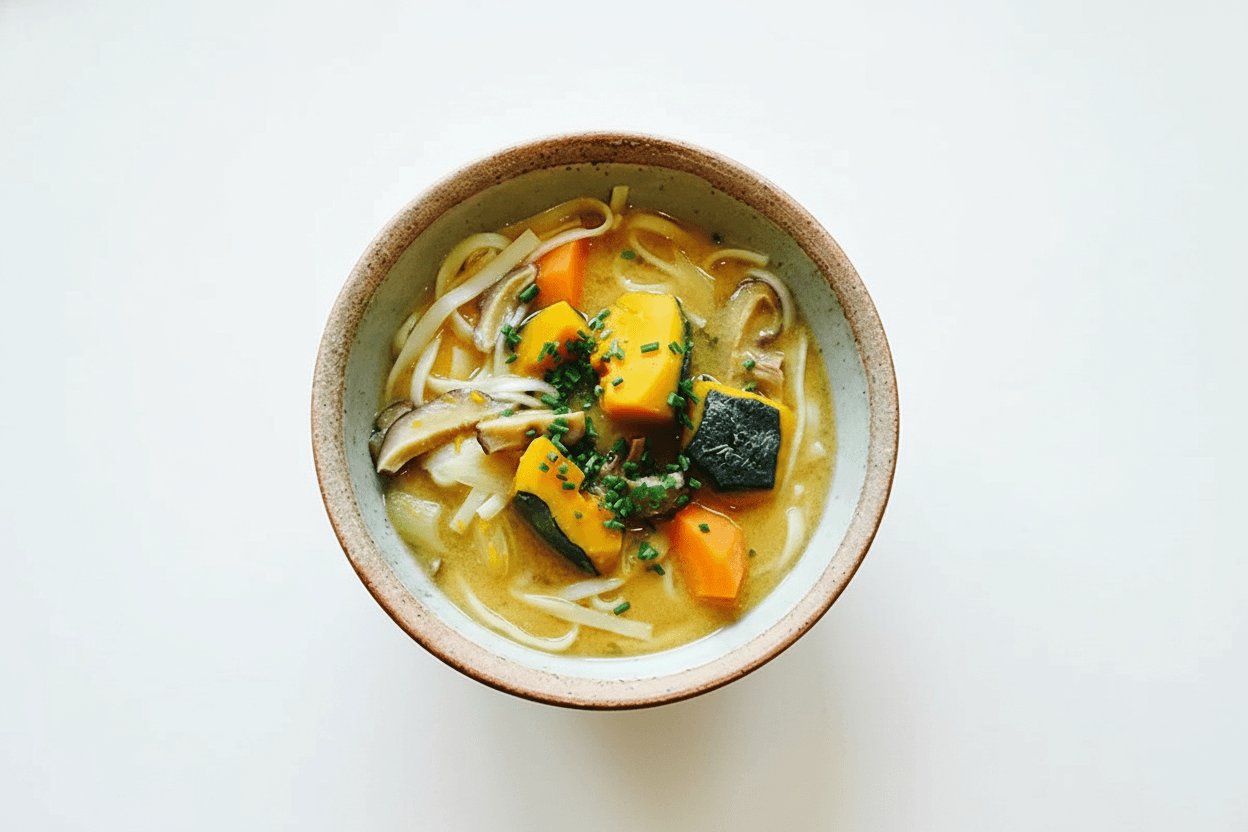
Yamanashi-Style Kabocha no Hoto
かぼちゃのほうとう·(kabocha no hōtō)
Obaachan's Wisdom: Healing & Zero Waste
While the rest of Japan centers its plate on polished rice, the harsh, mountainous Yamanashi prefecture relied on wheat. The result is hoto: a deeply rustic, soul-warming noodle stew that feels like a hug from a Japanese grandmother. Unlike udon, these noodles are made without salt and dropped entirely raw into the bubbling pot. The untamed flour from the noodles and the sweet, melting edges of the kabocha squash work together to create a thick, glossy, miso-rich gravy that coats your ribs and chases away the deepest chill. It’s practical, imperfect, and incredibly forgiving.
Before you start
Microwave the whole kabocha squash before chopping.
Microwaving the entire piece for about 3 minutes softens the notoriously dense flesh just enough to save your knife blade and your wrists when cutting.
Ingredients
- all-purpose flour2 1/2 cup
- warm water135 ml
- dashi6 cup
- thinly sliced pork belly1/2 lb
- kabocha squash3/4 lb
- daikon radish1 small
- carrot1 med
- napa cabbage2 cup
- shiitake mushrooms3.5 oz
- abura-age1 med
- long green onion1 med
- miso paste1/2 cup
Method
- 01
Mix the flour and warm water in a bowl until it forms a shaggy dough, kneading briefly just to bring it together.
Because hoto dough has absolutely no salt, it requires zero resting time for gluten development. Knead for just 2 to 3 minutes until cohesive, then cover with a damp towel.
- 02
Bring the dashi to a boil in a heavy Dutch oven, drop in the kabocha, daikon, and carrots, and simmer for 10 minutes.
Leaving the tough green skin on the kabocha is crucial; it holds the chunks together while the sweet orange flesh dissolves into the broth.
- 03
Roll the dough out on a heavily floured surface to an 1/8-inch thickness, fold into thirds, and slice into 1/2-inch wide ribbons.
Toss the cut noodles generously in flour and don't shake off the excess. This raw surface starch is exactly what thickens the stew.
- 04
Add the pork belly, cabbage, mushrooms, and abura-age to the tender roots, skimming off any foam that rises.
- 05
Dissolve exactly half of the miso paste into the bubbling broth, then drop in the raw, flour-dusted noodles.
Boiling miso usually kills its aroma, but doing it here allows the raw noodles to absorb the savory flavor from the inside out. Simmer uncovered for 6 to 8 minutes, separating them gently with chopsticks, as the broth transforms into a thick gravy.
- 06
Turn off the heat, stir in the remaining miso and sliced green onions, and let rest covered for a few minutes.
Adding the rest of the miso off the heat preserves its fresh, probiotic punch. Ladle into wide bowls, making sure everyone gets a melting chunk of kabocha.
Notes
Hoto-meshi is the ultimate zero-waste breakfast.
If you have leftovers, do not throw them away. The stew will solidify in the fridge overnight. The next morning, ladle the cold, thick pudding directly over piping hot white rice. It is often the best part of the meal.
Fresh noodles work in a pinch, but skip the frozen udon.
If you are too exhausted to knead the 10-minute dough, you can substitute a pound of raw, fresh wide udon or fettuccine. Avoid frozen udon; it is pre-boiled, meaning the surface starches are set and won't thicken the broth properly.
From Cook Japanese in America.