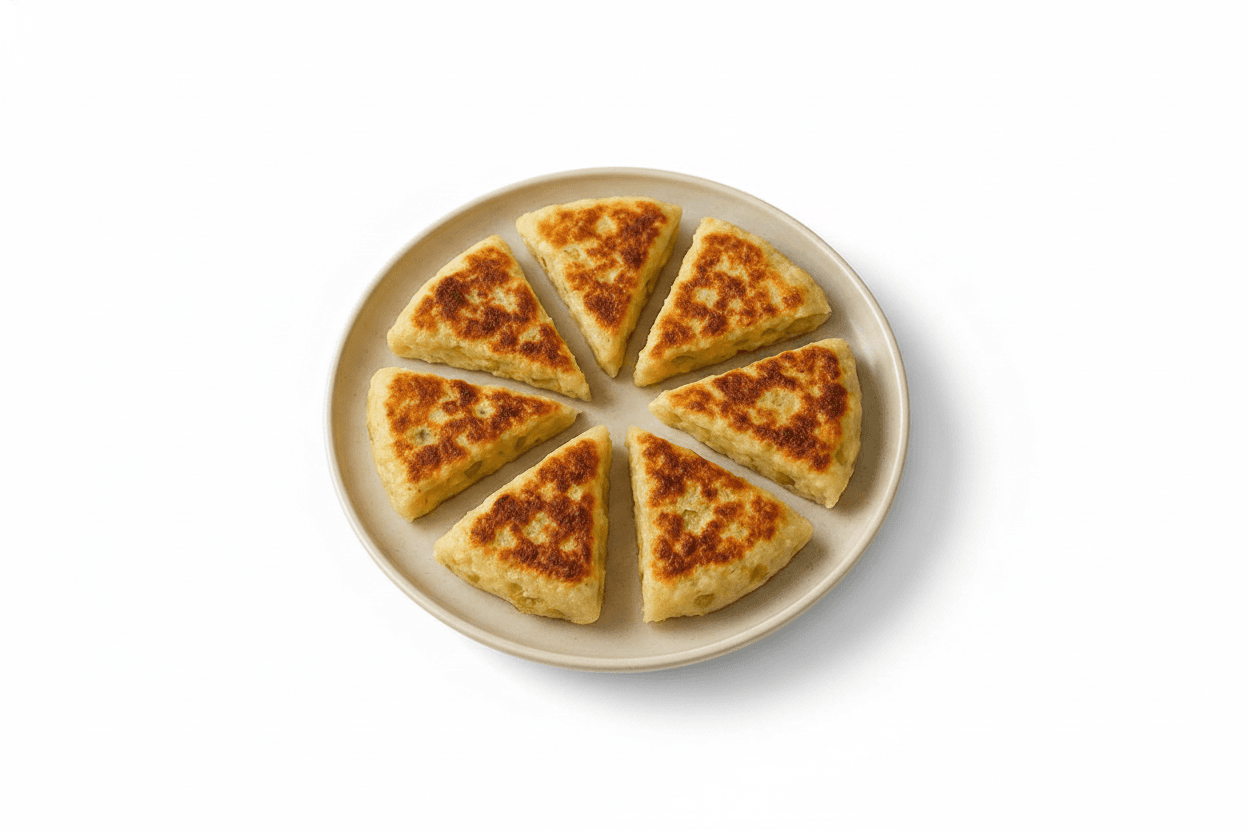
Ulster Fadge
Arán Prátaí·(ah-rawn praw-tee)
The Morning Fry & The Daily Bake
In the north of Ireland, they call it fadge, and in the native tongue, it’s arán prátaí. Whatever you call it, this four-ingredient marvel is the unpretentious, carb-heavy beating heart of the traditional Ulster Fry. It was born of absolute necessity—a brilliant, thrifty way for an Irish grandmother to stretch leftover potatoes to feed a hungry house on a damp morning. There are no eggs here, no splashes of milk, no culinary school flourishes. It requires just starchy potatoes, a little flour, butter, and a hot pan. The secret is profoundly simple: keep the potatoes dry, don't overwork the warm dough, and fry it in bacon fat if you know what's good for you.
Ingredients
- Russet or Yukon Gold potatoes1 lb
- European-style salted butter2 tbsp
- all-purpose flour3/4 cup
- kosher salt1/2 tsp
- bacon fat1 tbsp
Method
- 01
Boil the potatoes in a pot of well-salted water until just fork-tender.
- 02
Drain the potatoes completely and return them to the hot, turned-off pot for ten minutes to steam dry.
Wet potatoes demand extra flour to form a dough, which kills the authentic toasted potato flavor. Let that residual steam evaporate completely before mashing.
- 03
Mash the hot potatoes thoroughly until perfectly smooth before stirring in the melted butter and salt.
A potato ricer is your best friend here, but a standard masher works fine if you put your back into it. You must mash them while they are still hot.
- 04
Sprinkle the flour over the warm potato mash and gently mix with your hands until a soft dough forms.
Stop mixing the exact second the flour disappears into the potato. Overworking the dough activates the gluten and turns a tender, fluffy potato cake into a rubber tire.
- 05
Turn the dough out onto a generously floured board, pat it into a half-inch thick circle, and cut it into four equal triangles.
These four triangular pieces are traditionally known as farls.
- 06
Fry the farls on a hot cast-iron griddle or skillet in a little butter or bacon fat for three to five minutes per side.
You are looking for a gorgeous, crusty, golden-brown patchwork to develop. Serve them immediately, straight from the pan, ideally alongside thick-cut bacon or a fried egg.
Notes
You can easily use leftover mashed potatoes instead of boiling fresh ones.
This is how fadge was traditionally made. Just ensure your leftover mash isn't excessively soupy or overloaded with heavy cream, and warm it slightly before mixing in the flour.
From Cook Irish-American Food.