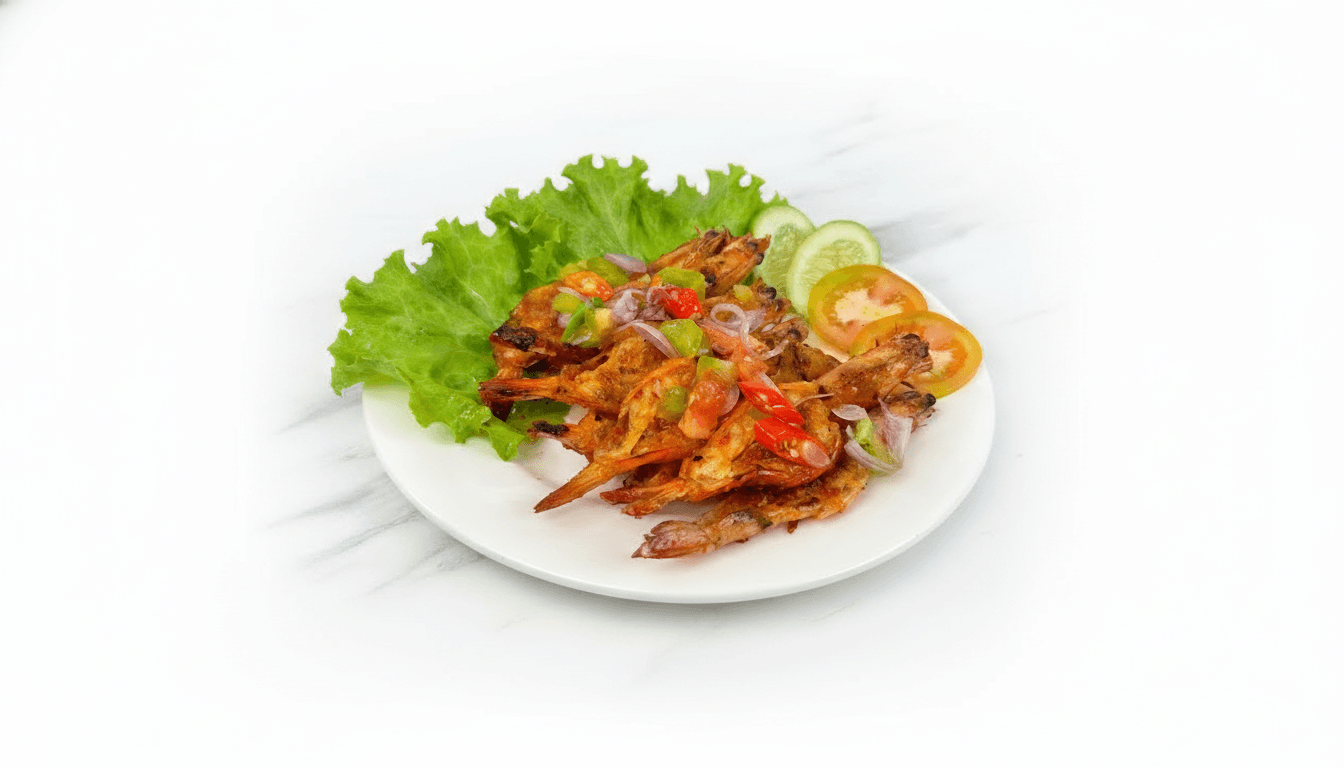
Udang Bakar Jimbaran
(oo-dang bah-kar jeem-bah-ran)
Kumpul Keluarga: Weekend Gatherings and Holidays
The smell of burning coconut husks and toasted shrimp paste drifting down Jimbaran Bay is a siren song. For families thousands of miles away in an Ohio suburb, recreating that chaotic, joyful weekend spread comes down to two grandmotherly secrets: pineapple and patience. Blending a small piece of fresh pineapple into the marinade tenderizes the prawns and kickstarts a furious caramelization under a hot broiler. But before it touches the seafood, you have to cook the spice paste until the oil separates—a technique called tanak—mellowing the raw garlic into a sweet, sticky lacquer that tastes exactly like home.
Before you start
Wash and butterfly the prawns.
Leave the shells on to protect the delicate meat from intense heat. Slice down the back to butterfly, remove the dark vein, and toss with the juice of one lime and a pinch of salt to neutralize odors. Let sit for 10 minutes, then rinse and pat thoroughly dry.
Toast the shrimp paste.
Never use raw terasi. Wrap the paste in a small piece of aluminum foil and toast in a dry skillet over medium heat for 2 to 3 minutes per side until it emits a pungent, roasted aroma.
Ingredients
- jumbo tiger prawns1 1/2 lb
- lime1 med
- salt1 tsp
- yellow onion1/2 med
- garlic4 clove
- shallots3 large
- fresh pineapple1/4 cup
- terasi1 tsp
- neutral cooking oil3 tbsp
- tomato ketchup2 tbsp
- oyster sauce1 tbsp
- Indonesian chili sauce1 tbsp
- kecap manis1 tbsp
- honey1 tbsp
- brown sugar1 tsp
- ground white pepper1/2 tsp
- unsalted butter2 tbsp
- lime1 med
Method
- 01
Blend the aromatics into a smooth paste.
In a blender, combine the yellow onion, garlic, shallots, pineapple, toasted terasi, and neutral oil. Blend until perfectly smooth. Using oil instead of water helps it fry properly.
- 02
Sauté the paste until the oil separates.
Pour the paste into a skillet over medium heat. Stir frequently for 8 to 10 minutes until the moisture evaporates and the oil pools at the edges—a state known as tanak. This cooks out the raw allium bite, leaving only depth.
- 03
Build the sticky glaze.
Reduce the heat to low. Stir in the ketchup, oyster sauce, chili sauce, kecap manis, brown sugar, and white pepper. Simmer for 2 minutes until thick, then turn off the heat and stir in the honey.
- 04
Blast the prawns under the broiler.
Arrange the butterflied prawns shell-side down on a foil-lined baking sheet. Brush the meat generously with the glaze. Broil on high, about 4 inches from the heat, for 3 to 4 minutes.
- 05
Baste, char, and serve.
Pull the prawns out, hit them with melted butter and another dab of glaze, and broil for 1 to 2 more minutes. You want the shell edges charred and the sauce bubbling. Serve immediately with a mountain of rice and raw sambal.
Notes
The magic of pineapple.
Do not skip the fresh pineapple. Its enzymes rapidly tenderize the dense prawn meat, while the natural sugars guarantee those deeply caramelized, charred edges iconic to Jimbaran Bay.
Sourcing the right sauces.
Seek out Bango or ABC brand Kecap Manis and ABC Saus Sambal at an Asian market. These specific bottled sauces form the unmistakable backbone of the authentic flavor profile.