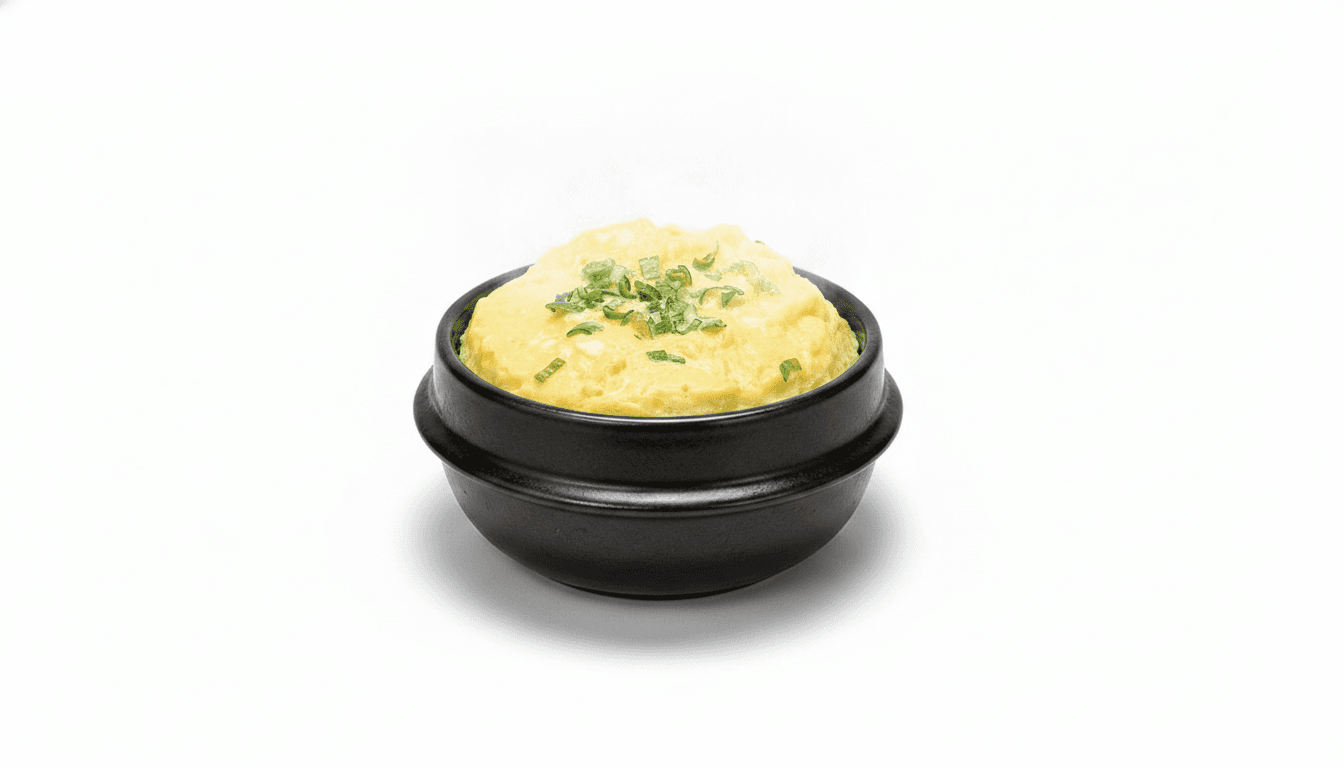
Ttukbaegi Gyeran-jjim
뚝배기 계란찜·(ttukbaegi gyeran-jjim)
The Everyday Babsang
Forget the explosive, six-inch-tall restaurant gimmicks puffed up with baking powder or dairy. This is the real deal—the unfussy way your grandmother made it. It requires no chemical cheats, just raw thermodynamics, a traditional earthenware pot, and the profound, deeply funky umami of salted fermented shrimp. You are looking for a soft, pillowy custard with a distinctly savory, toasted crust at the very bottom. That faint, scorched smell rising with the steam? That means you nailed it.
Ingredients
- toasted sesame oil1 tbsp
- large eggs4 large
- anchovy-kelp broth3/4 cup
- saeujeot1 tsp
- sugar1/4 tsp
- scallion1 med
- toasted sesame seeds1 tsp
Method
- 01
Whisk the base ingredients aggressively.
In a medium bowl, whisk the eggs, minced saeujeot, sugar, and broth until completely uniform and frothy. If you have an extra sixty seconds, pass the mixture through a fine-mesh sieve to break down the whites completely for an unimaginably silky texture.
- 02
Preheat and oil the pot.
Place your ttukbaegi (or a small, heavy-bottomed cast iron pot) over medium heat and brush the bottom and halfway up the sides with half of the sesame oil. This prevents aggressive sticking and infuses the crust with a nutty flavor.
- 03
Stir constantly to create curds.
Pour in the egg mixture, leaving about twenty percent of the pot empty so it can rise. Let it sit for about 15 seconds until the edges just begin to set, then use a spoon to continuously scrape the bottom and sides, pulling the cooked curds into the center.
- 04
Stop stirring at exactly eighty percent cooked.
Keep scraping until the mixture resembles soft, wet ricotta—what Koreans call mongle-mongle. When you have distinct, soft curds suspended in a bit of thick liquid, stop stirring immediately. If you wait any longer, the eggs will turn dense.
- 05
Trap the steam under a dome.
Scatter the chopped scallion over the wet eggs, immediately cover the pot with a domed lid or inverted heatproof bowl, and drop the heat to the absolute lowest setting.
- 06
Listen for the hiss and smell the scorch.
Do not lift the lid to check. Wait 2 to 3 minutes until you hear a faint hissing sound of escaping moisture and smell a pleasant, toasty aroma of scorching egg at the bottom.
- 07
Garnish and serve immediately.
Kill the heat, let the pot rest for 30 seconds, then carefully remove the dome using oven mitts. Drizzle the bubbling, puffed egg with the remaining sesame oil, sprinkle with sesame seeds, and serve directly in the pot.
Notes
You must mince the fermented shrimp.
Saeujeot is non-negotiable for true depth of flavor, but you must pick out the solid little shrimp and mince them to a paste. Biting into a whole briny shrimp ruins the delicate texture of the custard. If completely unavailable, substitute an equal amount of high-quality fish sauce.
The vessel dictates the technique.
The ttukbaegi (unglazed earthenware pot) holds intense heat, allowing the egg to puff up and finish cooking off the burner. If you don't have one, a mini enameled cast-iron pot is your best alternative. Do not attempt this in thin stainless steel.
From Cook Korean in America.