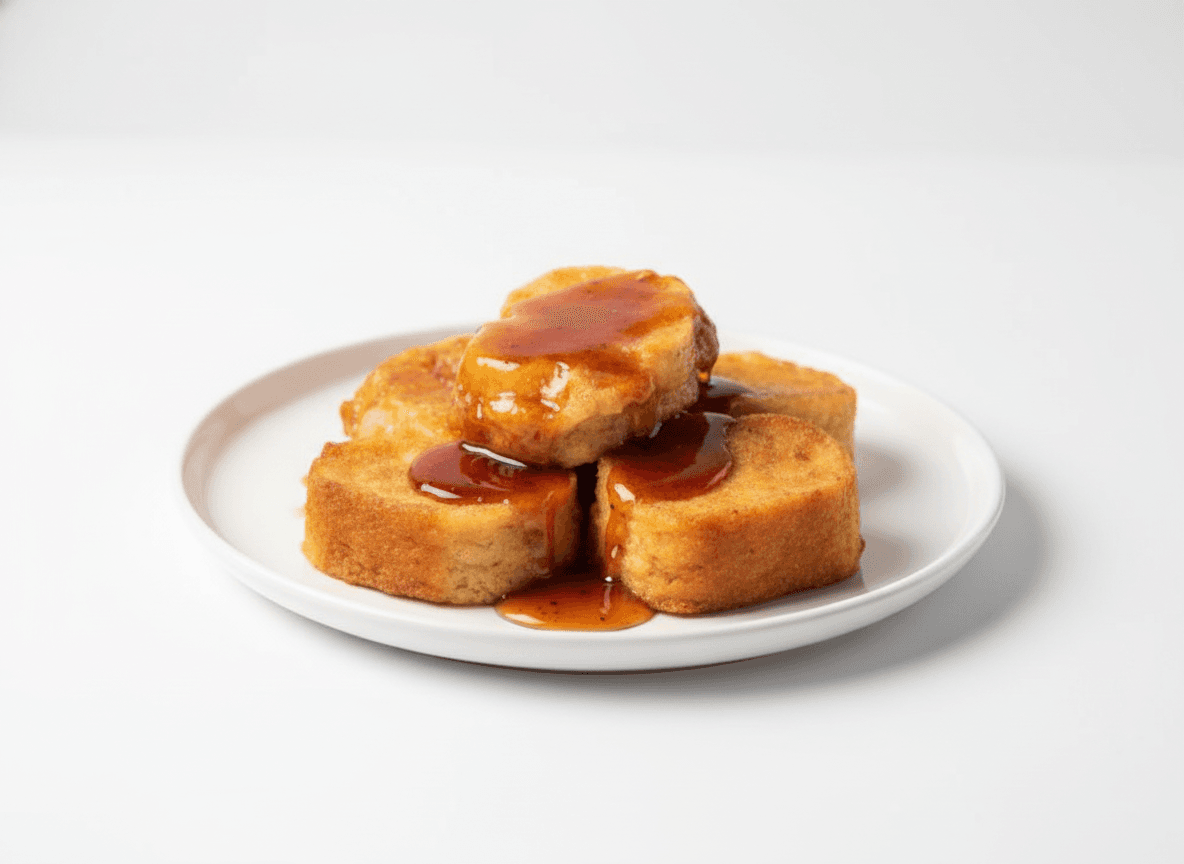
Torrejas en Almíbar
(toh-RREH-has en ahl-MEE-bar)
Un Dulcito (Simple Sweet Endings)
Forget the cream-cheese-stuffed monstrosities parading as Cuban French toast at trendy brunch spots. The real thing is a masterclass in peasant thrift—an aprovechamiento dessert born of stale bread, a hot pan, and a grandmother's pantry. The secret isn't tropical fruit; it's a salted cooking wine called vino seco. Splashed into the milk soak and the spiced sugar syrup, it acts as a sharp, acidic counterpunch to the profound sweetness, balancing the cinnamon and anise in a way that haunts you. This is the authentic, make-do magic of a Havana kitchen, engineered to save Tuesday night's bread and serve it back to you cold, dense, and dripping with syrup.
Before you start
Force-stale your fresh bread if you didn't plan ahead.
Cuban grandmothers rely on three-day-old pan de flauta. If you're working with a fresh supermarket loaf on a Tuesday night, slice it and dry the pieces in a 275°F oven for 15 minutes while the syrup simmers.
Ingredients
- water1 1/2 cup
- granulated white sugar1 1/2 cup
- cinnamon stick1 large
- star anise2 whole
- lemon peel1 wide strip
- fresh lemon juice1 tsp
- vino seco2 tbsp
- Cuban bread or French baguette1 loaf
- whole milk1 1/2 cup
- granulated white sugar2 tbsp
- vanilla extract1 tsp
- vino seco1 tbsp
- fine sea salt1 pinch
- eggs3 large
- milk1 tsp
- neutral oil1 cup
- ground cinnamon1 tsp
Method
- 01
Simmer the spiced syrup.
In a medium saucepan, combine the water, 1 1/2 cups of sugar, cinnamon stick, star anise, lemon peel, and lemon juice over medium heat. Bring to a gentle boil, then reduce the heat and simmer uncovered for 15 to 20 minutes until it slightly thickens into a light glaze. Remove from heat, stir in 2 tablespoons of vino seco, and let it steep.
- 02
Prepare the milk infusion.
In a shallow dish, vigorously whisk 1 1/2 cups of whole milk, 2 tablespoons of sugar, vanilla extract, 1 tablespoon of vino seco, and a pinch of salt until the sugar dissolves.
- 03
Thin the egg wash.
Crack the eggs into a separate shallow bowl, add exactly 1 teaspoon of milk, and beat with a fork until perfectly homogenous. This tiny splash of milk is the trick to a delicate, crispy crust rather than a rubbery omelet shell.
- 04
Heat the frying oil.
Add about 1/4-inch of neutral oil to a large skillet over medium-high heat, bringing it to roughly 350°F.
- 05
Execute the dip and fry.
Working in small batches, submerge a slice of stale bread in the milk for just 3 to 4 seconds per side to hydrate the crumb without destroying its structure. Immediately transfer it to the egg wash, coat both sides, and gently lay it into the hot oil.
- 06
Fry to a deep golden brown.
Cook for 2 to 3 minutes per side until properly crispy, then transfer to a paper towel-lined plate to drain. Repeat with the remaining bread, adding more oil between batches if necessary.
- 07
Bathe and chill the torrejas.
Arrange the fried bread in a single layer in a deep serving dish and generously pour the warm syrup over the top, discarding the spent spices. Dust lightly with ground cinnamon, cover, and refrigerate for at least an hour so the bread absorbs the liquid, transforming into a dense, cold custard.
Notes
Replicate the canonical cooking wine if you can't find it.
If Edmundo brand vino seco isn't waiting on the shelves at your local grocer, do not use regular drinking wine. Mix a standard dry white wine or dry sherry with a generous quarter teaspoon of kosher salt.
Patience is a culinary virtue.
While the smell of frying cinnamon will tempt you to eat them hot out of the pan, true torrejas demand fridge time. Serve them cold the next day alongside a shot of dark Cuban coffee.
From Cook Cuban in America.