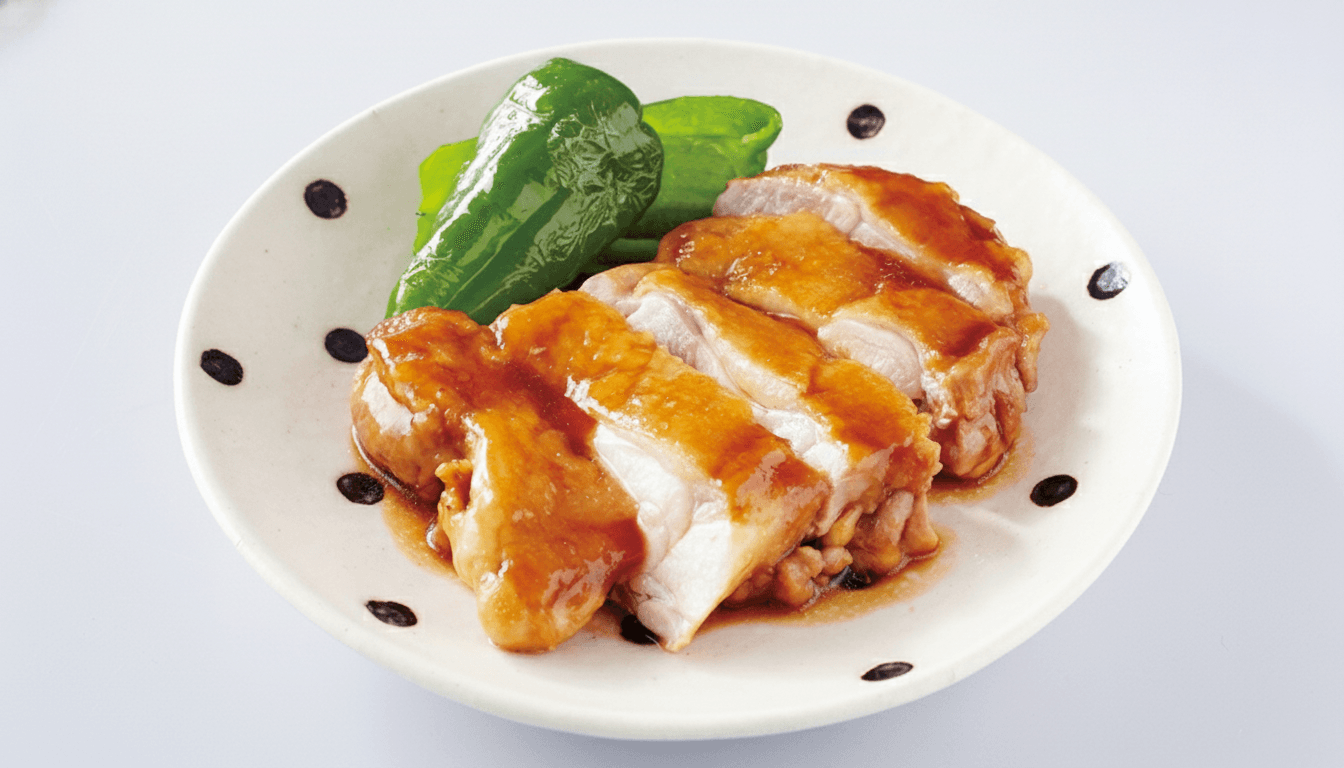
Tori no Teriyaki
鶏の照り焼き·(to-ri no te-ri-ya-ki)
Weeknight Okazu: The Savory Sides
If you grew up in a Japanese-American household, the smell of soy sauce and sugar caramelizing in a hot pan is the ultimate dinner bell. Forget the syrupy, pineapple-heavy mall food court marinades. Authentic Tori no Teriyaki isn't a bottled sauce; it's an uncompromising technique. Grandma didn't soak the chicken for hours. She relied on four simple pantry staples and a few brilliant, tactile tricks: pricking the skin, rendering the fat in a cold pan, and meticulously wiping away the grease before glazing. The result is a crackling, juicy thigh coated in a natural, sticky lacquer that tastes exactly like home.
Before you start
Whisk together the golden ratio tare.
In a small bowl, combine the soy sauce, sake, mirin, and sugar, stirring until the sugar is mostly dissolved so it is ready to pour instantly.
Aggressively prick the chicken skin with a fork.
Puncturing the skin 10 to 15 times severs the connective tissues, preventing it from shrinking in the pan while creating channels for the sweet glaze to penetrate.
Lightly dust the chicken with potato starch.
Pat the meat completely dry, season lightly with salt and white pepper, and apply a sheer, almost invisible coating of the starch to both sides.
Ingredients
- boneless skin-on chicken thighs1 lb
- kosher salt1 pinch
- white pepper1 pinch
- potato starch1 tbsp
- soy sauce2 tbsp
- sake2 tbsp
- mirin2 tbsp
- white sugar1 tbsp
- cooked short-grain white rice2 cup
- green cabbage1/4 med
Method
- 01
Place the chicken skin-side down into a completely cold, dry skillet.
Turn the heat to medium to gently coax the fat out from under the skin, essentially frying the skin in its own juices until shatteringly crisp, which takes about 6 to 8 minutes.
- 02
Flip the chicken to the flesh side.
Once the skin is a deep, crispy golden-brown, turn the chicken over and cook for another 3 to 4 minutes until cooked through.
- 03
Meticulously wipe away every drop of rendered fat from the pan.
Using a wad of paper towels held by tongs, clean the skillet completely dry; if you skip this, the water-based tare will violently repel the grease and break into an oily mess.
- 04
Pour the tare into the pan to create the lacquer finish.
Increase the heat to medium-high and continuously baste the chicken with the bubbling liquid as the water evaporates and the sauce reduces into a thick, sticky syrup.
- 05
Rest the chicken before slicing.
Transfer the chicken to a cutting board for two minutes to let the juices settle, then slice crosswise into strips and serve alongside rice and shredded cabbage.
Notes
Skin-on thighs are non-negotiable.
If your local supermarket only sells bone-in/skin-on thighs, simply buy those and use kitchen shears to cut the bone out yourself at home.
Seek out katakuriko over cornstarch.
Potato starch, found in the Asian aisle, provides a superior, lighter crisp to the skin and naturally thickens the sauce without turning it cloudy.
From Cook Japanese in America.