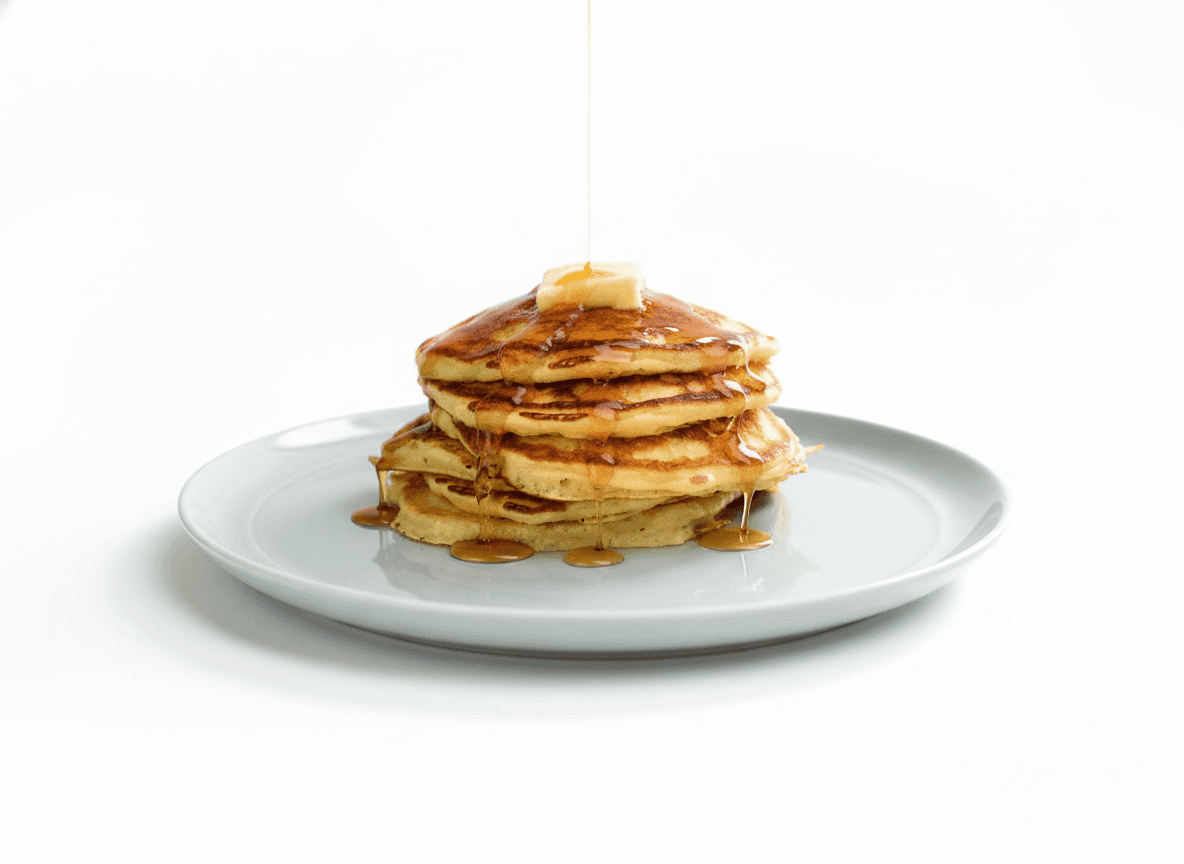
The Lumberjack Cast-Iron Buttermilk Pancakes
All-Day Breakfast
Sit at any diner counter off Route 1 at 2am and you'll witness a ballet of grease, steel, and steam. The short-order cook is a master of timing, and their weapon of choice is the flat-top griddle. To bring that magic into your home kitchen without industrial equipment, you need a heavy cast-iron skillet and a healthy respect for the process. These are the Lumberjack Pancakes, a homage to the 19th-century logging camps where men burned eight thousand calories a day and needed a breakfast that stuck to their ribs. We fortify a classic, fluffy buttermilk batter with old-fashioned rolled oats for chew and the secret weapon of the diner trade: malted milk powder. Read the techniques carefully: respect the batter rest, master the griddle scrape, and only flip once.
Ingredients
- all-purpose flour1 1/4 cup
- old-fashioned rolled oats3/4 cup
- malted milk powder1/4 cup
- baking powder2 tsp
- baking soda1 tsp
- kosher salt1 tsp
- whole milk buttermilk2 cup
- eggs2 large
- unsalted butter4 tbsp
- vanilla extract1 tsp
- clarified butter2 tbsp
Method
- 01
Whisk the dry ingredients together in a large bowl.
Combine the flour, rolled oats, malted milk powder, baking powder, baking soda, and kosher salt.
- 02
Whisk the wet ingredients until frothy in a separate pitcher.
Vigorously mix the buttermilk, beaten eggs, melted butter, and vanilla extract.
- 03
Fold the wet ingredients into the dry until just moistened.
Use a wooden spoon and stop immediately once combined. The batter should look lumpy and ugly, as overmixing develops gluten and guarantees rubbery pancakes.
- 04
Walk away and let the batter rest at room temperature for at least fifteen minutes.
This is the secret to short-order loft, allowing the oats to hydrate and the buttermilk to react with the baking soda. Use this window to get your bacon rendering or hash browns started.
- 05
Preheat your largest cast-iron skillet over medium-low heat for five to ten minutes.
A heavy skillet mimics the thermal mass of a commercial flat-top. Test it with a water droplet, which should sizzle and dance across the surface.
- 06
Brush the skillet with a thin layer of clarified butter and ladle in half-cup portions of batter.
Do not let the butter pool, and do not crowd the pan, leaving plenty of room to operate your spatula.
- 07
Flip the pancakes once the surface bubbles burst and the edges look matte and dry, about three to four minutes.
Slide a wide metal spatula underneath and flip with conviction, cooking for an additional two minutes until golden brown. Never press down on the pancake with your spatula.
- 08
Perform the short-order scrape before dropping the next batch.
Take the flat edge of your metal spatula and firmly scrape the skillet surface, pushing burnt bits and exhausted oil into a paper towel before re-oiling. This ensures your last pancake looks as pristine as your first.
Notes
Malted milk powder is the secret to an authentic diner flavor.
It provides a toasted, nostalgic sweetness and helps achieve that flawless golden-brown crust. If absolutely necessary, substitute two tablespoons of dark brown sugar, but seek out the malt.
Do not substitute quick oats.
Quick oats dissolve into the batter and ruin the texture. Old-fashioned rolled oats provide the structural integrity required for a true lumberjack chew.
From Cook Diner Food at Home.