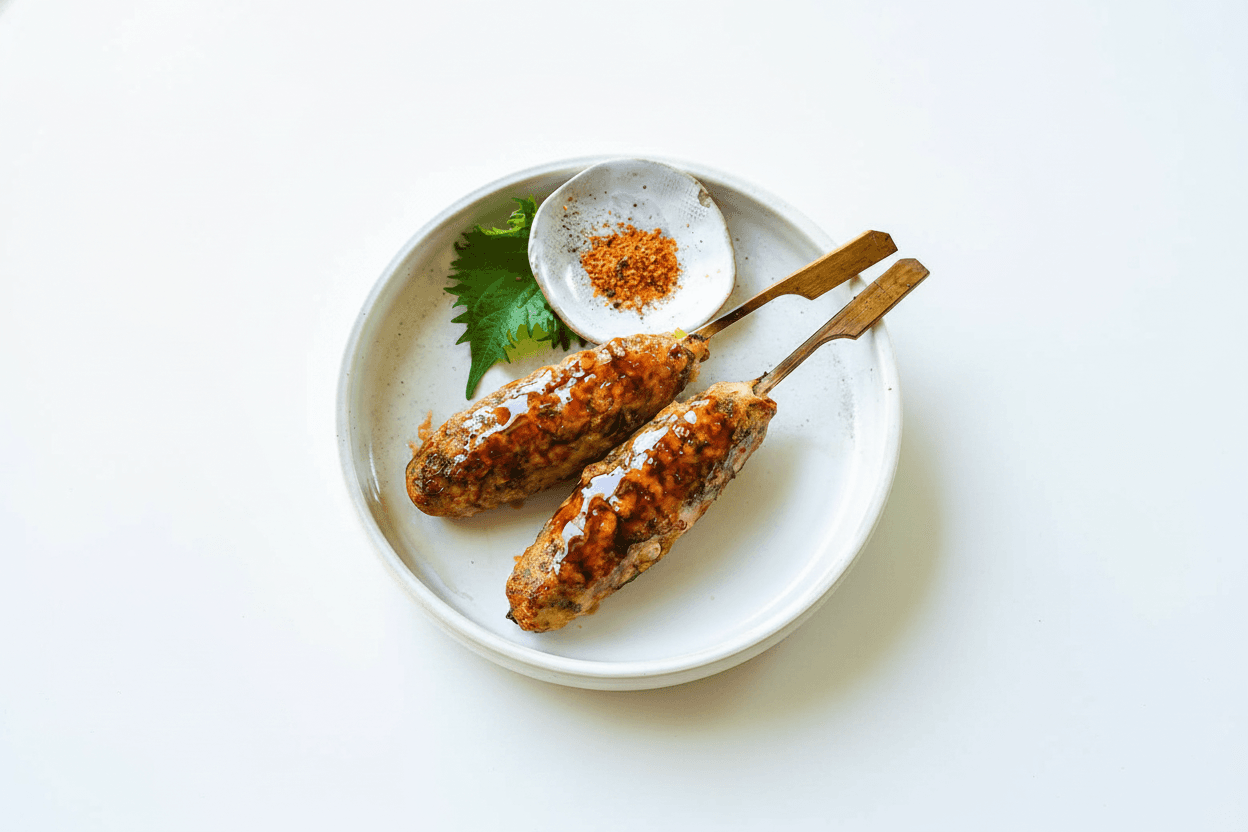
Thanksgiving Teriyaki Turkey Tsukune
ふわふわターキーつくね·(fuwa-fuwa tākī tsukune)
The Nikkei Heritage Table: Potlucks & Holidays
When Japanese families settled in the American Midwest, they brought the ancient culinary philosophies of washoku to the suburban supermarket. Faced with a November deluge of lean ground turkey, first-generation grandmothers didn't compromise; they adapted. By working drained tofu into the meat and swapping hard-to-find chicken cartilage for minced raw onion, they engineered a dish that effortlessly bridges two worlds. This isn't the hyper-sweet, garlic-heavy mall food court teriyaki you grew up dreading. It is impossibly fluffy, gently crunchy, and lacquered in a pure four-ingredient glaze—the unadulterated, nostalgic taste of a Japanese home kitchen, optimized for a Tuesday night in Ohio.
Before you start
Extract moisture from the tofu.
Wrap the half-block of firm tofu in two layers of thick paper towels or a clean kitchen cloth, place it on a plate with a heavy object on top, and let it sit for 15 to 20 minutes to press out the excess water.
Mash the pressed tofu.
Once pressed, unwrap the tofu and use your hands or a fork to mash it into a fine crumble.
Mix the glaze.
In a small bowl, whisk together the soy sauce, mirin, sake, and granulated sugar until the sugar is mostly dissolved.
Ingredients
- ground turkey1 lb
- firm tofu7 oz
- yellow onion1/2 med
- egg1 large
- potato starch2 tbsp
- fresh ginger1 tsp
- kosher salt1/2 tsp
- black pepper1/4 tsp
- toasted sesame oil1 tbsp
- neutral oil1 tbsp
- soy sauce3 tbsp
- mirin3 tbsp
- sake3 tbsp
- granulated sugar1 1/2 tbsp
- toasted white sesame seeds1 tbsp
- scallions2 med
- egg yolks4 large
Method
- 01
Emulsify the meat mixture.
In a large mixing bowl, combine the ground turkey, mashed tofu, minced onion, whole egg, potato starch, grated ginger, salt, pepper, and toasted sesame oil. Mix vigorously with your hands, making a claw shape with your fingers and stirring in a circular motion until the mixture becomes pale, highly sticky, and forms a cohesive paste.
- 02
Form the tsukune.
Lightly coat your hands with a drop of cooking oil or water to prevent sticking, scoop about two heaping tablespoons of the meat mixture, and gently toss it back and forth between your palms to knock out any air bubbles before shaping into slightly flattened oval patties.
- 03
Sear to develop a crust.
Heat the neutral oil in a large non-stick skillet over medium heat, carefully arrange the tsukune in the pan, and cook undisturbed for 3 to 4 minutes until the undersides develop a deep, golden-brown crust.
- 04
Steam-fry the meatballs.
Carefully flip the meatballs, immediately cover the pan with a tight-fitting lid, and reduce the heat to medium-low. Let them steam-fry for 4 to 5 minutes so the moisture from the tofu steams the lean turkey gently without drying it out.
- 05
Prepare the pan for glazing.
Remove the lid and wipe away any excess grease or liquid pooled in the pan with a bunched-up paper towel held by tongs.
- 06
Apply the teriyaki glaze.
Turn the heat up to medium-high and pour the teriyaki glaze directly into the pan. As the liquids reduce and bubble furiously, continually baste and roll the meatballs around until they are lacquered in a sticky, glossy sauce that coats the back of a spoon.
- 07
Garnish and serve.
Transfer the tsukune to a serving platter, drizzle with any remaining syrup from the pan, and garnish with toasted sesame seeds and sliced scallions. Serve alongside a small bowl containing a raw egg yolk for dipping.
Notes
Do not skip draining the tofu.
If you leave the water in, your meatballs will fall apart in the pan. Pressing the tofu ensures it absorbs the savory turkey juices rather than leaking water into your glaze.
Embrace the potato starch.
Unlike Italian-American meatballs that rely on milk-soaked breadcrumbs, authentic tsukune utilizes katakuriko (potato starch). It gelatinizes inside the meatball, acting as an internal hydrocolloid that traps the juices so the lean turkey never dries out.
The secret to the shine is real mirin.
The characteristic glossy finish, or 'teri', of a true Japanese glaze relies entirely on the unique sugar structures found in genuine mirin. Avoid substitutions if you want the authentic lacquered texture.
From Cook Japanese in America.