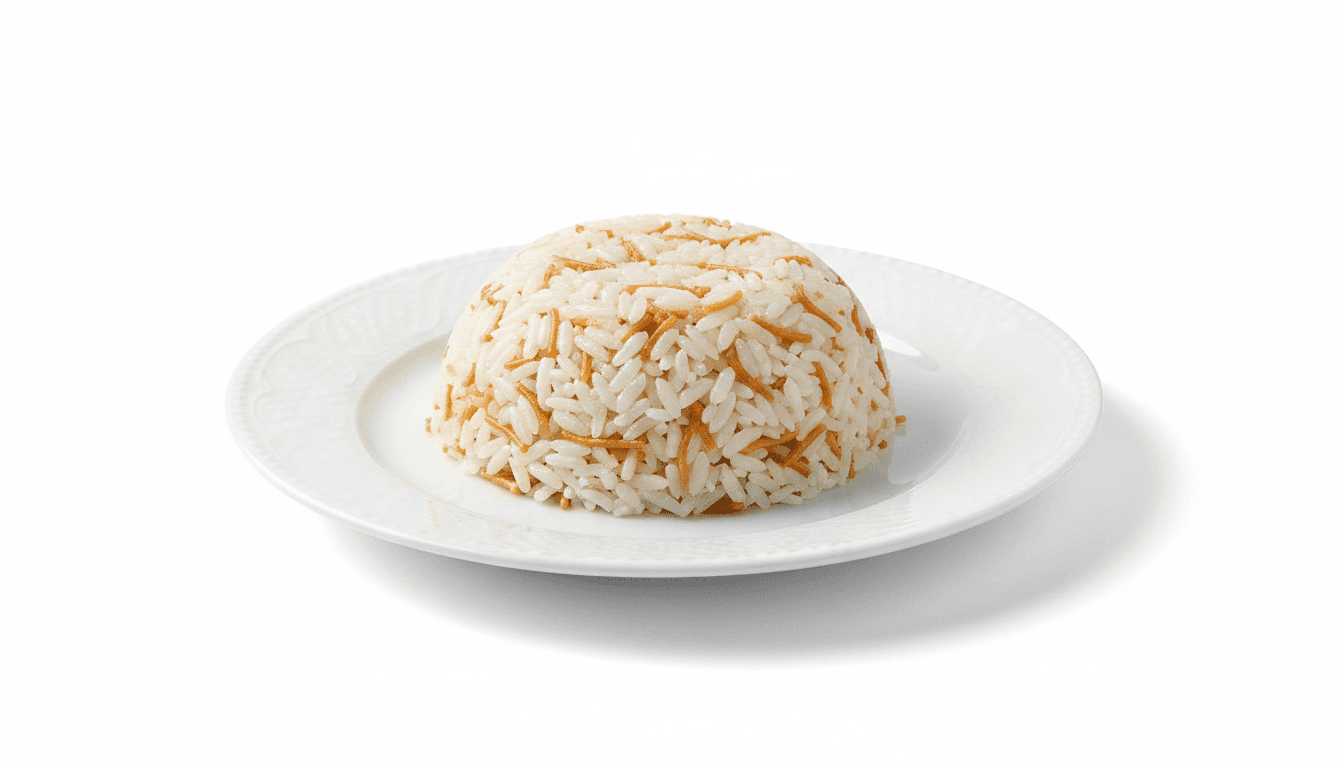
Tane Tane Şehriyeli Pirinç Pilavı
Tane Tane Şehriyeli Pirinç Pilavı·(tah-neh tah-neh sheh-ree-yeh-lee pee-rinch pee-lah-vuh)
Esnaf Lokantası at Home (The Tradesmen’s Lunch)
In a bustling Istanbul tradesmen's restaurant, pilaf isn't an afterthought—it is the indispensable foundation, a humble masterpiece sitting proudly in a bain-marie to catch the juices of rich, slow-cooked stews. The secret to its transcendent, grain-by-grain texture isn't some Michelin-starred parlor trick; it's the quiet, rigorous wisdom of Turkish grandmothers. We trade hard-to-find Baldo rice for standard Calrose to make this work on an American weeknight, but the ritual remains sacred. A saltwater soak to strip the starch, a hard toast in butter, and a tight, towel-draped steeping to capture the final wisp of steam. This is how you build a real pilaf.
Before you start
Strip the surface starch from the rice.
Place the rice in a medium bowl, cover with warm tap water, and add a generous pinch of salt. Let it soak for 15 to 20 minutes, then rinse in a fine-mesh strainer under cold running water until the runoff is perfectly clear. Shake vigorously to ensure it is bone dry.
Ingredients
- Calrose rice1 cup
- orzo1/4 cup
- chicken broth1 1/2 cup
- unsalted butter2 tbsp
- neutral oil1 tbsp
- kosher salt1/2 tsp
- fresh lemon juice4 drops
- granulated sugar1 pinch
Method
- 01
Toast the orzo until dark golden brown.
In a wide, shallow pot with a tight-fitting lid, melt the butter and neutral oil over medium heat. When the butter foams, add the orzo and stir continuously for 2 to 3 minutes until deeply toasted, watching closely so it does not burn.
- 02
Coat and toast the rice grains.
Immediately add the drained rice to the pot. Sauté gently for 3 to 4 minutes until the edges of the rice turn translucent and the grains feel heavy and begin to clump slightly.
- 03
Add the broth and flavor enhancers.
Carefully pour in the hot chicken broth. Immediately add the salt, lemon juice, and sugar, giving the pot just one gentle stir to distribute everything, then bring the liquid to a rapid boil.
- 04
Simmer undisturbed.
Once boiling, immediately drop the heat to the lowest possible simmer and cover the pot. Cook without opening the lid for 12 to 15 minutes, until all surface liquid has evaporated and tiny craters form on the rice.
- 05
Steep the pilaf.
Turn off the heat. Quickly open the lid, drape a clean kitchen towel tightly across the top of the pot, and replace the lid. Let it rest on the warm stove for 10 to 15 minutes to absorb condensation and guarantee a pristine, grain-by-grain texture.
- 06
Fluff and serve.
Remove the lid and towel, gently fluffing the rice with a fork or wooden spoon to distribute the golden orzo evenly before serving.
Notes
The lemon and sugar are non-negotiable.
It might sound strange, but a few drops of lemon keep the rice brilliantly white by inhibiting the Maillard reaction, while a single pinch of sugar rounds out the savory depth of the butter and broth.
Choosing the right rice.
While Baldo rice is the Turkish homeland ideal, standard medium-grain Calrose mimics its plumpness and starch behavior perfectly for American kitchens. Avoid basmati or long-grain white rice, which will yield a drier, unauthentic texture.
From Cook Turkish in America.