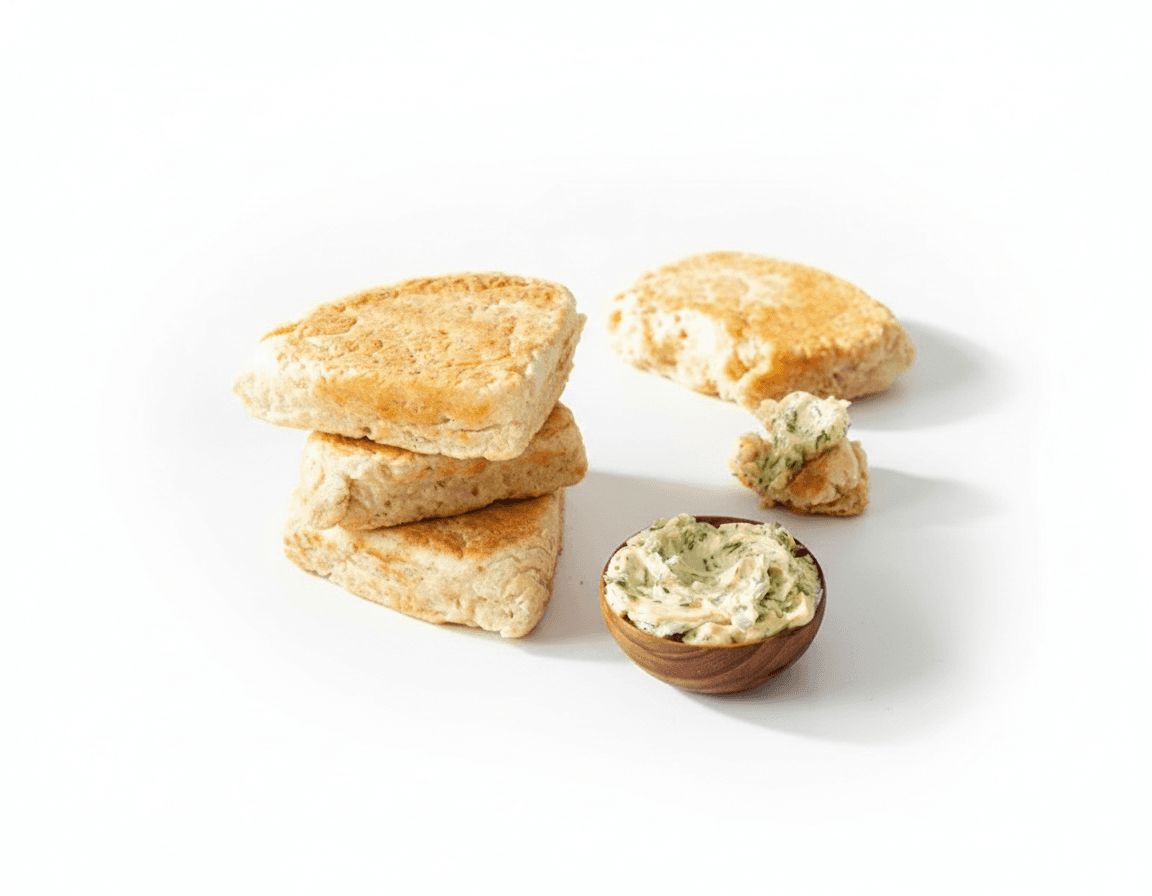
Skillet Soda Farls
Arán Sóide·(uh-rawn soh-juh)
The Morning Fry & The Daily Bake
Before ovens were household standards, Irish grandmothers baked their daily bread on flat iron griddles over glowing turf fires. The soda farl is a masterpiece of unpretentious necessity—a tender wedge leavened by the quick, violent reaction of sour buttermilk and baking soda. It requires no yeast, no waiting, and no special equipment. This is the ultimate weeknight stovetop bread, engineered by history to sop up a runny yolk or carry an obscene smear of good salted butter.
Before you start
Create a weeknight buttermilk substitute if you don't have the real thing on hand.
Pour 1 tablespoon of white vinegar or fresh lemon juice into a measuring jug, then add enough whole milk to reach the 1-cup mark. Stir and let sit for 5 minutes until it curdles and creates the acidic environment required to activate the baking soda.
Ingredients
- all-purpose flour1 cup
- cake flour1 cup
- baking soda1 tsp
- fine sea salt1/2 tsp
- cultured buttermilk1 cup
Method
- 01
Place a large cast-iron skillet on the stove over medium-low heat with absolutely no fat.
Test the heat by dropping a pinch of flour in the center; if it toasts to a tan color in a few moments, the skillet is ready.
- 02
Whisk the all-purpose flour, cake flour, baking soda, and salt together in a large bowl.
Use your hands to lift the mixture up and let it drop back into the bowl a few times to aerate it like the ancestors did.
- 03
Make a well in the center of the flour and pour in three-quarters of the buttermilk.
Using a wooden spoon or your hands, swiftly and gently bring the dough together into a soft, slightly sticky mass, adding the remaining buttermilk only if it feels too crumbly.
- 04
Turn the dough out onto a generously floured countertop and gently fold it over itself three or four times.
Do not knead this like pizza dough. Just bring it into a cohesive ball, pat it down with your palms into a half-inch thick circle, and use a floured knife to cut it straight through into four equal wedges.
- 05
Sprinkle a light dusting of flour directly onto the hot skillet and carefully transfer the four farls into the pan.
Cook them low and slow for 8 to 10 minutes on the first side so they puff into thick pillows and the bottoms turn a deep, crusty golden brown. High heat will scorch the outside and leave the inside raw.
- 06
Carefully flip each farl and cook for another 8 to 10 minutes.
Once both flat sides are done, perform the grandmother's trick known as 'harning': prop the farls up on their flat, cut edges in the skillet for about a minute to toast and seal the pale sides.
- 07
Remove the hot farls from the skillet and immediately wrap them in a clean, dry tea towel.
This traps the steam, slightly softening the crust and keeping the bread perfectly tender while it cools.
Notes
Blend your flour to mimic soft Irish winter wheat.
If you use straight American all-purpose flour, the bread will be tough. A fifty-fifty split of all-purpose and cake flour drops the protein content to the exact level needed for that proper, cakey crumb.
Keep the skillet bone dry.
Resist the American urge to put oil or butter in the pan. Authentic griddle bread gets its rustic, slightly smoky character from toasting on a completely dry, hot, flour-dusted surface.
From Cook Irish-American Food.