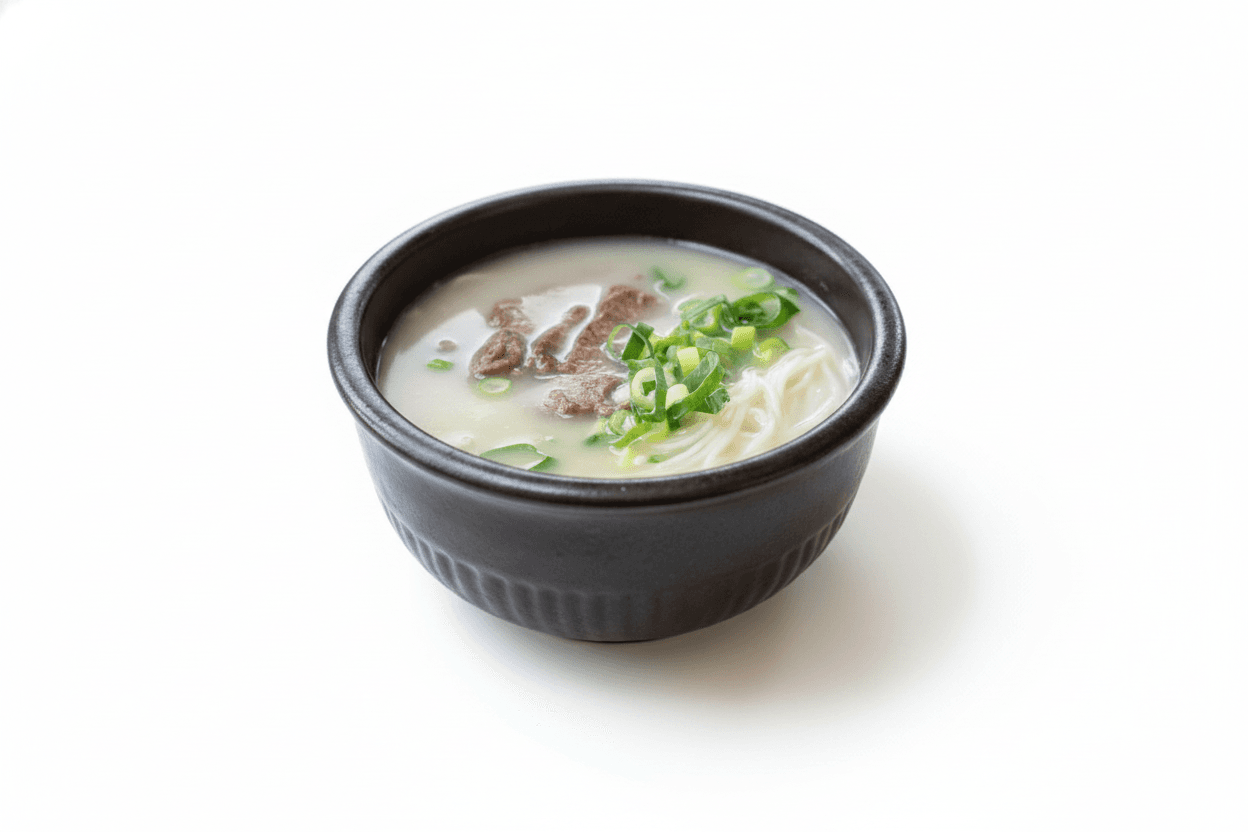
Seolleongtang
설렁탕·(seol-leong-tang)
Halmoni's Weekend Projects
Growing up in an Ohio suburb, winter weekends smelled like one thing: a massive pot of bones boiling into oblivion. This isn't a thirty-minute weeknight hack. It is a weekend project, a masterclass in patience where water and bone violently emulsify into a lip-smacking, snowy white broth. But here is the secret: you put in the time on a lazy Sunday, freeze the liquid gold, and suddenly you are ten minutes away from a deeply authentic, bone-warming bowl of home on a chaotic Tuesday. No bouillon cubes, no artificial whiteners. Just bones, time, and respect.
Before you start
Source the right bones from an Asian market or trusted butcher.
Marrow bones give you the milky color, but the knuckles or ox feet provide the essential collagen and gelatin. Without them, your broth will be thin and watery.
Ingredients
- beef marrow bones3 lb
- cow knuckles or ox feet1 1/2 lb
- beef brisket or beef shank1 1/2 lb
- water7 l
- somyeon8 oz
- cooked white rice4 cup
- scallion1 large
- coarse sea salt1/4 cup
- ground black pepper1 tbsp
- kkakdugi2 cup
Method
- 01
Submerge the bones and meat in cold water for one to two hours to draw out the blood.
Residual blood is the enemy of a clean broth; skip this and you get a murky, gamey stench, so drain the red water completely once finished.
- 02
Bring the bones to a violent boil in fresh cold water for ten minutes, then dump everything down the drain.
It feels like a culinary sin, but it is non-negotiable. Rinse each bone individually under cold water to scrub off the dark coagulated scum, and wash your pot spotless.
- 03
Cover the cleaned bones with seven liters of fresh water and maintain a constant, rolling boil for four hours.
Do not drop the heat to a gentle simmer. You need the physical turbulence of a rolling boil to shatter and emulsify the fat into the water, creating that iconic snowy-white, opaque broth. Top off with boiling water if it drops below the bones.
- 04
Drop the whole brisket into the rolling broth and cook for another hour and a half.
Once the meat pierces easily with a chopstick but isn't falling apart into mush, pull it out, let it cool completely, and slice it thin against the grain.
- 05
Remove the exhausted bones and strain the milky broth into a clean container to chill overnight.
In the morning, peel off the solidified disc of fat from the top and discard it. You are left with pure, gelatinous liquid gold; freeze whatever you aren't eating in the next few days.
- 06
Boil your noodles, heat the broth and sliced meat, and build your bowls.
To serve, pour the boiling white broth over the cooked noodles and warm meat, and serve immediately alongside hot white rice.
Notes
Never salt the pot in the kitchen.
True seolleongtang is served completely unseasoned. Diners hit their own bowls at the table with coarse sea salt, black pepper, heaps of scallions, and a spoonful of red, tangy juice straight from the radish kimchi.
Freeze the extra broth for weeknights.
Once the fat is skimmed off, portion the gelatinous broth into containers and freeze. You will be ten minutes away from an authentic meal on a busy Tuesday.
From Cook Korean in America.