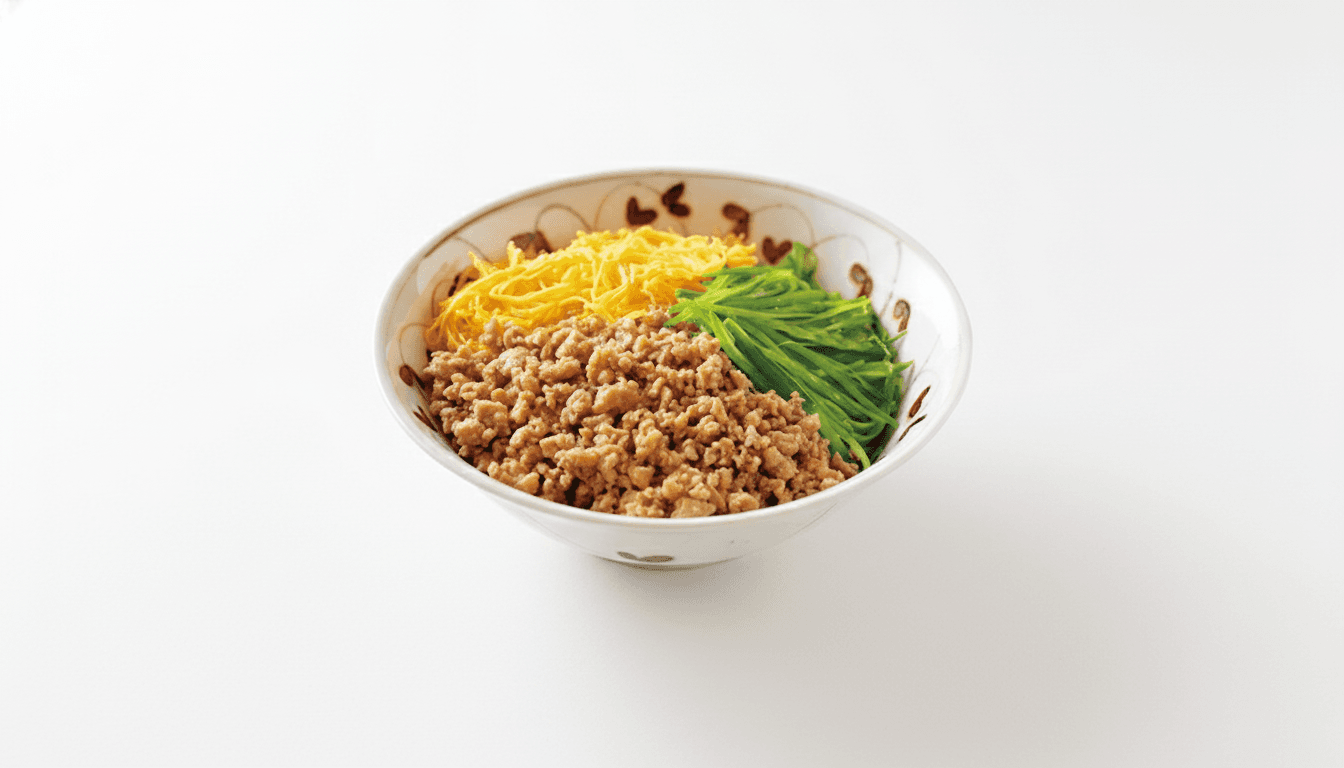
Sanshoku Soboro Don
三色そぼろ丼·(san-sho-ku so-bo-ro don)
Japanese Breakfasts & Bento Boxes
This is the ultimate Japanese weeknight meal and bento box champion—pure, unadulterated nostalgia in a bowl. The secret to making it taste exactly like it does in a Tokyo kitchen isn't an obscure, imported ingredient, but an unapologetically functional approach to heat and agitation. By mixing the ground meat with its sweet and savory marinade before the pan even gets hot, you force the proteins to separate into a delicate, crumbly texture rather than seizing into tough meatballs. Keep it simple, attack the pan with a fistful of chopsticks, and let the rendered fat and caramelized soy sauce do the heavy lifting.
Before you start
Prepare the snow peas.
Bring a small pot of salted water to a rolling boil, drop in the snow peas for 1 minute until bright green, then drain, shock in cold water, and slice diagonally into thin matchsticks.
Ingredients
- cooked short-grain Japanese white rice3 cup
- ground chicken thigh1 lb
- fresh ginger1 tbsp
- dark soy sauce3 tbsp
- mirin3 tbsp
- sake4 tbsp
- granulated sugar4 1/2 tbsp
- large eggs4 large
- kosher salt1/4 tsp
- neutral oil1 tsp
- fresh snow peas1 cup
Method
- 01
Whisk the egg mixture.
Crack the eggs into a mixing bowl, add 1 1/2 tablespoons of the sugar, 1 tablespoon of the sake, and the salt, then whisk thoroughly until completely smooth.
- 02
Scramble the eggs into fine curds using the four-chopstick method.
Heat a non-stick frying pan over medium-low heat with the neutral oil. Pour in the eggs and immediately begin stirring rapidly in small circles with four wooden chopsticks bunched together in your hand. If the eggs clump or cook too fast, lift the pan off the heat while continuing to stir wildly until they resemble tiny, fluffy, dry yellow pebbles, then transfer to a clean bowl and wipe the pan clean.
- 03
Mix the raw chicken and liquids in a cold pan.
With the stove completely off, place the raw ground chicken into the cold pan and pour the grated ginger, soy sauce, mirin, and the remaining 3 tablespoons of sake and 3 tablespoons of sugar directly over the meat. Mash and mix aggressively with your four chopsticks until it forms a uniform, soupy slurry with no visible distinct clumps of meat.
- 04
Simmer and reduce the chicken mixture.
Turn the heat to medium and stir continuously with the chopsticks as the liquid comes to a vigorous simmer. Continue cooking and stirring for 5 to 8 minutes as the massive amount of liquid aggressively boils off.
- 05
Caramelize the rendered fat and sugars.
Once the liquid has almost entirely evaporated, the sound will change from a boil to a sizzle as the chicken begins to fry in its own rendered fat. Stir for another 60 seconds to allow the sugars to glaze the meat, removing from heat once dragging a spatula across the bottom of the pan leaves a clean trail.
- 06
Assemble the three-color bowls.
Divide the hot, fluffy rice evenly among serving bowls to act as a warming canvas. Visually divide the surface of each bowl into thirds, spooning the dark savory chicken into one third, the bright yellow eggs into the second, and the vibrant green snow peas into the final section.
Notes
The crucial cold-start technique.
Browning ground chicken in a hot pan causes the proteins to seize into irreversible, tough lumps. Saturating the meat with cold liquid before heat is applied forces it to physically separate into the delicate, crumbly texture necessary for authentic soboro.
Embrace the golden ratio.
The 1:1:1:1 ratio of soy sauce, sugar, sake, and mirin is the undisputed champion of Japanese home cooking. It provides the perfect balance of salt, sweetness, tenderization, and a glossy glaze.
Meal prep and bento boxes.
The high salt and sugar content acts as a natural preservative. The cooked chicken keeps beautifully in an airtight container in the fridge for up to five days, making it an indispensable tool for packed lunches.
From Cook Japanese in America.