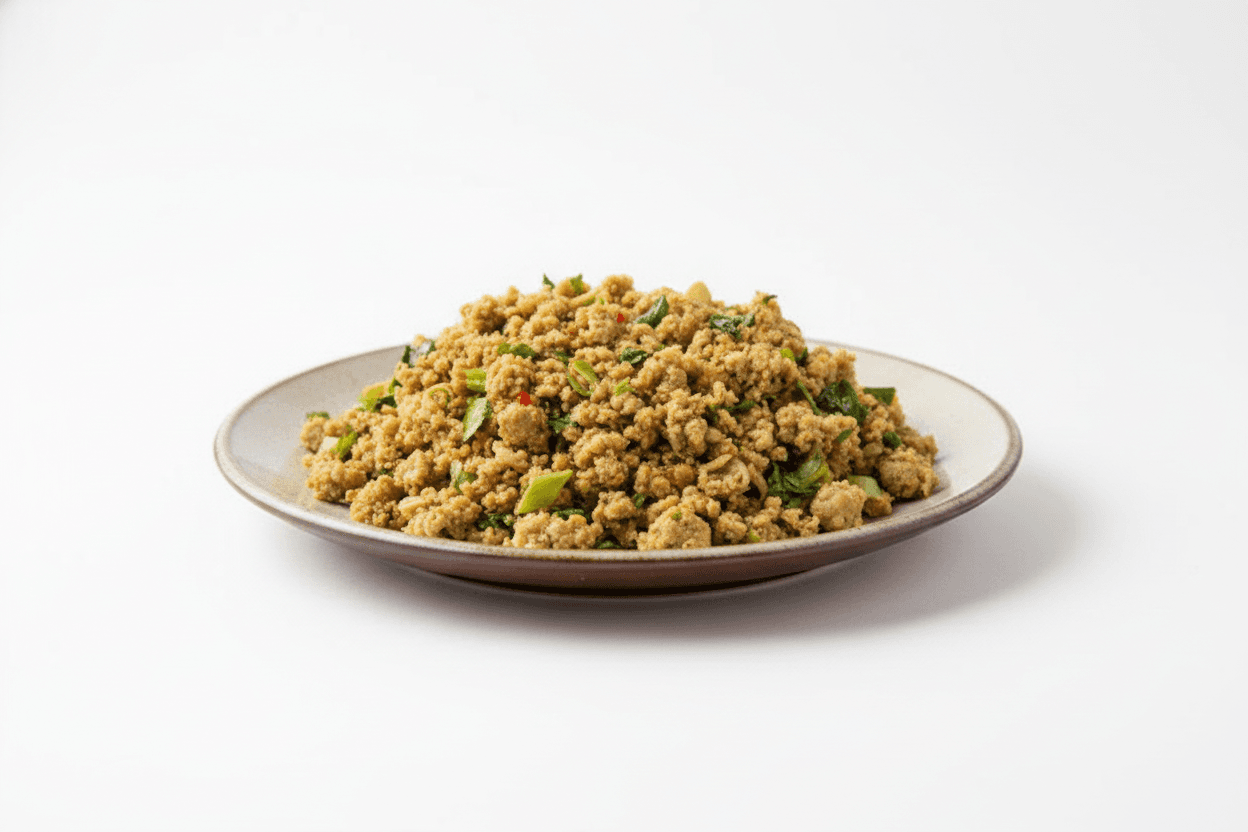
Sai Ua "Uncased"
ไส้อั่วปั้นก้อน·(sai ua pan kon)
Sunday Heritage Simmers & Regional Thai Traditions
The smell of Sai Ua means a special occasion—an intensely aromatic, turmeric-stained pork sausage historically made during all-day communal events in Chiang Mai. But for a first-generation cook in an Ohio suburb on a Tuesday night, nobody has time to mess with sausage casings. The secret to this Northern Thai masterpiece isn't the casing at all; it’s the aggressive kreung gaeng paste and the uncompromising ratio of fat to lean pork. By utilizing the traditional pan kon (patty) method, cooks skip the fussy charcuterie work, kneading a vibrant paste of lemongrass, fresh turmeric, and Makrut lime directly into deeply marbled pork to achieve a thirty-minute weeknight meal that tastes exactly like the smoke-filled night markets of the homeland.
Before you start
Prepare your aromatics meticulously.
The lemongrass and Makrut lime leaves must be sliced as thinly as humanly possible to prevent tough, woody textures in the final patties.
Ingredients
- Thai red curry paste3 tbsp
- fresh turmeric root1 tbsp
- fresh lemongrass2 stalks
- fresh garlic3 cloves
- coriander seeds1 tsp
- ground pork1 1/2 lb
- Makrut lime leaves6 large
- scallions3 med
- fresh cilantro1/4 cup
- fish sauce1 tbsp
- light soy sauce1 tsp
- brown sugar1 tsp
- neutral cooking oil1 tbsp
Method
- 01
Fortify the curry paste.
In a large mixing bowl, combine the red curry paste, fresh turmeric, minced lemongrass, garlic, and ground coriander, mashing them together with the back of a spoon until the fresh aromatics are completely stained yellow.
- 02
Knead the meat and aromatics to extract the protein.
Add the ground pork, Makrut lime leaves, scallions, cilantro, fish sauce, light soy sauce, and brown sugar to the bowl, then use your bare hands to aggressively knead and squeeze the mixture for about three to four minutes until it becomes intensely tacky and holds together in a solid mass.
- 03
Perform a quick taste test.
Pinch off a marble-sized piece of the raw mixture, microwave it on a saucer for twenty seconds until cooked through, and taste it to see if you need to adjust the fish sauce or sugar before shaping the rest.
- 04
Shape the mixture into rustic patties.
With slightly wet hands to prevent sticking, scoop up about three tablespoons of the meat and roll it into a ball, flattening it into a two-inch wide, half-inch thick patty.
- 05
Pan-fry the patties slowly.
Heat the neutral oil in a large cast-iron or non-stick skillet over medium-low heat and cook the patties in batches for four to five minutes per side, allowing them to slowly caramelize and char without burning the delicate herbs.
- 06
Serve immediately.
Transfer the cooked patties to a paper towel-lined plate and serve hot alongside warm sticky rice, cucumber slices, and crisp cabbage leaves.
Notes
Respect the pork fat constraint.
Standard American supermarkets often sell ground pork that is far too lean. If you can only find lean pork, ask the butcher to grind in a bit of pork belly, or mix one to two tablespoons of cold water into the meat during the kneading phase to introduce much-needed moisture.
Sourcing Makrut lime leaves is non-negotiable.
These are the soul of Sai Ua and cannot be substituted with standard lime zest; buy a large pack at an Asian market and keep them in your freezer, where they will last for months and slice perfectly from frozen.
Embrace the yellow hands.
Authentic Sai Ua is bright yellow inside, and your hands will be temporarily stained by the turmeric—this is simply the mark of a true Northern Thai cook.
From Cook Thai in America.