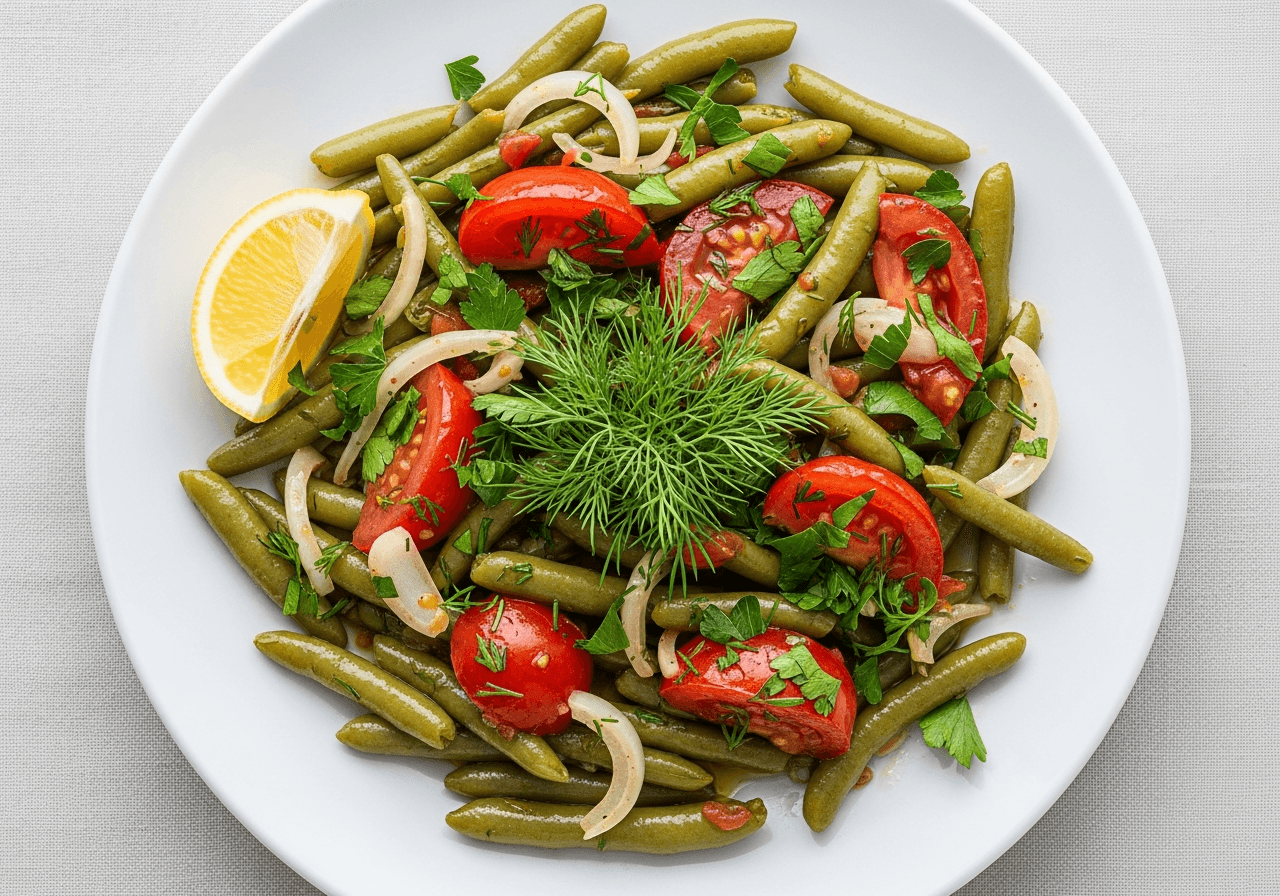
Romano Beans in Olive Oil
Zeytinyağlı Taze Fasulye·(zay-tin-yah-luh tah-zeh fah-sool-yeh)
Zeytinyağlılar (The Olive Oil Cooling Rack)
If there is one dish that defines the smell of a Turkish summer, it is Zeytinyağlı Taze Fasulye. Generic recipes will tell you to sauté the onions and boil the beans until crisp. Ignore them. To make this taste exactly like an Aegean grandmother’s kitchen, we use the çiğden method—layering everything raw into the pot—and braise it low and slow under a parchment paper lid. There is no tomato paste here; just the pure, bright marriage of sweet summer tomatoes, copious amounts of extra virgin olive oil, and a crucial pinch of sugar to make the sauce shine. The best part for a busy weeknight? It takes fifteen minutes to prep, and tastes even better the next day straight from the fridge.
Before you start
Prep the beans the traditional way.
Lay the flat Romano bean on your cutting board and carefully run your knife lengthwise down the center to split it in half before cutting crosswise. This exposes the inner cellular structure, allowing the olive oil to penetrate deeply.
Grate the tomatoes.
Grate fresh tomatoes on the large holes of a box grater until you are left with just the skin in your hand, then discard the skin.
Ingredients
- fresh Romano beans1 lb
- yellow onion1 large
- ripe summer tomatoes3 large
- garlic4 med cloves
- extra virgin olive oil1/3 cup
- granulated sugar1 1/2 tsp
- kosher salt1 tsp
- hot water1/4 cup
Method
- 01
Assemble the raw layers.
Do not turn on the heat yet. Scatter the finely diced onions evenly across the bottom of a wide, heavy-bottomed pot or Dutch oven, then pile the prepared beans evenly over the onions and top with the grated tomatoes and sliced garlic.
- 02
Season and dress the vegetables.
Sprinkle the salt and sugar evenly over the top, then drizzle the one-third cup of olive oil over the whole mountain.
- 03
Create a parchment paper seal.
Tear off a piece of parchment paper slightly larger than your pot, crumple it, run it briefly under cold tap water, and flatten it out. Tuck this wet paper directly onto the surface of the beans and tomatoes like a blanket, then place the heavy pot lid on top.
- 04
Braise low and slow.
Place the pot over medium heat until you hear the tomatoes begin to simmer, about five to ten minutes. Immediately drop the heat to the absolute lowest setting and let the beans braise undisturbed for 45 to 55 minutes, adding the hot water only if the pot sounds like it's frying rather than gently simmering.
- 05
Cool the beans in the pot.
Once the beans have lost their raw green color and are meltingly tender, turn off the heat. Remove the parchment paper, drizzle the final tablespoon of raw olive oil over the top for shine, and immediately put the lid back on.
- 06
Rest until room temperature.
Do not serve the beans hot. Leave the pot exactly where it is for about two hours so the cooling beans can act like sponges, absorbing the olive oil and tomato juices into a velvety glaze.
Notes
Never use tomato paste.
Authentic Aegean recipes strictly forbid the use of salça in this dish; the sauce relies entirely on the bright acidity of fresh summer tomatoes to keep the oil translucent and unclouded.
Sugar is structural, not sweet.
The addition of sugar neutralizes the raw acidity of the tomatoes and interacts with the olive oil to create the dish's famous glossy shine.
From Turkish Heritage Kitchen.