Pica-Pau Rápido
Pica-Pau Rápido·(pee-kah-pow rah-pee-doo)
Despensa Luso-Americana
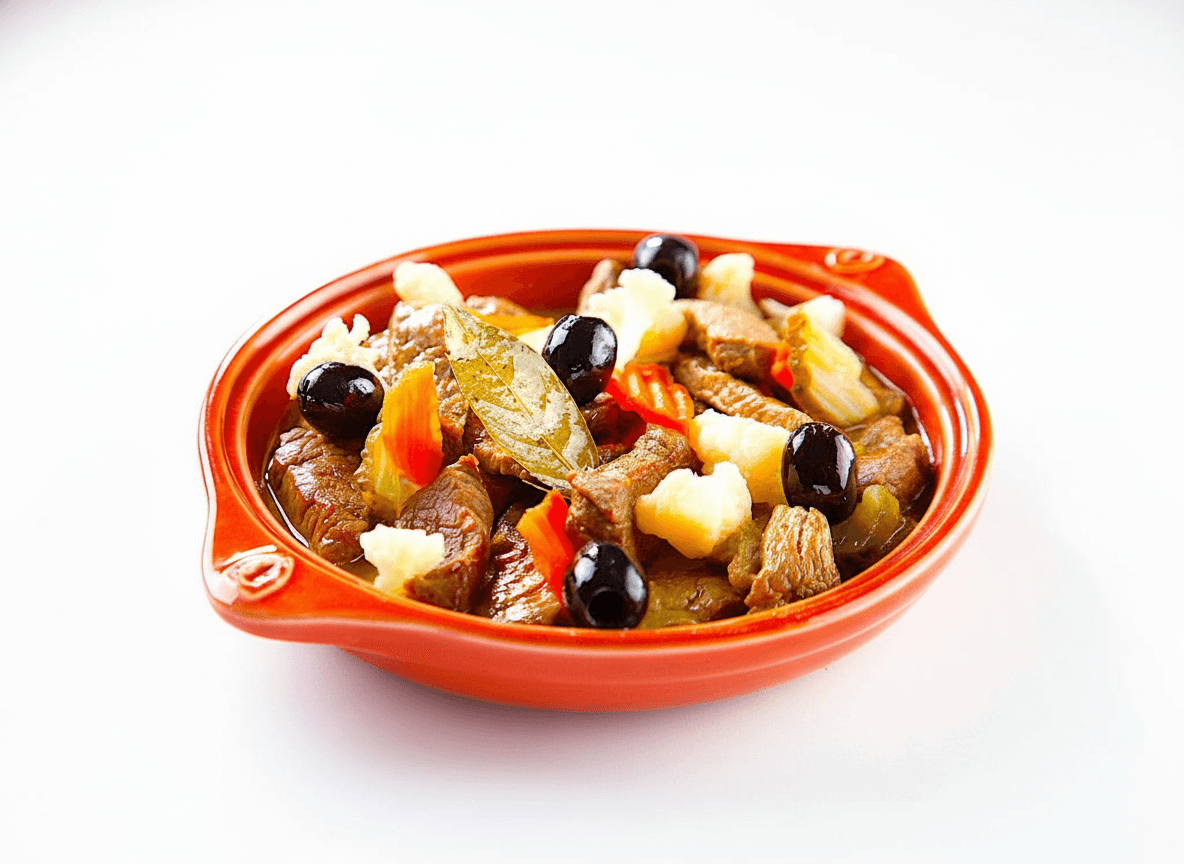
For anyone raised in a Portuguese-American household, the smell of garlic and bay leaves hitting hot olive oil is the immediate, visceral scent of home. Pica-Pau—literally "woodpecker"—is the ultimate tavern food, meant to be shared straight from the pan, pecked at with toothpicks, and chased with cold beer. Overcomplicated versions try to turn this into a stew, but the old-world secret your grandmother knew is simply a lightning-fast, high-heat pan fry. Using accessible American sirloin and a jar of supermarket giardiniera to stand in for traditional Portuguese pickles, this is a deeply nostalgic masterpiece you can pull off on a random Tuesday night.
Before you start
Pat the beef completely dry with paper towels.
Moisture is the enemy of a good sear, and a hard crust is structurally essential to the dish.
Ingredients
- sirloin steak1 1/2 lb
- kosher salt1 tsp
- black pepper1/2 tsp
- extra-virgin olive oil2 tbsp
- unsalted butter3 tbsp
- garlic4 large cloves
- dried bay leaves2
- light beer1/2 cup
- Dijon mustard1 tbsp
- hot sauce1 tsp
- mild Italian giardiniera1/2 cup
- pitted black olives1/4 cup
- fresh parsley2 tbsp
- crusty bread1 loaf
Method
- 01
Sear the beef over high heat and remove it immediately.
Season the dried beef generously with salt and pepper. Heat the olive oil and 1 tablespoon of butter in a large, heavy-bottomed skillet over high heat. Add the beef in a single layer, undisturbed, for 2 minutes to build a deep crust. Flip and sear for 1 more minute until browned but still rare inside, then immediately transfer the meat to a clean plate.
- 02
Bloom the aromatics in the residual fat.
Lower the heat to medium. Do not wipe out the pan—those browned bits are essential. Toss in the smashed garlic cloves and cracked bay leaves, stirring for about a minute until highly fragrant and turning golden.
- 03
Deglaze the pan and emulsify the sauce.
Pour in the beer to forcefully deglaze the pan, scraping up all the caramelized bits with a wooden spoon. Let it reduce by half for about 2 minutes to cook off the alcohol. Whisk in the Dijon mustard and hot sauce, then drop in the remaining 2 tablespoons of cold butter, swirling continuously until it melts into a glossy, thickened gravy.
- 04
Return the beef to the pan just to warm through.
Pour the reserved beef and its resting juices back into the skillet. Toss everything in the sauce for about 60 seconds. Do not cook the beef further; it must remain incredibly tender.
- 05
Fold in the garnishes off the heat and serve.
Turn off the heat entirely. Fold in the chopped giardiniera and black olives so they warm slightly without losing their acidic crunch. Scatter with parsley and serve straight from the pan with toothpicks and plenty of crusty bread.
Notes
The Supermarket Pickle Hack
Traditional Portuguese pickles are a simple vinegar brine of carrots, cauliflower, and cucumbers. Mild Italian giardiniera is a flawless American supermarket substitute that provides the exact same crunch and acidic punch required to cut through the rich meat.
Do Not Overcook the Beef
The most common mistake made in diaspora kitchens is boiling the meat in the sauce. Treating it as a two-step process—searing first, making the sauce in the empty pan, then reuniting them—guarantees a tender bite.