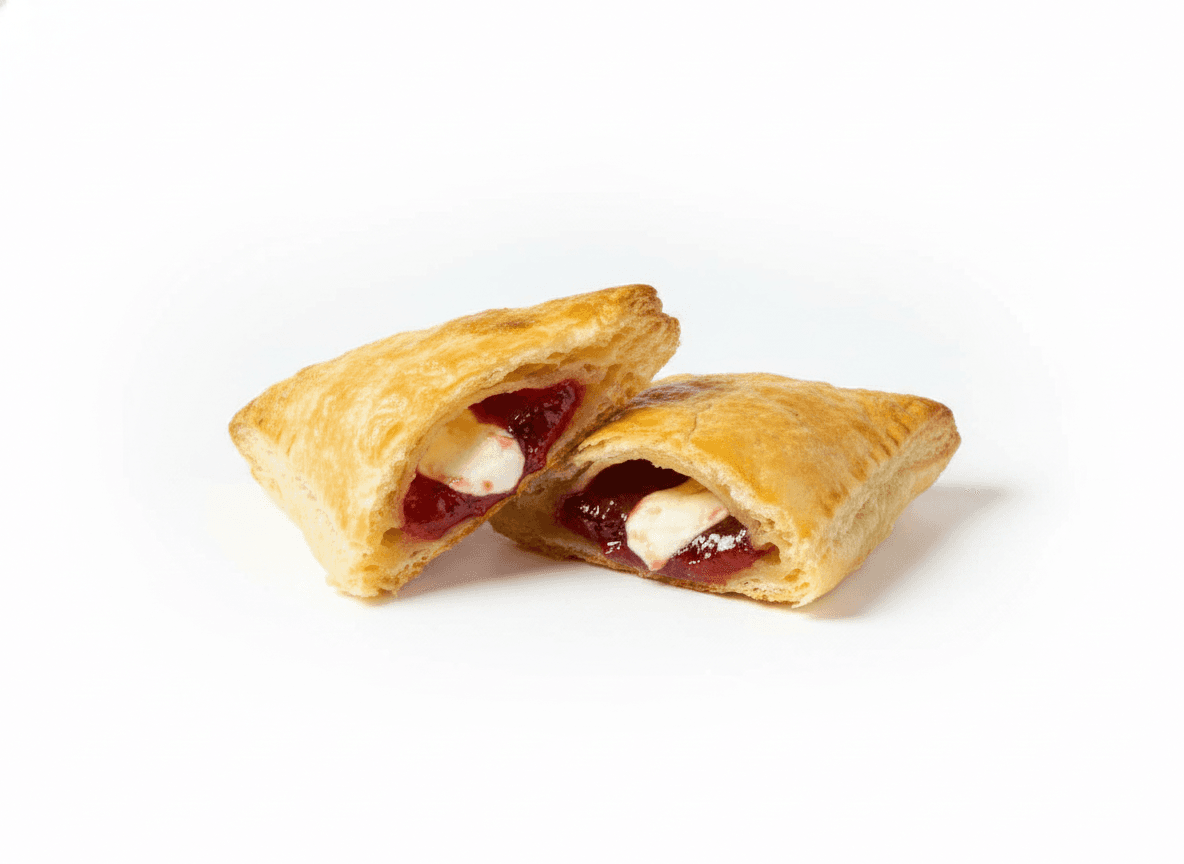
Pastelitos de Guayaba y Queso
Pastelitos de Guayaba y Queso·(pah-steh-lee-tos de gwah-yah-bah ee keh-so)
La Ventanita at Home (Mornings & Miami Rhythms)
If you grew up near a Cuban enclave, your weekend mornings smelled exactly like this. The pastelito is the undisputed king of the Miami bakery window—a brilliant, unpretentious masterclass in contrasts where shatteringly crisp dough gives way to molten, hyper-sweet guava, only to be abruptly cut by the cold lactic tang of pure cream cheese. Grandmothers across the diaspora figured out how to recreate this magic using standard American supermarkets without losing the soul of the dish. They embraced commercial puff pastry, refused to sugar the cheese, and finished the bake with a sticky sugar syrup that demands you lick your fingers. It’s a perfect reproduction of the ventanita experience, engineered for a Tuesday night.
Before you start
Thaw the puff pastry.
Leave the frozen sheets at room temperature for 40 minutes, or wrap in a damp paper towel and microwave on defrost in 15-second bursts just until pliable enough to unfold without snapping. Do not let the butter melt.
Ingredients
- frozen puff pastry sheets1 pkg
- guava paste10 oz
- full-fat cream cheese8 oz
- large egg1 large
- water1 tbsp
- granulated white sugar1/4 cup
- water1/4 cup
Method
- 01
Preheat the oven to 400°F.
High heat is mandatory; it is what shocks the commercial puff pastry into rising into hundreds of flaky layers. Line a large rimmed baking sheet with parchment paper.
- 02
Section the base dough.
Unfold the first sheet of thawed puff pastry directly onto your parchment-lined baking sheet and cut it into a 3x3 grid to create nine equal squares.
- 03
Layer the cheese and guava.
Place one slice of cold cream cheese in the dead center of each pastry square, then top it with a slice of guava paste, making sure to leave a distinct, empty border around the dough edges.
- 04
Seal the pastry pockets.
Brush the exposed borders with a mixture of the beaten egg and one tablespoon of water. Place a matching, pre-cut square of puff pastry on top of each base, and press the edges down firmly with your fingertips to seal.
- 05
Vent the top crusts.
Using a sharp paring knife, cut two to three small slits directly in the top center of each pastelito. Do not skip this, or the steam from the filling will rupture the sides of the pastry.
- 06
Apply the egg wash and bake.
Brush the entire surface of the pastries generously with the remaining egg wash, then transfer to the middle rack of the oven. Bake for 20 to 25 minutes until deeply puffed and a rich, dark golden brown.
- 07
Boil the bakery glaze.
While the pastries are in their final 5 minutes of baking, combine the sugar and 1/4 cup of water in a small saucepan. Bring to a rapid boil over medium-high heat for 3 to 4 minutes until the sugar dissolves into a light syrup.
- 08
Glaze the hot pastries.
Immediately brush the hot syrup generously over the pastelitos the second they emerge from the oven to create that iconic, sticky shine. Let them cool for at least 15 minutes before serving so the molten guava does not burn your mouth.
Notes
Do not buy guava jelly or jam.
You must buy the firm block of guava paste, usually found wrapped in plastic or in a tin in the international aisle. Jelly possesses too much free water and will violently boil out of the pastry.
Leave the cream cheese alone.
Do not whip the cheese or add sugar or vanilla to it. The traditional profile relies entirely on the unsweetened tang of the cheese cutting through the extreme sweetness of the guava paste.
Skip the glaze if you are short on time.
If you want to skip boiling the simple syrup, simply sprinkle two tablespoons of turbinado or granulated sugar over the egg-washed pastries right before baking.
From Cook Cuban in America.