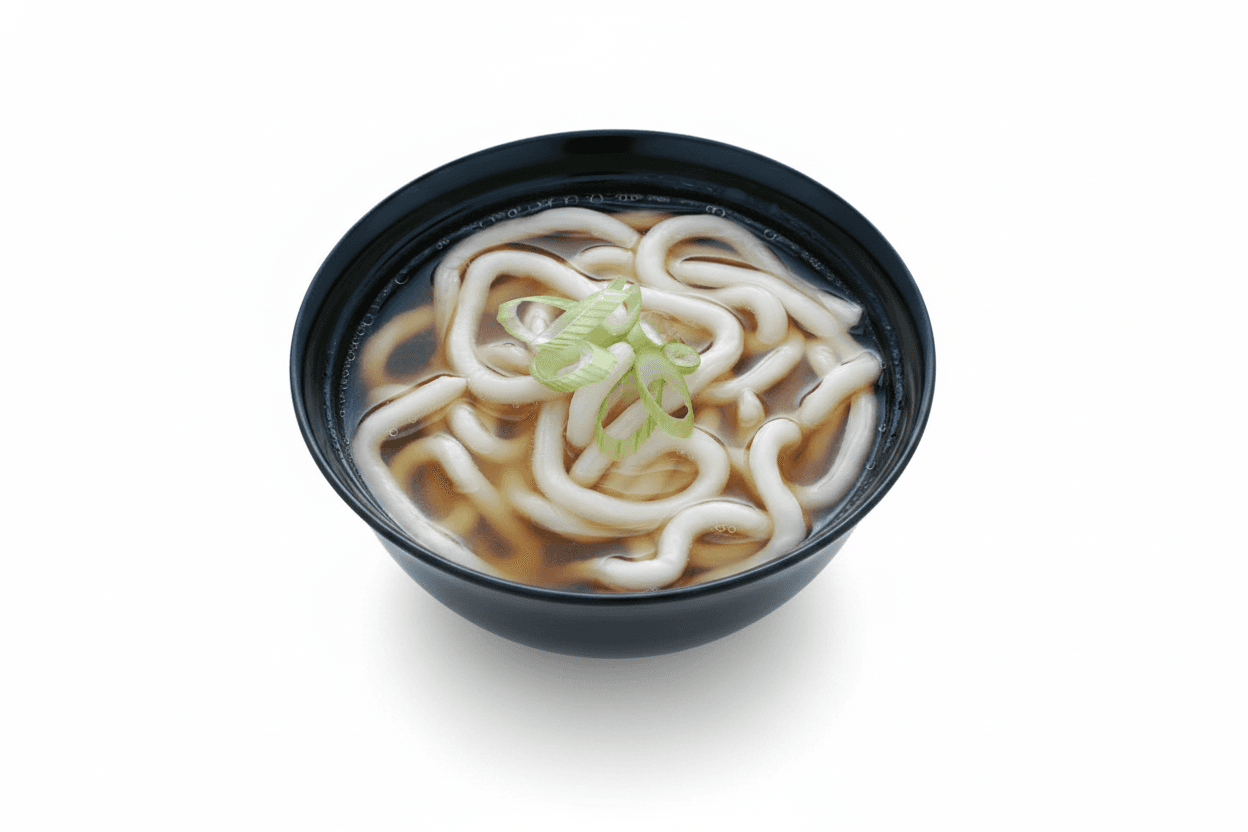
Obaachan's Kake Udon
かけうどん·(kake udon)
Obaachan's Wisdom: Healing & Zero Waste
Kake udon is the chicken noodle soup of Japan, the ultimate restorative bowl passed down from an Obaachan's kitchen when you were tired, cold, or coming down with something. The Kansai-style broth is pale gold and profoundly savory—a masterclass in restraint that relies on a non-negotiable golden ratio of dashi, light soy, and mirin. And because a Japanese grandmother wastes nothing, the spent kelp and bonito used to brew that dashi are given a second life. They are simmered down into a sweet, sticky relish called tsukudani, turning a fast, healing bowl of weeknight noodles into a profound lesson in respecting the ingredient.
Before you start
Prepare the dashi.
If making homemade awase dashi from scratch, reserve the wet, spent kombu and katsuobushi after straining so you can make the zero-waste tsukudani relish.
Ingredients
- awase dashi3 cup
- usukuchi shoyu3 tbsp
- hon-mirin4 tbsp
- sake4 tsp
- kosher salt1/4 tsp
- frozen sanuki udon blocks2 large
- scallions2 med
- kamaboko1 oz
- tenkasu2 tbsp
- shichimi togarashi1/4 tsp
- spent kombu1 med
- spent katsuobushi1/2 cup
- koikuchi soy sauce1 tbsp
- sugar1 tsp
- toasted white sesame seeds1 tsp
Method
- 01
Build the golden broth.
In a medium pot, combine the dashi, usukuchi shoyu, three tablespoons of the hon-mirin, and one teaspoon of the sake over medium heat. Let it bubble gently for one to two minutes—a crucial step to burn off the harsh alcohol and leave behind only the deep, rounded sweetness. Taste, adjust with salt if necessary, and drop the heat to keep it steaming hot.
- 02
Cook the noodles from frozen.
Bring a large, separate pot of water to a rolling boil and drop the frozen udon blocks straight in. Do not force them apart with chopsticks or they will break; just let the boiling water naturally loosen them for about a minute until they achieve that perfect, bouncy chew.
- 03
Rinse away the surface starch.
Drain the noodles into a colander and briefly rinse them under hot running water. It is an old-school trick to wash away the gelatinized starch on the exterior, ensuring your delicate golden broth stays crystal clear in the bowl.
- 04
Assemble the bowls.
Divide the hot, rinsed noodles between two deep bowls and ladle that steaming, fragrant broth right over the top. Garnish with the sliced kamaboko, scallions, and a handful of crunchy tenkasu, and serve immediately with a dash of shichimi togarashi.
- 05
Transform the dashi leftovers into tsukudani.
Place the chopped, wet kombu and katsuobushi into a small saucepan with the koikuchi soy sauce, the remaining tablespoon of hon-mirin, the remaining tablespoon of sake, and the sugar. Simmer over medium-low heat, stirring frequently, until the liquid evaporates and the mixture turns into a sticky, caramelized glaze, then fold in the sesame seeds to serve over plain white rice.
Notes
The Weeknight Dashi Shortcut.
If you don't have time to make scratch dashi, drop two premium dashi packets into three cups of water, simmer for five minutes, remove the packets, and proceed with the soy sauce and mirin. In a pinch, one and a half teaspoons of granulated hondashi dissolved in hot water will do the trick.
From Cook Japanese in America.