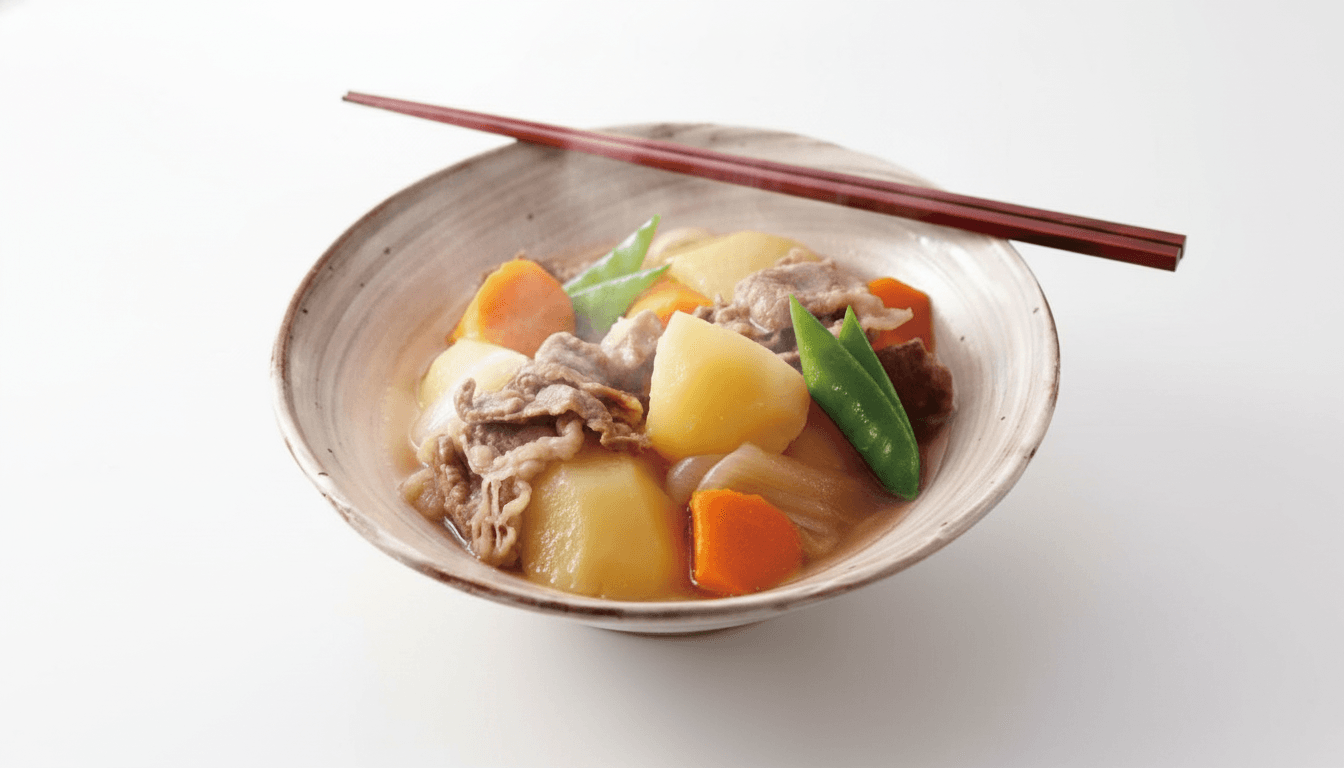
Nikujaga
肉じゃが·(nee-koo-jah-gah)
Weeknight Okazu: The Savory Sides
Nikujaga is the undisputed king of ofukuro no aji—the taste of mother. It’s a humble, working-class stew born from a botched attempt to recreate British naval rations, utilizing a shimmering, savory-sweet dashi broth instead of a thick roux. The magic here isn't a rare ingredient, it's a profound understanding of how things cook: potatoes absorb flavor not when they boil, but when they cool. Whether your family used paper-thin beef in Kansai or rich pork belly in Kanto, this is the authentic, unembellished taste of a Japanese home.
Before you start
Soak the potatoes.
Soaking cut Russet or Yukon Gold potatoes in cold water for 10 minutes removes excess surface starch, which stops your broth from turning into a thick, gluey mess.
Create a makeshift drop lid (otoshibuta).
If you don't own a traditional wooden drop lid, simply cut a piece of aluminum foil or parchment paper into a circle slightly smaller than your pot and poke a small hole in the middle for steam to escape.
Ingredients
- thinly sliced beef or pork1/2 lb
- Yukon Gold or Russet potatoes1 lb
- yellow onion1 large
- carrot1 med
- shirataki noodles7 oz
- neutral cooking oil1 tbsp
- snow peas or green beans1/2 cup
- dashi2 cup
- sake2 tbsp
- mirin2 tbsp
- white or light brown sugar2 tbsp
- soy sauce3 1/2 tbsp
Method
- 01
Heat the oil in a medium, heavy-bottomed pot over medium heat and sauté the meat until it just begins to lose its raw color.
- 02
Add the onions, carrots, and drained potatoes to the pot.
Sauté everything together for about three minutes. Coating the potatoes in oil creates a slight protective barrier, helping them maintain their shape during the long simmer.
- 03
Pour in the dashi and bring the pot to a simmer.
You will see foam rise to the surface; use a fine-mesh skimmer or a spoon to gently skim this off to ensure a clean-tasting broth.
- 04
Apply the Sashisuseso rule of seasoning by adding the sugar, sake, and mirin first.
Do not add the soy sauce yet. If you add the saltiness now, it will lock the exterior of the potatoes and the sweetness will never penetrate the center.
- 05
Add the chopped shirataki noodles, cover directly with a drop lid, and simmer undisturbed on medium-low for 10 minutes.
The drop lid forces the bubbling broth to cascade back down over the ingredients, ensuring even cooking without having to stir and break the fragile potatoes.
- 06
Lift the lid, pour in the soy sauce, and replace the lid to simmer for another 10 to 12 minutes.
Cook until a skewer glides effortlessly through the thickest piece of potato.
- 07
Turn off the heat and let the pot sit undisturbed for at least 30 minutes.
This is the grandmother's secret. As the temperature drops, the potatoes act like sponges, pulling the savory-sweet broth deep into their cores.
- 08
Gently reheat the stew over medium-low heat and serve in individual bowls.
Ensure everyone gets a fair share of meat and potatoes, pour a generous ladle of broth over the top, and scatter with the bright green snow peas.
Notes
The East-West meat divide.
In Western Japan (Kansai), 'meat' implicitly means beef, so use paper-thin ribeye or chuck. In Eastern Japan (Kanto) and the north, pork is king, making thinly sliced pork belly or shoulder the authentic choice. Both are entirely correct.
Sourcing the meat.
Pre-sliced shabu-shabu meat from an Asian market is ideal. Alternatively, place a well-marbled steak or piece of pork belly in the freezer for thirty minutes until firm, then slice it paper-thin yourself.
From Cook Japanese in America.