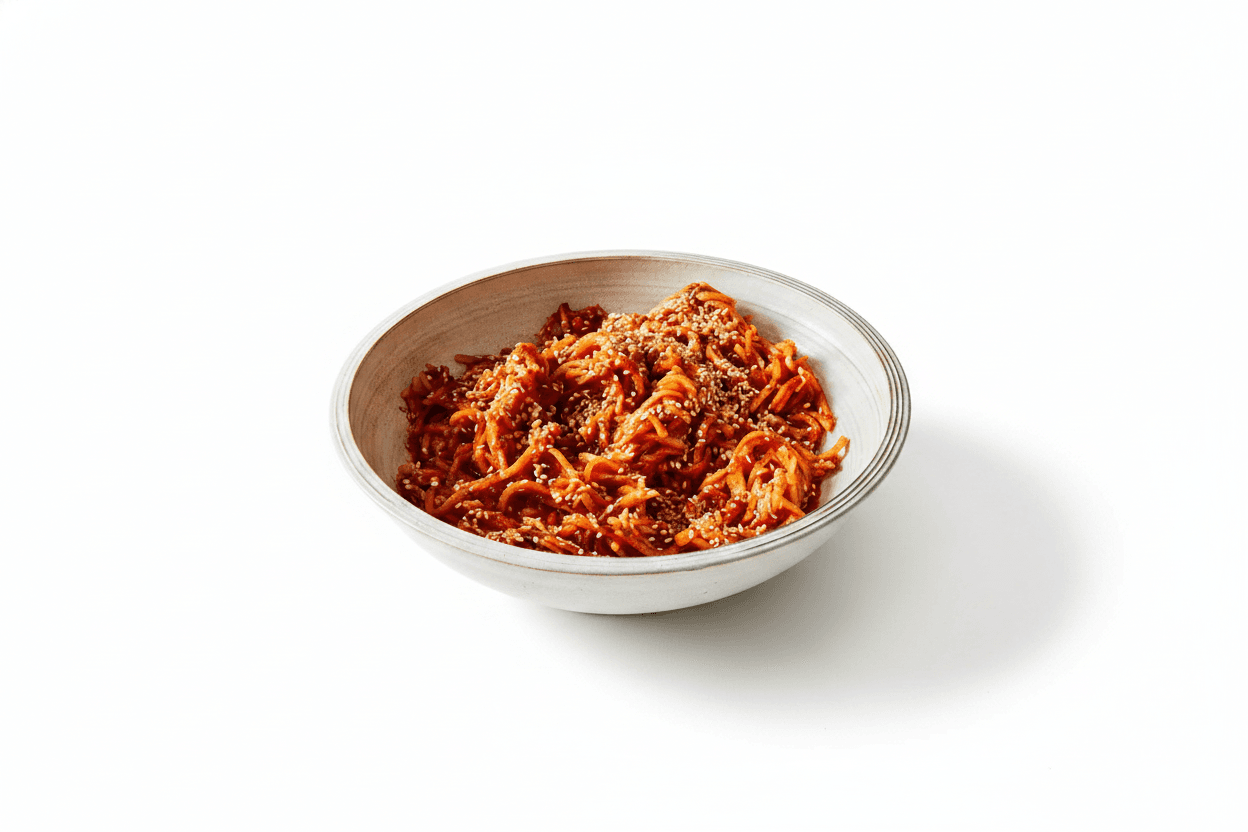
Mu-saengchae
무생채·(mu-saengchae)
The Everyday Babsang
If you grew up in a Korean household, the smell of toasted sesame oil and pungent garlic mixing with sweet, raw radish is the smell of home. This isn't the watered-down, heavily salted version you find in bad food court bibimbap. The real trick, the grandmother’s secret, is to skip the salting step entirely and massage the naked, julienned radish directly with chili flakes. It locks in the crunch, dyes the radish a brilliant ruby red, and creates a glorious, spicy juice at the bottom of the bowl that is absolutely mandatory for mixing into your next bowl of rice.
Ingredients
- Korean radish or Daikon1 lb
- gochugaru2 tbsp
- Korean fish sauce1 1/2 tbsp
- saeujeot1 tsp
- sugar or plum extract1 tbsp
- garlic1 tbsp
- ginger1/2 tsp
- scallions2 large
- toasted sesame seeds1 tbsp
Method
- 01
Slice the radish into matchsticks with the grain to preserve its crunch.
Cut the radish into 2-inch cylinders, stand them on their flat ends, and slice downward into 1/8-inch slabs. Stack the slabs and slice them vertically into matchsticks. Cutting with the vertical fibers keeps the radish from turning to mush when tossed.
- 02
Massage the chili flakes directly into the dry, raw radish.
Do not salt the radish first. Using your hands, aggressively toss the gochugaru into the matchsticks until they turn a brilliant stained-glass red, then let sit for 5 minutes. The dry flakes will absorb the surface moisture and prevent the salad from becoming soggy later.
- 03
Build the savory foundation with your aromatics and fermented seafood.
Add the fish sauce, minced saeujeot, sugar, garlic, and ginger to the bowl. Toss gently until the sugar dissolves and the aromatics are evenly distributed.
- 04
Fold in the scallions and toasted sesame seeds to finish.
Give it one final toss. Serve immediately for a snappy bite, or keep it in the fridge for up to a week to let the juices pool for your next meal.
Notes
Rescue bitter summer radishes with a quick sugar maceration.
If you are cooking in the dead of summer and can only find watery, slightly bitter daikon, toss the julienned radish with 1 tablespoon of sugar and let it sit for 10 minutes. The sugar pulls out the bitter water without destroying the crunch. Do not rinse; simply add the gochugaru and proceed.
Add vinegar for the modern sweet and sour style.
Traditional southern recipes omit vinegar to let the earthy, savory flavors shine, but if you prefer the bright, palate-cleansing modern restaurant style, add 1 tablespoon of apple cider vinegar along with the wet ingredients.
Make it vegan with soup soy sauce.
Omit the fish sauce and salted shrimp entirely. Substitute with an equal amount of Korean soup soy sauce (guk-ganjang) to provide the necessary salty, umami depth.
From Cook Korean in America.