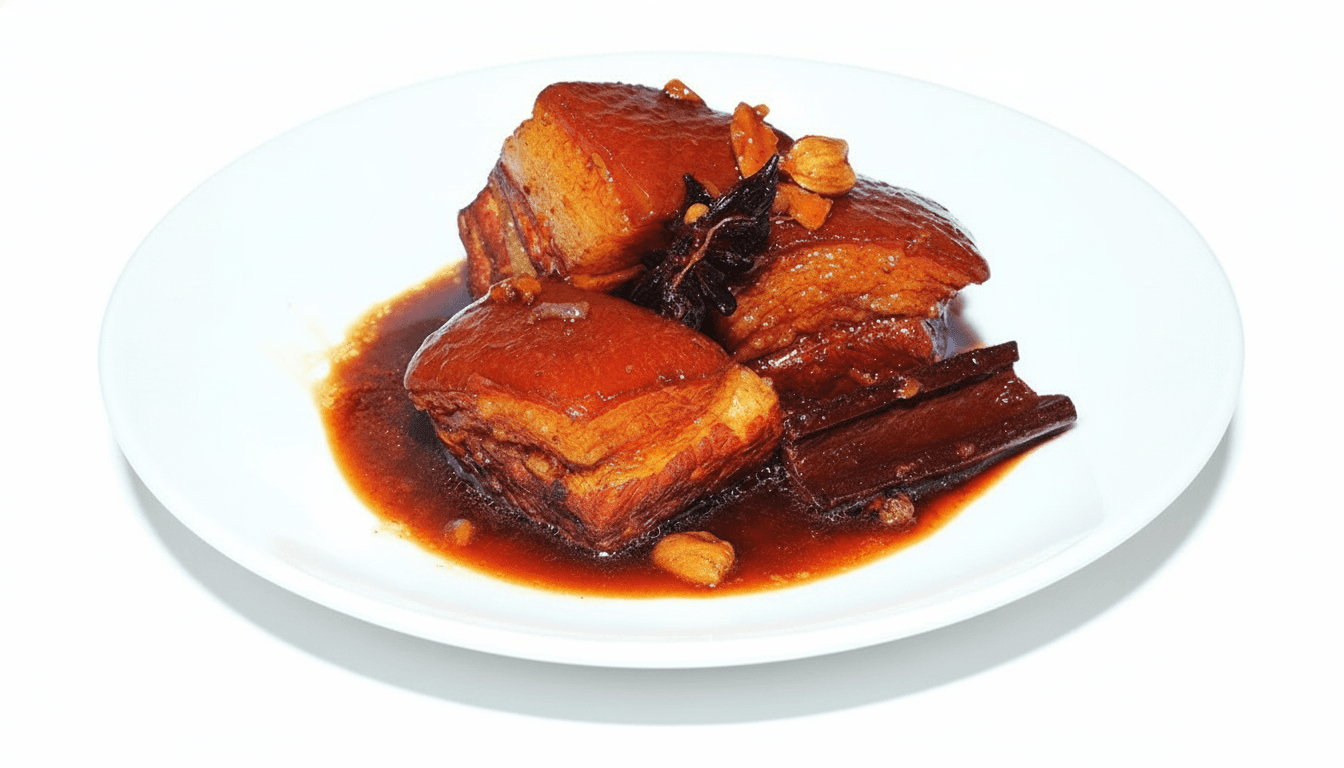
Moo Hong Mor Ad Dan
หมูฮ้องหม้ออัดแรงดัน·(moo hong mor ad dan)
Sunday Heritage Simmers & Regional Thai Traditions
For first-generation Thai-Americans, the scent of garlic, black pepper, and coriander root hitting hot pork fat is the undisputed aroma of home. Moo Hong is the crown jewel of Southern Thai comfort food—a rich, sticky, intensely savory pork belly stew brought to Phuket by Hokkien Chinese immigrants. Unlike the heavily spiced Moo Palo, authentic Moo Hong leans entirely on a pungent black pepper paste and a dark, syrupy soy glaze to let the pork shine. Traditionally, a grandmother would simmer this on the stove for hours. By utilizing a modern pressure cooker and taking the time to properly caramelize the palm sugar, that labor-intensive heritage translates into an uncompromised weeknight staple.
Before you start
Sourcing Thai dark sweet soy sauce.
Do not substitute standard Chinese dark soy sauce here; it is intensely salty and lacks the required syrupy molasses sweetness.
Ingredients
- skin-on pork belly2 lb
- whole black peppercorns1 tbsp
- garlic cloves10 large
- coriander roots or thick cilantro stems5 med
- palm sugar3 tbsp
- Thai light soy sauce3 tbsp
- Thai dark sweet soy sauce2 tbsp
- oyster sauce2 tbsp
- star anise pods2 whole
- cinnamon stick1 small
- water or unsalted pork stock1 1/2 cup
Method
- 01
Pound the aromatic paste.
In a heavy mortar and pestle, coarsely grind the black peppercorns. Add the coriander roots or stems, smashing until broken down, followed by the garlic cloves. Pound everything into a rough, pungent paste to release the essential oils.
- 02
Marinate the pork belly.
In a large bowl, toss the pork chunks with half of the pounded paste, the light soy sauce, dark sweet soy sauce, and oyster sauce. Let it rest for 20 to 30 minutes to allow the flavors to penetrate.
- 03
Render the fat and sauté the aromatics.
Set the pressure cooker to the sauté function. Add the marinated pork belly without any additional oil, letting it cook for about 5 minutes until the natural fat renders and the edges brown. Push the meat to one side, pooling the hot fat, and fry the remaining aromatic paste for 30 seconds until deeply fragrant.
- 04
Caramelize the sugar.
Add the palm sugar directly to the bottom of the pot. Stir constantly as it melts into the hot fat and aromatic paste, transforming into a bubbling, amber-colored caramel. Toss the pork to coat it completely in the sticky mixture.
- 05
Pressure cook the stew.
Drop in the star anise and cinnamon stick, then pour in the water. Use a wooden spoon to scrape up any caramelized bits from the bottom to prevent burning. Cancel the sauté function, secure the lid, and pressure cook on high for 30 minutes.
- 06
Reduce the sauce to a glossy glaze.
Allow the pressure to release naturally for 10 minutes, then manually vent the remaining steam. Skim off the clear layer of fat pooled at the surface. Turn the cooker back to the sauté function and boil aggressively uncovered for 8 to 12 minutes until the watery liquid transforms into a thick, sticky, dark mahogany glaze.
Notes
Watch the caramelization closely.
When caramelizing the palm sugar, keep a close eye on the pot. It can shift from a perfect deep amber to bitter and burnt in seconds.
Leftovers taste even better.
Like most stews, the flavors deepen overnight in the refrigerator. The chilled fat will form a solid cap on top, making it incredibly easy to remove before reheating.
From Cook Thai in America.