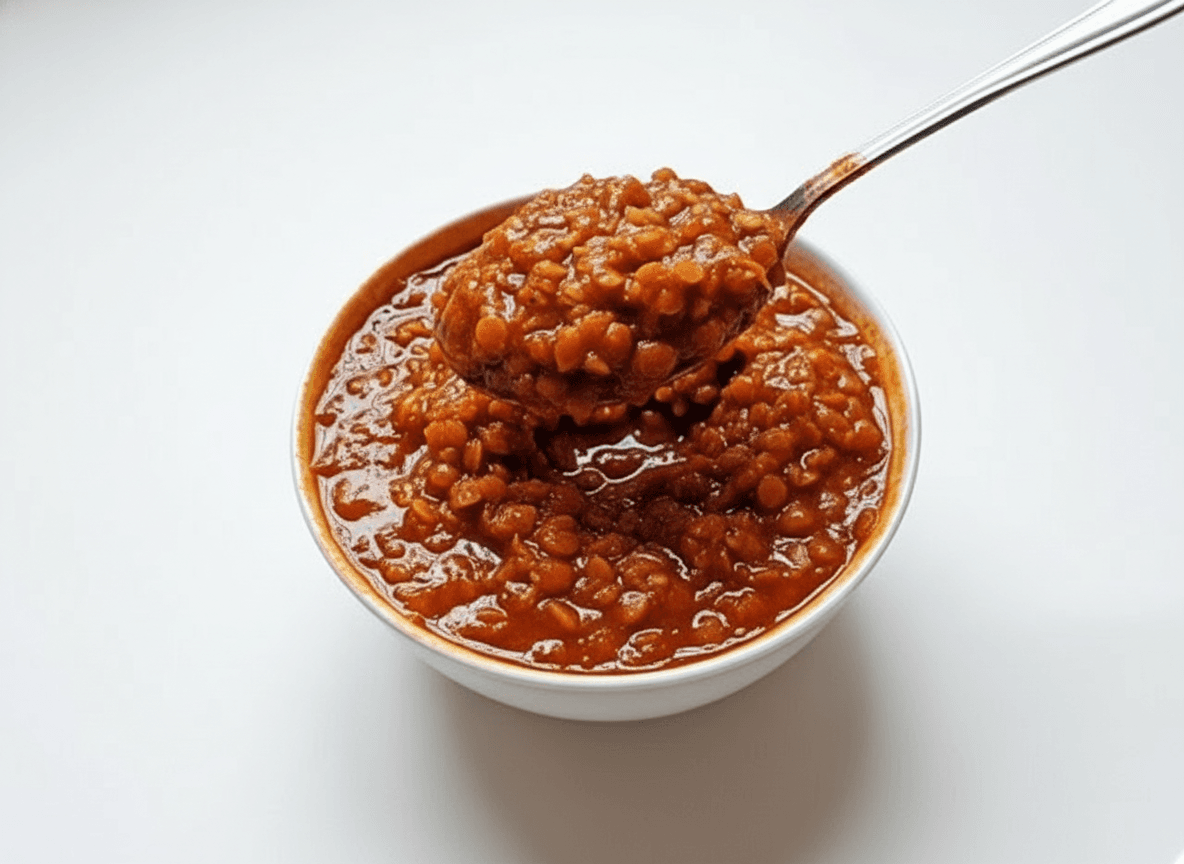
Misir Wot
ምስር ወጥ·(mi-sir wot)
The Grandmother's Fridge: Batch-Cooked Foundations
The smell of Berbere blooming in hot oil is the undeniable, immediate scent of an Ethiopian home. If you grew up with it, you know exactly what I'm talking about. But making a proper kulet—the intensely caramelized onion foundation of any good wot—takes the kind of patience you simply do not have on a Tuesday night. The grandmothers know the secret: you make a massive batch of the base on Sunday, keep it in the fridge, and execute this flawless, deeply nostalgic red lentil stew in the time it takes to boil water. No shortcuts on the flavor, just a smarter use of your time.
Before you start
Purée the chopped red onions in a food processor until they form a coarse, watery paste.
We want total cellular collapse to create a seamless sauce base, and this modern hack cuts out an hour of knife work and tears.
Dry-sweat the onion purée in a large, dry Dutch oven over medium heat for 20 to 30 minutes.
Do not add oil yet. Cover and let them cook in their own juices until the water evaporates and the onions reduce to a pale brown paste. This is the absolute core technique of authentic Ethiopian stew-making.
Pour in the vegetable oil and fry the onion paste for 10 minutes.
Now that the water is gone, the concentrated onion sugars will caramelize rapidly in the fat and take on a deep, savory aroma.
Bloom the aromatics and Berbere spice in the hot fat.
Stir in the tomato paste, garlic, and ginger for 2 minutes, then add the Berbere. Cook for 3 to 5 minutes until the oil turns a brilliant crimson and the raw chili smell softens.
Simmer the kulet with a splash of water, then cool and store.
Add a half cup of hot water, reduce heat to low, and let it meld for 15 minutes into a dark red paste. This yields enough master base for three or four meals. Keep it in a mason jar in the fridge for up to two weeks.
Ingredients
- red onions6 large
- neutral vegetable oil1 cup
- authentic Berbere spice1/2 cup
- garlic3 tbsp
- ginger2 tbsp
- tomato paste3 tbsp
- red split lentils1 cup
- hot water3 cup
- kosher salt1 tsp
- Mekelesha spice blend1/2 tsp
- Niter Kibbeh or ghee1 tbsp
Method
- 01
Heat one cup of your batch-cooked kulet base in a medium saucepan over medium heat.
The onions and spices are already deeply caramelized and bloomed; you just need to wake them up until the paste bubbles.
- 02
Stir the thoroughly washed red lentils into the hot kulet.
Make sure you washed the lentils until the water ran perfectly clear, or your stew will turn into glue. Coat them completely in the red paste.
- 03
Pour in two cups of hot water, add the salt, and simmer over medium-low heat.
Using hot water maintains your cooking temperature. Cover the pot and stir it occasionally, scraping the bottom so nothing sticks.
- 04
Cook until the lentils are creamy but still retain some textural integrity, about 15 to 20 minutes.
Add the remaining half cup of hot water if it looks too dry before the lentils are tender. You want a thick stew, not a puréed soup.
- 05
Turn off the heat completely and stir in the Mekelesha spice and Niter Kibbeh.
Mekelesha contains highly volatile essential oils, and boiling it destroys the aroma. Let the residual heat release the intoxicating cardamom and clove notes, then rest for 5 minutes before serving with injera or rice.
Notes
Cut the heat, not the flavor.
If your family cannot handle the fiery heat of true Ethiopian Berbere, cut it 50/50 with mild, sweet paprika when making the kulet. You maintain the crucial red color and foundational flavor volume without the pain.
The Mekelesha hack.
If you cannot source pre-made Mekelesha, a tiny pinch of ground cardamom, cinnamon, and clove is a highly effective, authentic-tasting American pantry substitution.