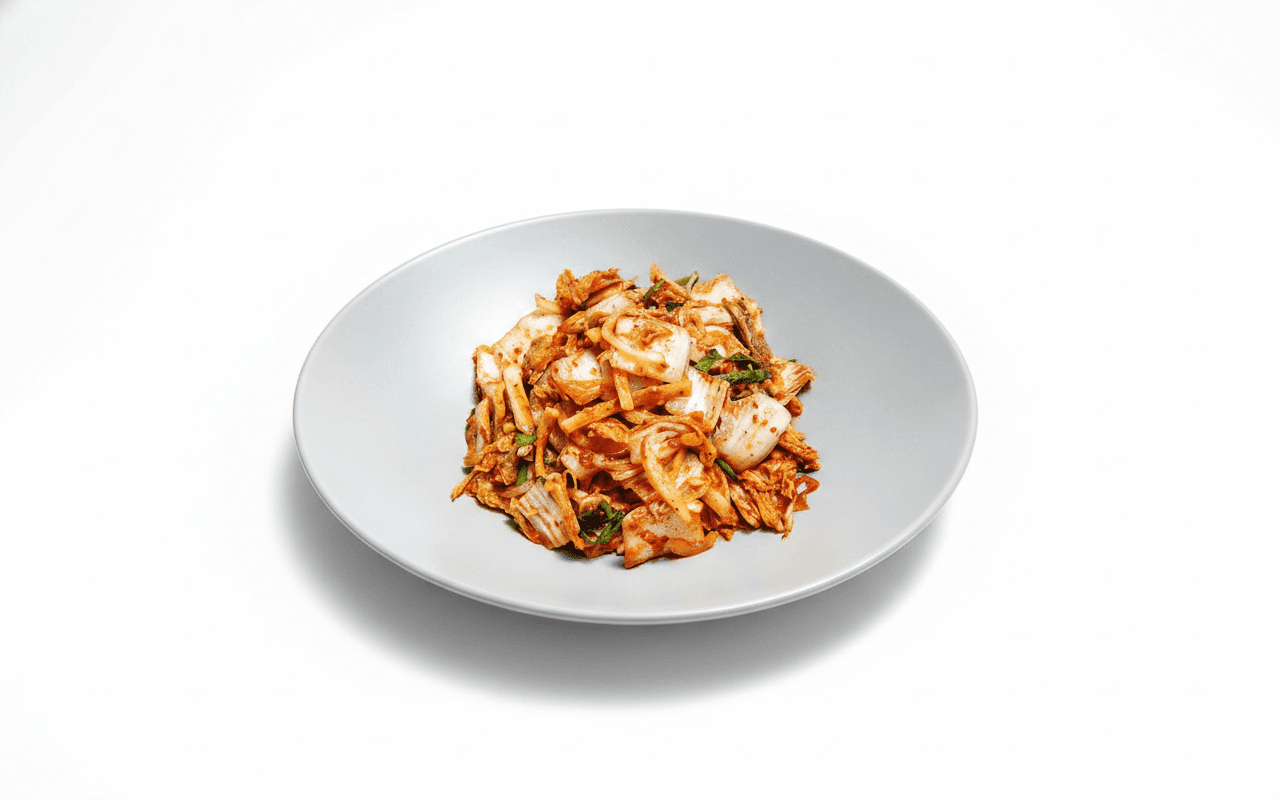
Mak-Kimchi
막김치·(mak-gimchi)
Halmoni's Weekend Projects
While the meticulously layered whole-cabbage Pogi-Kimchi is the revered poster child of Korean fermentation, Mak-Kimchi is its pragmatic, un-Hollywood workhorse. This is the rough, chopped kimchi a busy grandmother throws together on a random Tuesday to feed her family, skipping the tedious layering without sacrificing an ounce of flavor. By employing a hybrid brining method and blending leftover cold rice into the aromatic paste—a brilliant, generations-old shortcut that bypasses the stovetop entirely—this recipe delivers the profound, marine-funky, deeply authentic umami that works perfectly in the rhythm of a standard weeknight.
Before you start
Prepare your station.
Ensure you have a very large mixing basin for the cabbage, disposable gloves for the mixing phase, and a sterilized gallon-sized jar or specialized kimchi container ready for packing.
Ingredients
- Napa cabbage5 lb
- Korean radish1 lb
- scallions8 med
- coarse sea salt3/4 cup
- cold water2 cup
- yellow onion1/2 large
- Asian pear1/2 large
- garlic cloves15 large
- ginger1 tbsp
- cold cooked white rice3 tbsp
- fish sauce1/4 cup
- salted fermented shrimp3 tbsp
- plum extract1 tbsp
- Korean red chili flakes1 1/4 cup
Method
- 01
Apply the hybrid brine.
Sprinkle one-half cup of the coarse salt directly onto the cabbage squares, massaging it specifically into the thicker white stems, then dissolve the remaining quarter cup of salt into the cold water and pour it over the bowl.
- 02
Turn and wait.
Let the cabbage sit at room temperature for roughly two hours, digging your hands to the bottom of the basin every thirty minutes to turn the submerged pieces to the top.
- 03
Perform the bend test.
Pick up a thick white stem and bend it in half; if it snaps, it needs more time, but if it bows flexibly into a U-shape, the cabbage is perfectly cured.
- 04
Rinse aggressively and drain.
Transfer the wilted cabbage to a colander and rinse it thoroughly under cold running water exactly three times to wash away the harsh excess salt, then let it drain completely for thirty minutes.
- 05
Blend the flavor engine.
While the cabbage drains, throw the onion, pear, garlic, ginger, cold rice, fish sauce, salted shrimp, and plum extract into a blender with a splash of water, pureeing on high until entirely smooth and frothy.
- 06
Bloom the gochugaru.
Pour the pale puree over the radish matchsticks and scallions in a large, dry bowl, then stir in the chili flakes so the mixture immediately transforms into a thick, vibrant crimson paste.
- 07
Massage the cabbage.
Put on a pair of disposable kitchen gloves, dump the drained cabbage into the bowl, and use your hands to aggressively massage the paste into the leaves until every single piece is thoroughly coated.
- 08
Pack firmly into a jar.
Transfer the finished kimchi into a large, airtight glass or plastic container, pressing down hard with your fist to force out trapped air pockets, and leave at least two inches of headspace at the top for expansion.
- 09
Ferment on the counter.
Seal the container and leave it at room temperature away from direct sunlight for one to three days, briefly opening the lid daily to release built-up gases until you see active bubbles and smell a deep, funky tang, then move it to the refrigerator.
Notes
The rice hack explained.
Blending cold, leftover white rice provides the complex carbohydrates needed to feed the fermentation bacteria, completely bypassing the traditional, fussy requirement of cooking sweet rice porridge on the stove.
Embrace the aroma.
As this ferments on the counter, it will smell aggressively of raw garlic, marine extract, and funky cabbage; this isn't a mistake, it's the smell of authentic culinary alchemy happening in your kitchen.
Sourcing the shrimp.
Salted fermented shrimp (saeujeot) is the non-negotiable secret to profound, lingering umami and can be found in the refrigerated or frozen section of any good Asian market.
From Cook Korean in America.