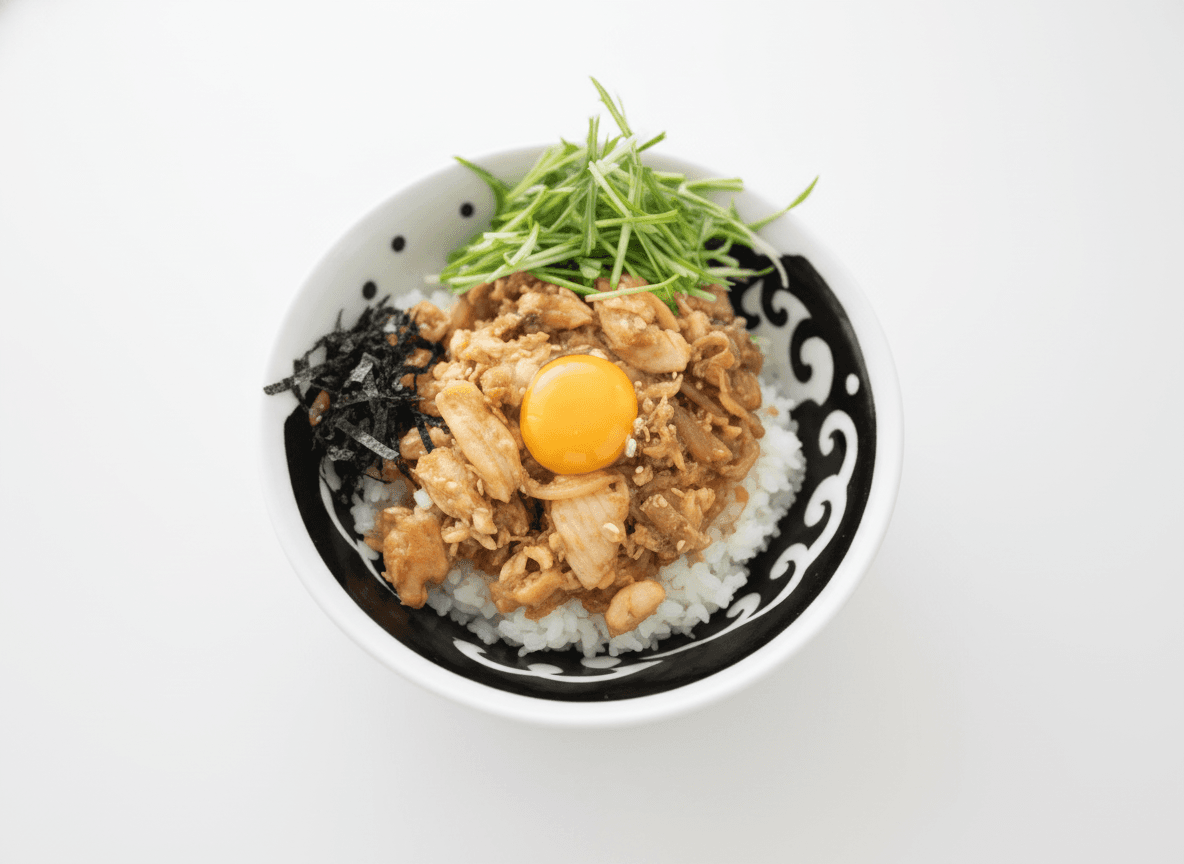
Leftover Shiozake Tanindon
鮭の卵とじ丼·(sake no tamagotoji don)
One-Bowl Donburi & Noodle Fixes
In Japanese kitchens, mottainai isn’t some trendy sustainability buzzword—it’s the operating system. When you inevitably grill too much heavily salted, perfectly charred shiozake for breakfast, grandmotherly logic dictates it becomes an accidental weeknight masterpiece. By flaking that deeply savory leftover salmon, simmering it in a sweet broth with onions to temper the salt, and binding it all under a silken, soft-scrambled blanket of egg, you get an unapologetically beautiful bowl of comfort. It transforms cold leftovers into something you'd happily eat every single day.
Before you start
Cure your own salmon if starting from scratch.
If you want to make this but don't have leftover shiozake, rub a fresh salmon fillet with salt (about 2% of its weight), let it sit in the fridge for 30 minutes to overnight, then broil until the skin crisps up before flaking.
Ingredients
- Japanese short-grain rice2 cup
- leftover cooked salted salmon1 cup
- yellow onion1/2 med
- fresh ginger1/2 tsp
- eggs3 large
- water1/3 cup
- dry sherry3 tbsp
- mirin1 1/2 tbsp
- soy sauce1 tbsp
- granulated sugar2 tsp
- scallion greens2 med
- kizami nori1 pinch
- shichimi togarashi1 pinch
Method
- 01
Whisk together the simmering liquid.
In a small bowl, combine the water, dry sherry, mirin, soy sauce, and sugar, stirring until the sugar dissolves.
- 02
Simmer the onions and ginger in the broth.
Pour the broth mixture into a small, 8 to 10-inch skillet, add the sliced onions and julienned ginger, and bring to a gentle simmer over medium heat for 2 to 3 minutes until softened.
- 03
Revive the leftover salmon.
Gently scatter the flaked salmon into the simmering broth to warm through and absorb the savory liquids for about 60 seconds.
- 04
Pour exactly half the egg over the mixture in a figure-eight motion.
With the broth at a steady simmer, slowly pour half the lightly beaten eggs evenly into the skillet, doing absolutely nothing to stir it while it sets for 30 to 45 seconds.
- 05
Add the remaining egg to achieve hanjuku perfection.
Pour the rest of the egg over the top to fill any bare spots, immediately cover with a tight-fitting lid, and turn the heat off completely.
- 06
Let the residual heat steam the egg.
Leave the skillet undisturbed on the warm burner for 60 to 90 seconds to create a glossy, incredibly tender, soft-set texture.
- 07
Slide the omelet over rice and serve.
Uncover the skillet, loosen the edges with a spatula, and carefully slide half of the salmon and egg mixture directly over hot rice, garnishing with scallions, nori, and a dusting of shichimi togarashi.
Notes
The secret is entirely in the staging.
Pouring the egg in two distinct stages is what gives you that textbook silken, runny texture instead of a rubbery scramble.
Canned salmon is an acceptable weeknight substitute.
If you don't have leftovers, use high-quality canned wild Alaskan sockeye salmon. Drain it exceptionally well and pick out any bones—the soy, sherry, and ginger will elevate it completely.
From Cook Japanese in America.