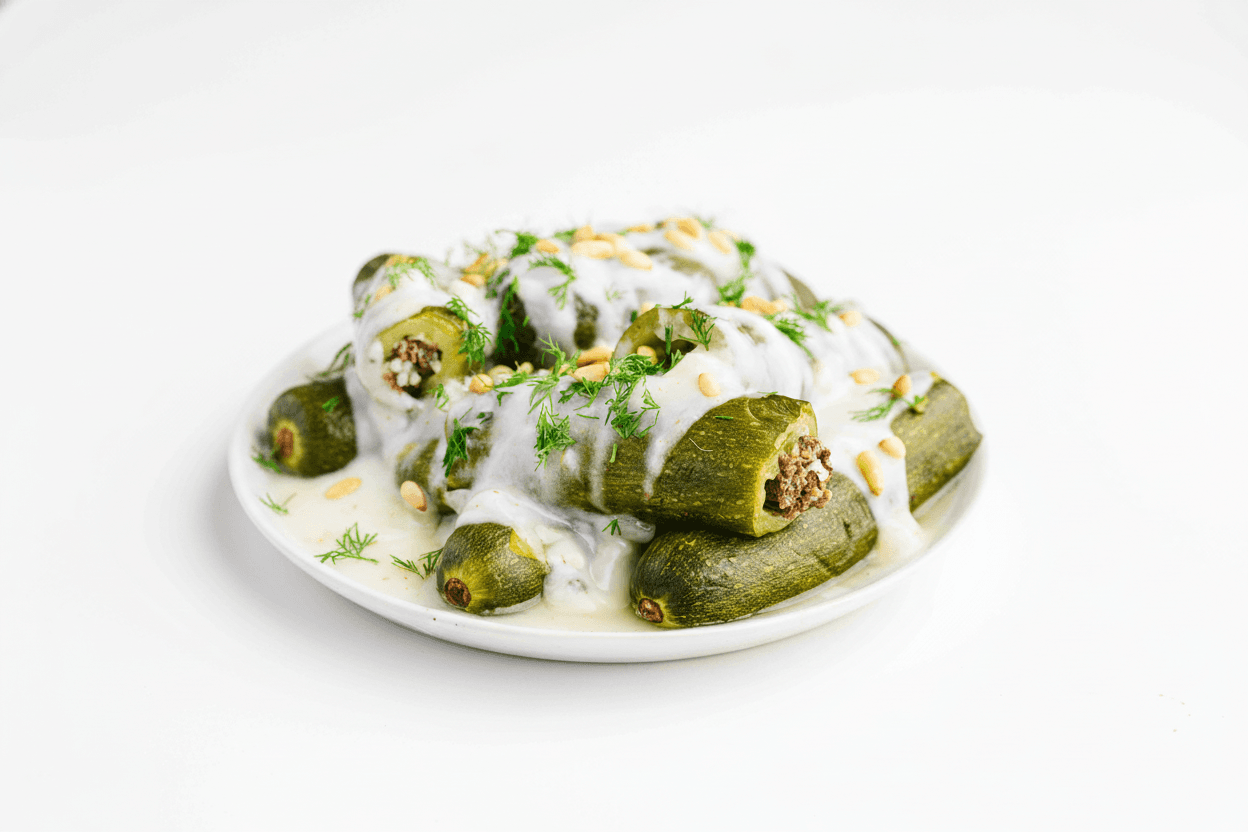
Kousa Mehshi
محشي كوسا·(koo-sa meh-shee)
Teta's Hands: Weekend Prep for Weekday Eating
There used to be a time when hollowing out summer squash was an all-day Sunday affair, a labor of love orchestrated by a symphony of grandmothers. For those of us raised in the American diaspora, the scent of Lebanese 7-Spice, warm cinnamon, and a pungent hit of garlicky dried mint simmering in tomato broth is the visceral definition of home. We don't have all Sunday anymore, but we still want the real thing, eschewing the fake Hollywood shortcuts. The secret to making this happen on a Tuesday night is an old-country trick: prep the squash and the raw, fat-laced rice and meat filling on the weekend, freeze them solid, and drop them straight into a boiling broth when you get home from work. It tastes exactly like Teta's, because it is.
Before you start
Freeze the stuffed, raw squashes for weeknight convenience.
Stop right after stuffing the squashes. Arrange them in a single layer in a freezer-safe bag and freeze solid for up to two months. When you want them on a Tuesday night, drop the rock-hard frozen squashes directly into the boiling tomato broth (never thaw them first, or they turn to mush) and add fifteen to twenty minutes to your simmering time.
Ingredients
- Mexican squash or gray squash12 med
- ground beef (80/20) or beef-lamb blend1 lb
- medium-grain white rice1 cup
- Lebanese 7-Spice1 tsp
- ground cinnamon1/2 tsp
- kosher salt1 tsp
- black pepper1/2 tsp
- ghee or neutral oil1 tbsp
- crushed tomatoes or tomato passata28 oz
- tomato paste3 tbsp
- water or low-sodium beef broth4 cup
- garlic6 med clove
- dried mint1 1/2 tbsp
- lemon1 med
- kosher salt1 tsp
Method
- 01
Hollow the squashes carefully to leave a quarter-inch wall.
Slice off the stem and rub the cut end with a generous pinch of kosher salt, letting it sit for ten minutes to soften the flesh and prevent cracking. Using a zucchini corer, apple corer, or serrated spoon, gently hollow out the core. Poke two tiny holes in the bottom of each squash with a toothpick so the boiling broth can flow through later, cooking the rice evenly and preventing blowouts.
- 02
Mix the raw filling and stuff the squashes loosely.
Gently mix the beef, rinsed rice, 7-Spice, cinnamon, 1 teaspoon salt, pepper, and ghee with your hands, taking care not to over-knead and break the rice. Drop the filling into the squash, filling only to your first knuckle (about three-quarters full), and tap the squash on the counter to settle the mix instead of aggressively packing it down.
- 03
Bring the tomato broth to a rapid boil and submerge the squashes.
In a large, wide Dutch oven, whisk together the crushed tomatoes, tomato paste, water, half of the crushed garlic, and half of the dried mint. Carefully slide the stuffed squashes into the boiling broth, ensuring they are almost entirely submerged.
- 04
Weigh down the squashes with an inverted plate and simmer.
Place a heavy, heat-proof plate directly on top of the squashes inside the pot to keep them from bobbing and spilling their contents. Reduce the heat to a gentle simmer, cover the pot with a lid, and cook for forty-five minutes.
- 05
Finish the broth with the remaining garlic, mint, and lemon juice.
Carefully remove the plate using tongs. Stir the remaining crushed garlic, the rest of the dried mint, and the fresh lemon juice directly into the simmering broth, cooking for five more minutes so the volatile mint oils and sharp garlic hit the palate immediately upon serving.
Notes
Never throw away the extracted squash core.
Traditionally called lib el kousa, the scooped-out flesh is chopped and sautéed in olive oil with onions and garlic, or folded into eggs to make a savory Levantine frittata called Ijjeh. Any leftover meat stuffing is rolled into meatballs and dropped right into the broth.
Adjust your broth depending on the canned tomatoes.
American canned tomatoes vary wildly in acidity and thickness. Taste your broth halfway through; if it is too thick, add a splash of water, and if it is aggressively acidic, a tiny pinch of sugar will balance it out.
From Cook Lebanese in America.