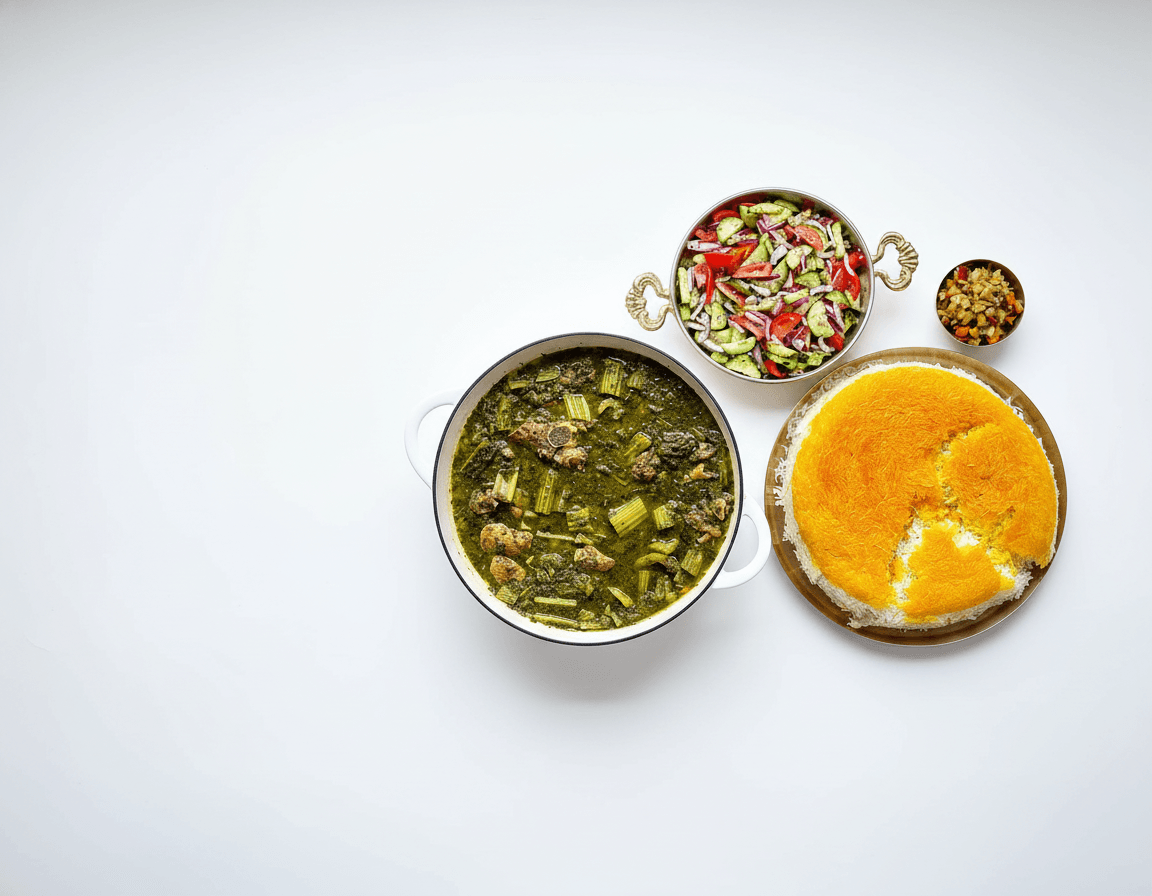
Khoresh-e Karafs ba Morgh
خورش کرفس با مرغ·(kho-resh-e ka-rafs ba morg)
The Weeknight Khoresh (Stovetop Magic for Busy Parents)
Forget the two-hour braises. This is the everyday stovetop magic of a Persian kitchen, adapted for the realities of an American weeknight. The secret here isn't a slow-simmering cut of lamb, but the meticulous, separate frying of celery and herbs to lock in their structure and extract their deep, lipid-soluble flavors. It is a masterclass in building a profound, herbaceous broth from nothing more than chicken thighs, caramelized onions, turmeric, and water. No boxed stock necessary. Just honest ingredients, treated with the respect a grandmother would demand.
Before you start
Wash and dry the herbs thoroughly.
Ensure the parsley and mint are completely dry before chopping to prevent them from steaming instead of frying in the oil.
Ingredients
- Limu Omani3 small
- vegetable oil3 tbsp
- celery1 bunch
- fresh flat-leaf parsley2 cup
- fresh mint1/2 cup
- yellow onion1 med
- ground turmeric1 tsp
- boneless skinless chicken thighs1 1/2 lb
- tomato paste1 tbsp
- water3 cup
- kosher salt1 tsp
- black pepper1/2 tsp
- fresh lemon juice2 tbsp
Method
- 01
Tame the dried limes.
Puncture 3 to 4 holes in each lime using a fork, then submerge them in cold water. This leaches the harsh tannins while preserving their beautiful, fermented sourness.
- 02
Fry the celery and herbs.
Heat 1 tablespoon of oil in a large skillet over medium heat and sauté the celery stalks for 8 to 10 minutes until softened and vibrant. Add the celery leaves, parsley, and mint. Drop the heat to medium-low and cook for 4 to 5 minutes, stirring constantly until the herbs darken and release their oils. Watch carefully; mint burns easily and will turn the whole pot bitter if scorched. Set aside.
- 03
Build the aromatic base.
In a large Dutch oven, heat the remaining 2 tablespoons of oil over medium-high heat. Add the onion and sauté patiently for 8 to 10 minutes until deeply golden. Do not rush this; these caramelized onions form the foundation of your broth. Stir in the turmeric and black pepper, toasting for 30 seconds.
- 04
Sear the chicken.
Toss the chicken pieces into the pot to coat them in the spiced onions. Cook for 5 to 7 minutes until browned and sealed. Stir in the tomato paste, letting it caramelize on the bottom of the pot for 1 minute to cook off its raw flavor.
- 05
Braise the stew.
Transfer the sautéed celery and herb mixture into the Dutch oven. Add the salt, pour in the water, and drop in the drained limes. Bring to a rolling boil, immediately drop the heat to its lowest setting, cover, and simmer gently for 40 to 45 minutes.
- 06
Adjust the seasoning and serve.
Uncover the pot. The chicken should be incredibly tender, the celery holding its shape, and a layer of seasoned oil should have risen to the top. Stir in the lemon juice for a confident acidic punch. Taste, adjust the salt, and serve piping hot alongside steaming saffron basmati rice.
Notes
Don't fear the herb volume.
In Persian cooking, herbs aren't a garnish; they are the main vegetable. If you cannot find fresh mint, 2 tablespoons of high-quality dried mint can be substituted.
Reject the boxed stock.
Western instinct screams for chicken broth here. Resist. The natural collagen from the chicken thighs, the maillard reaction from the onions, and the turmeric create an unadulterated Persian flavor profile that commercial stock would only muddy.
Missing dried limes?
If you can't source Limu Omani, substitute with an additional 3 tablespoons of freshly squeezed lemon juice stirred in at the very end to achieve the signature tang.
From Cook Persian in America.