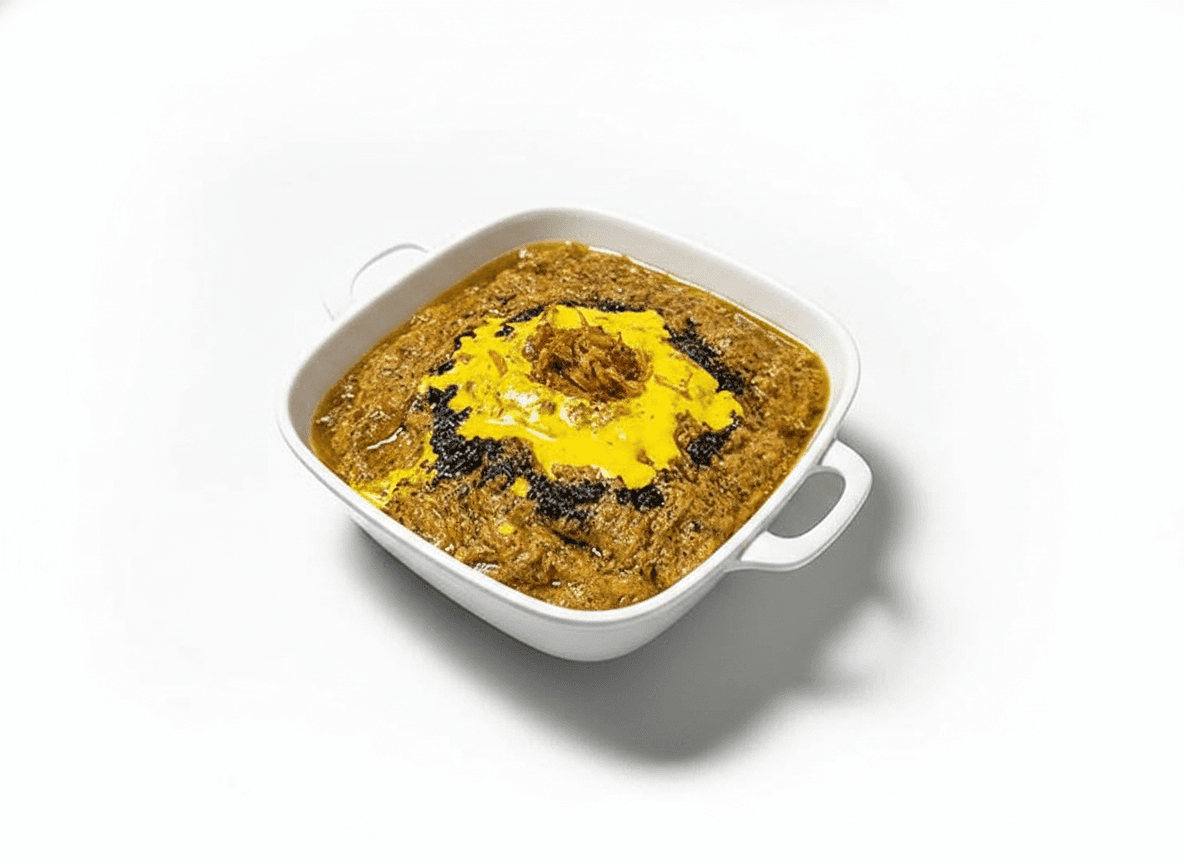
Kashk-e Bademjan
کشک بادمجان·(kashk-e ba-dem-jan)
The Iranian-American Pantry & Prep (Setting the Sofreh)
The smell of caramelized onions, garlic, and bloomed mint is the unmistakable signal that a Persian feast is imminent. Traditionally, making Kashk-e Bademjan required hours of standing over sputtering oil to pan-fry heavily salted eggplants. This pragmatic adaptation captures that exact smoky, deeply savory flavor by high-heat roasting Chinese eggplants instead. Paired with the essential lactic tang of kashk and the vital crunch of walnuts to balance the dish's culinary energy, it is a vibrant, soulful dip that demands the center of the table.
Before you start
Preheat the oven to 425°F.
Line a large baking sheet with parchment paper.
Ingredients
- Chinese eggplant6 med
- extra-virgin olive oil1/4 cup
- yellow onion1 large
- garlic clove5 med
- ground turmeric1 tsp
- black pepper1/2 tsp
- kosher salt1 tsp
- hot water1/3 cup
- liquid kashk1/2 cup
- walnuts1/3 cup
- extra-virgin olive oil2 tbsp
- dried mint2 tbsp
- yellow onion1 small
- garlic clove2 med
- walnuts2 tbsp
- liquid kashk1 tbsp
Method
- 01
Brush the scored eggplant halves generously with olive oil and roast face-down for 35 to 45 minutes.
They should look wrinkled, collapsed, and completely tender. Once cool enough to handle, scoop the creamy flesh into a bowl and discard the skins.
- 02
Heat a quarter cup of olive oil in a wide skillet over medium heat and cook the diced onion until deeply golden brown.
This takes about 15 to 20 minutes and provides the crucial underlying sweetness. Add the minced garlic, turmeric, and black pepper, stirring constantly for one minute until fragrant.
- 03
Add the roasted eggplant to the skillet and aggressively mash it into the onion mixture with a wooden spoon or potato masher.
Avoid the temptation to use a food processor, as the dish requires a rustic, chunky texture rather than a smooth puree.
- 04
Stir in the hot water, the toasted walnuts, and the half cup of kashk, then cover and simmer gently on medium-low for 15 minutes.
This allows the tangy kashk to permeate the eggplant while the excess moisture evaporates. Taste for seasoning, keeping in mind that kashk is naturally quite salty.
- 05
Warm two tablespoons of olive oil in a very small pan over medium-low heat, immediately remove from heat, and swirl in the dried mint for ten seconds.
This is the most critical step of the entire recipe; if the mint stays on the heat too long, it will burn and introduce an irreversible bitterness to the dish.
- 06
Spread the warm dip onto a serving platter and garnish with the bloomed mint oil, remaining walnuts, and fried aromatics.
Create shallow swoops with the back of a spoon to catch the mint oil, crispy sliced onions, fried garlic, and a delicate drizzle of thinned kashk.
Notes
Replicate the distinctive tang of kashk using common supermarket dairy if the real thing is hard to source.
Whisk together a quarter cup of thick whole-milk Greek yogurt, a quarter cup of full-fat sour cream, half a teaspoon of fine salt, and a tablespoon of fresh lemon juice.
Do not skip the walnuts.
In traditional Persian humoral medicine, eggplant and dairy are considered cold ingredients; walnuts bring a necessary warm energy to balance the dish, alongside vital textural crunch.
Seek out Chinese or Japanese eggplants to save time and effort.
Standard American globe eggplants are watery and bitter, requiring a mandatory heavy salting step. Asian varieties have thinner skins and fewer seeds, making them perfect for quick roasting.
From Cook Persian in America.