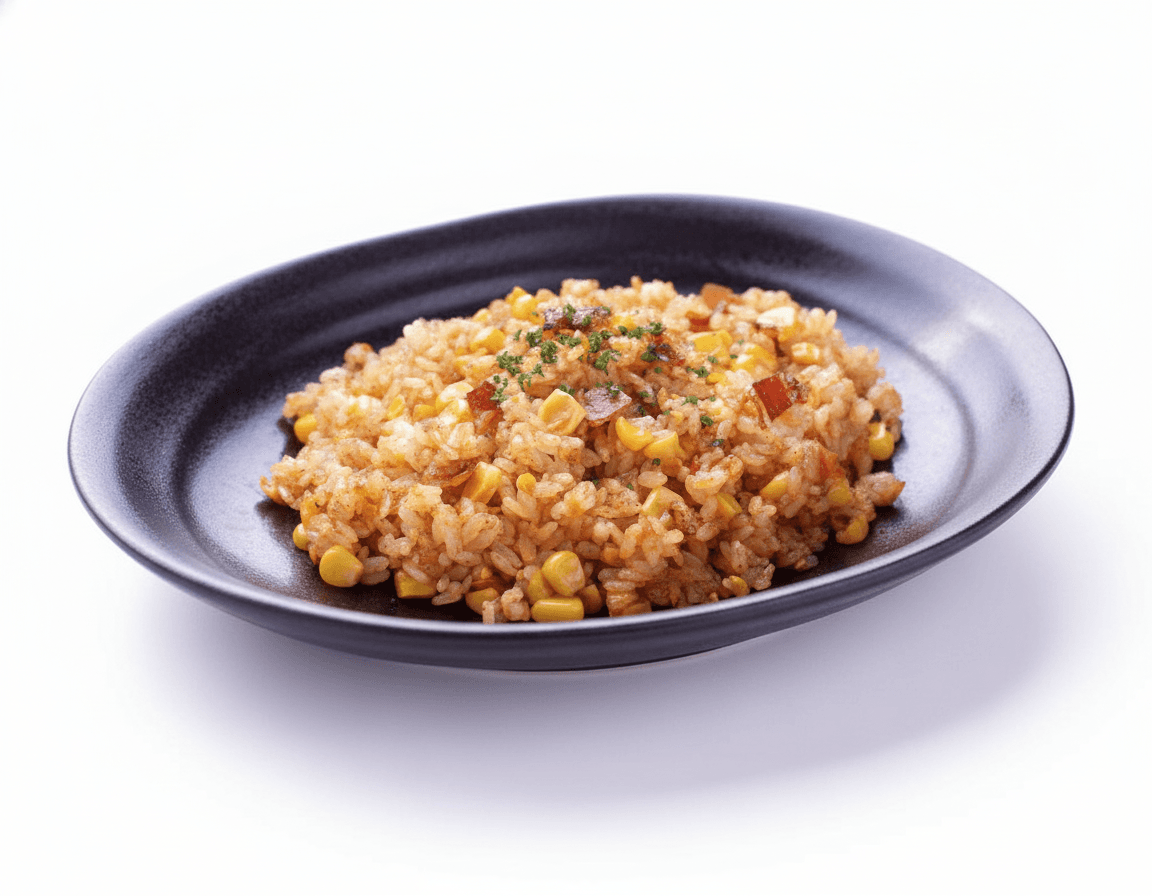
Japanese-American Breakfast Bacon Yakimeshi
ベーコン焼き飯·(bēkon yakimeshi)
Japanese Breakfasts & Bento Boxes
This isn't a compromise; it's a fiercely legitimate tradition forged from necessity. When Japanese immigrants adapted to mid-century American supermarkets, thick-cut bacon stepped in for chashu, rendering a smoky fat that perfectly coats day-old rice. The real secret here isn't the meat, but the nabehada technique—hitting the hot rim of the pan with soy sauce to caramelize it before it touches the rice, instantly conjuring the complex, deeply comforting umami of a first-generation childhood.
Before you start
Cook and chill the rice a day in advance.
Fresh, hot rice will turn into a mushy disaster in the pan. The starches need to crystallize overnight in the fridge to ensure the grains stay separate and springy.
Ingredients
- day-old medium-grain rice3 cup
- thick-cut bacon4 oz
- eggs2 large
- scallions3 med
- toasted sesame oil1 tbsp
- chicken stock powder1 tsp
- soy sauce1 tbsp
- black pepper1/4 tsp
Method
- 01
Render the bacon in a large cold skillet or wok over medium heat until crispy.
Starting in a cold pan allows the fat to slowly render out without burning the meat. After about 4 to 5 minutes, use a slotted spoon to remove the bacon bits, leaving the liquid fat behind.
- 02
Increase the heat to medium-high, add the sesame oil to the bacon fat, and loosely scramble the eggs.
Pour in the beaten eggs and let them bubble furiously for 10 seconds. Push them around to form large curds, and when they are mostly set but still slightly runny, push them to one side of the pan.
- 03
Toss the white parts of the scallions into the empty side of the pan for fifteen seconds before adding the chilled rice.
Use the edge of your spatula to chop down into the cold rice and break up any clumps. Never mash it flat; chopping preserves the individual grains for a perfect, separated texture.
- 04
Sprinkle the chicken stock powder and black pepper evenly over the rice, then return the crispy bacon to the pan and toss everything together.
Make sure the rice is heated through and evenly coated in the rendered fat, breaking up the egg curds as you mix.
- 05
Clear a small space in the center of the pan and pour the soy sauce directly onto the bare, hot metal.
This is the grandmother's secret. Let the soy sauce hit the pan—not the rice—so it instantly hisses and caramelizes, releasing a smoky cloud. Immediately toss the rice into the bubbling sauce to coat the grains without making them soggy.
- 06
Remove from heat, toss in the reserved green scallion tops, and serve immediately.
Adding the greens off the heat keeps them bright and crunchy.
Notes
Use a heavy pan that holds high heat.
A carbon steel wok is traditional, but a cast-iron skillet works exceptionally well for executing the scorched soy sauce technique without losing temperature.
From Cook Japanese in America.