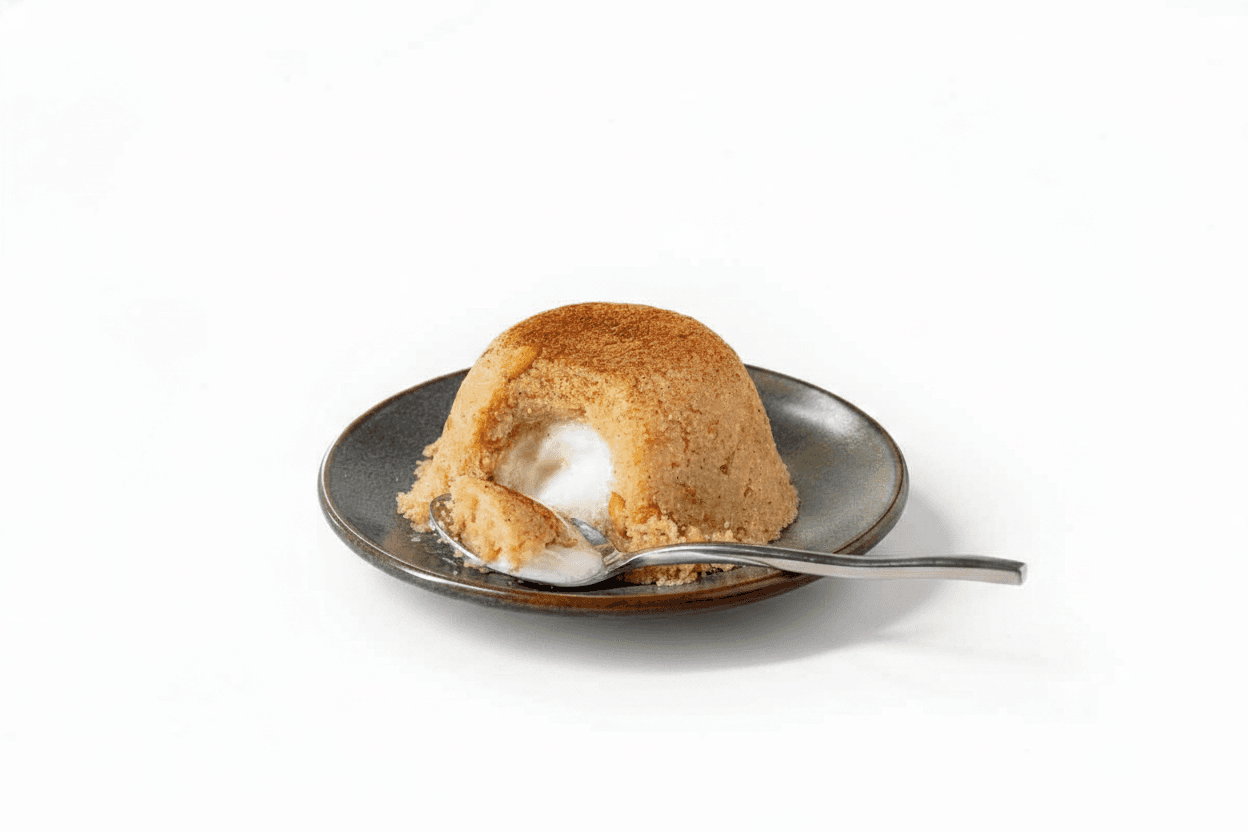
İrmik Helvası
İrmik Helvası·(eer-MEEK hel-VAH-suh)
Kahve ve Çay Saati (The Afternoon Ritual)
This is the scent of a Turkish home. Whether it is marking a birth, mourning a death, or just anchoring a rainy Tuesday afternoon, butter browning with semolina means comfort. For first-generation kids growing up in the Midwest, this dessert was magic—turning four humble pantry staples into a deeply nutty, melt-in-your-mouth ritual. Ignore the internet blogs pushing cardamom and cloves; the only real grandmother secret here is the patience to toast the wheat low and slow until it turns the color of wet sand. We have streamlined the syrup so you can easily pull this off on a busy weeknight. Serve it plain with strong black tea, or packed warm over vanilla ice cream for a proper finish.
Ingredients
- whole milk1 1/2 cup
- water1 1/2 cup
- granulated white sugar1 1/2 cup
- unsalted butter7 tbsp
- neutral oil1 tbsp
- pine nuts1/3 cup
- coarse semolina2 cup
- ground cinnamon1 tsp
- vanilla bean ice cream1 pt
Method
- 01
Heat the milk, water, and sugar just until dissolved.
Combine them in a medium saucepan over gentle heat, stirring until the sugar melts, then set it aside on the back of the stove to stay warm without bringing it to a boil.
- 02
Melt the butter and oil in a wide, heavy-bottomed skillet over medium-low heat.
The splash of neutral oil is the grandmother's trick to keep the butter solids from burning during the long toasting process ahead. Add the pine nuts and stir for a minute or two until they begin to release their fragrance.
- 03
Stir in the semolina and toast it continuously for twenty to twenty-five minutes.
This is the non-negotiable soul of the dish. Stand at the stove and keep things moving with a wooden spoon over medium-low heat until the grains turn the deep, golden-brown color of wet sand. Do not rush this on high heat, or the semolina will burn on the outside and stay raw inside.
- 04
Carefully pour the warm syrup into the toasted semolina.
Stand back, as the mixture will violently bubble, hiss, and throw up a large cloud of steam. Immediately stir vigorously so the semolina absorbs the liquid evenly without clumping.
- 05
Drop the heat to its absolute lowest and gently simmer until the liquid is mostly absorbed.
It should take about three to five minutes. You are looking for a thickened but still slightly loose, glossy texture.
- 06
Remove from the heat, cover with a towel and tight lid, and let it rest for fifteen minutes.
Place a clean kitchen towel taut across the top of the pot and press the lid down tightly over it. This traps the steam and absorbs excess condensation, allowing the semolina to fluff up into distinct, tender grains instead of a gummy porridge.
- 07
Fluff gently with a wooden spoon and serve warm.
Dust lightly with cinnamon. To serve it like a modern Turkish restaurant, pack the warm halva into a small ramekin leaving a hollow center, drop in a scoop of cold vanilla ice cream, seal the bottom with more halva, and invert it onto a plate.
Notes
Sourcing the right semolina.
Standard American supermarket semolina is usually milled very fine for pasta dough. Seek out boxes labeled 'Coarse Semolina' or 'Farina' to ensure the halva has the proper fluffy, distinct grain structure.
Dairy-free adaptation.
To make this vegan, swap the butter entirely for extra virgin olive oil, and replace the milk with equal parts water or a creamy plant milk like oat milk. The Mediterranean regions of Turkey have been making it this way for centuries.
From Cook Turkish in America.