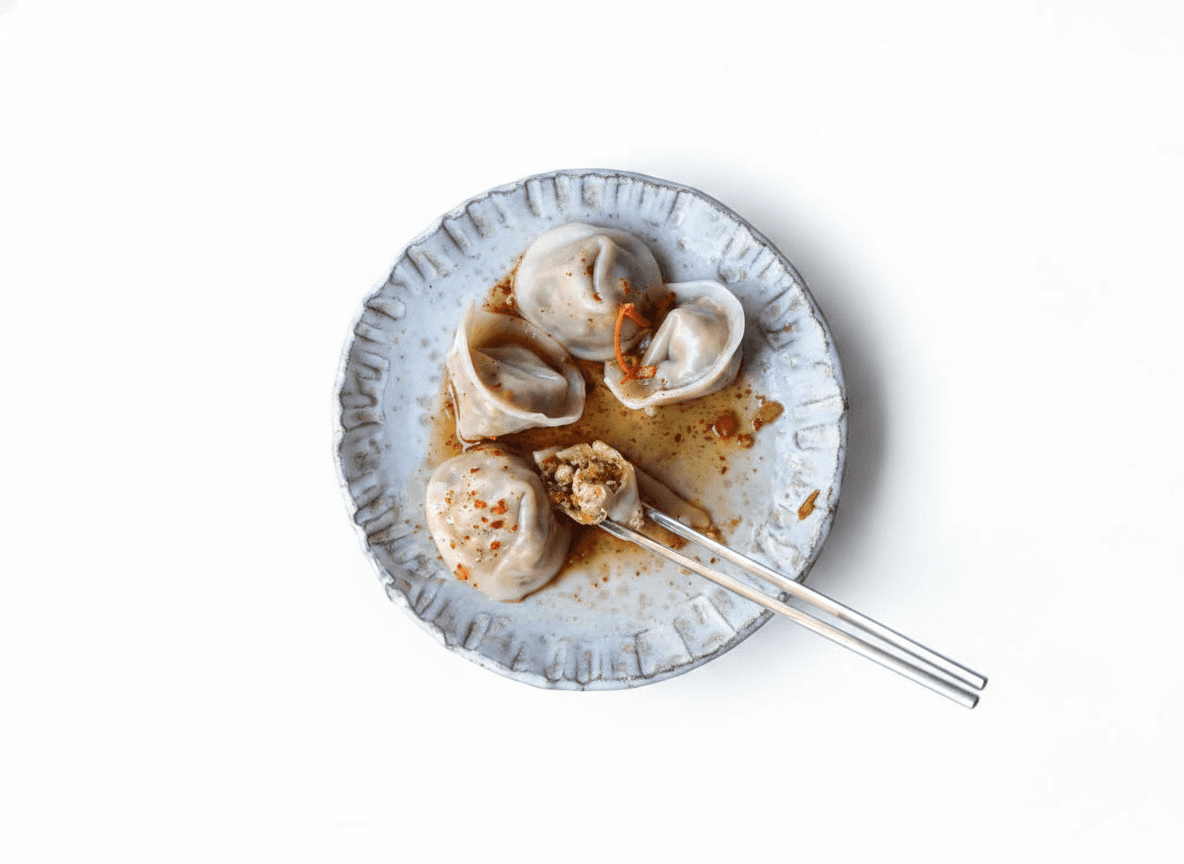
Homemade Kimchi Mandu
이북식 김치만두·(ibuksik gimchi mandu)
Halmoni's Weekend Projects
There is an invisible dumpling line dividing the Korean peninsula; north of it, where the winters bite harder, grandmothers spent their weekends folding massive, kimchi-stuffed mandu and leaving them on the porch to freeze. This recipe honors that uncompromising tradition. It demands deeply fermented, unapologetically sour kimchi and requires the kind of aggressive moisture extraction that leaves your wrists aching. Put in the work on a Sunday afternoon, and you will be rewarded with a freezer full of the real thing—spectacular, complex, unfussy dumplings ready to salvage a chaotic Tuesday night with an instant, profound taste of home.
Before you start
Ferment the kimchi.
Ensure your kimchi is heavily fermented and sour; if you only have fresh kimchi, leave the jar out on the kitchen counter for two days before beginning.
Prepare your squeezing cloth.
Have a clean cotton cloth, cheesecloth, or a brand-new mesh laundry bag ready to extract moisture from the vegetables.
Ingredients
- Napa cabbage kimchi2 cup
- ground pork1 lb
- extra-firm tofu14 oz
- mung bean sprouts8 oz
- dry sweet potato glass noodles4 oz
- garlic chives1 cup
- yellow onion1/2 med
- soy sauce4 tbsp
- toasted sesame oil3 tbsp
- fresh garlic1 tbsp
- fresh ginger1 tsp
- gochugaru1 tbsp
- sugar1 tsp
- fine sea salt1/2 tsp
- black pepper1/2 tsp
- Korean dumpling wrappers50 med
- water1 cup
- rice vinegar1 tbsp
- toasted sesame seeds1 tsp
Method
- 01
Extract the moisture from the kimchi and tofu.
Place the finely minced kimchi in your cloth or mesh bag and squeeze with all your might over the sink to extract every possible drop of liquid, then repeat this exact process with the tofu until it resembles dry, crumbly feta.
- 02
Blanch and chop the noodles and sprouts.
Boil the sweet potato noodles for 5 minutes, rinse under cold water, and chop into half-inch pieces, then blanch the mung bean sprouts in boiling water for exactly 2 minutes, shock them in cold water, chop finely, and squeeze them entirely dry in your cloth.
- 03
Emulsify the pork and seasonings.
In a medium bowl, combine the ground pork, 2 tablespoons of soy sauce, 2 tablespoons of sesame oil, garlic, ginger, gochugaru, sugar, salt, and black pepper, vigorously kneading the meat in a circular motion with your bare hands for about 2 minutes until it transforms into a sticky, cohesive paste.
- 04
Mix the filling.
Combine the sticky pork paste, chopped chives, and minced onion with the dry kimchi, tofu, noodles, and sprouts in a large bowl, mixing with your hands until perfectly and evenly integrated.
- 05
Fold and form the mandu.
Place a tablespoon of filling in the center of a wrapper, wet the outer edge with water, fold it in half like a taco while pressing out trapped air, and pinch the two bottom corners together to form a round tortellini shape.
- 06
Freeze the dumplings for storage.
Arrange the folded mandu on a parchment-lined baking sheet so they do not touch and freeze for one to two hours until rock solid before transferring them to a heavy-duty freezer bag.
- 07
Cook and serve.
Steam over rapidly boiling water for 13 to 15 minutes, or pan-fry in a lightly oiled skillet until the bottoms brown before adding a quarter cup of water and covering to steam through.
Notes
The secret is in the squeeze.
American cooks are used to keeping moisture in their meatballs, but here, excess water is a catastrophic failure that turns the interior into mush and bursts the delicate wrappers. Squeeze the kimchi, tofu, and sprouts until your hands hurt, then squeeze them again.
Make the dipping sauce.
Whisk together the remaining 2 tablespoons of soy sauce, the rice vinegar (or leftover pungent kimchi brine), the remaining 1 teaspoon of sesame oil, a pinch of leftover gochugaru, and the toasted sesame seeds.
From Cook Korean in America.