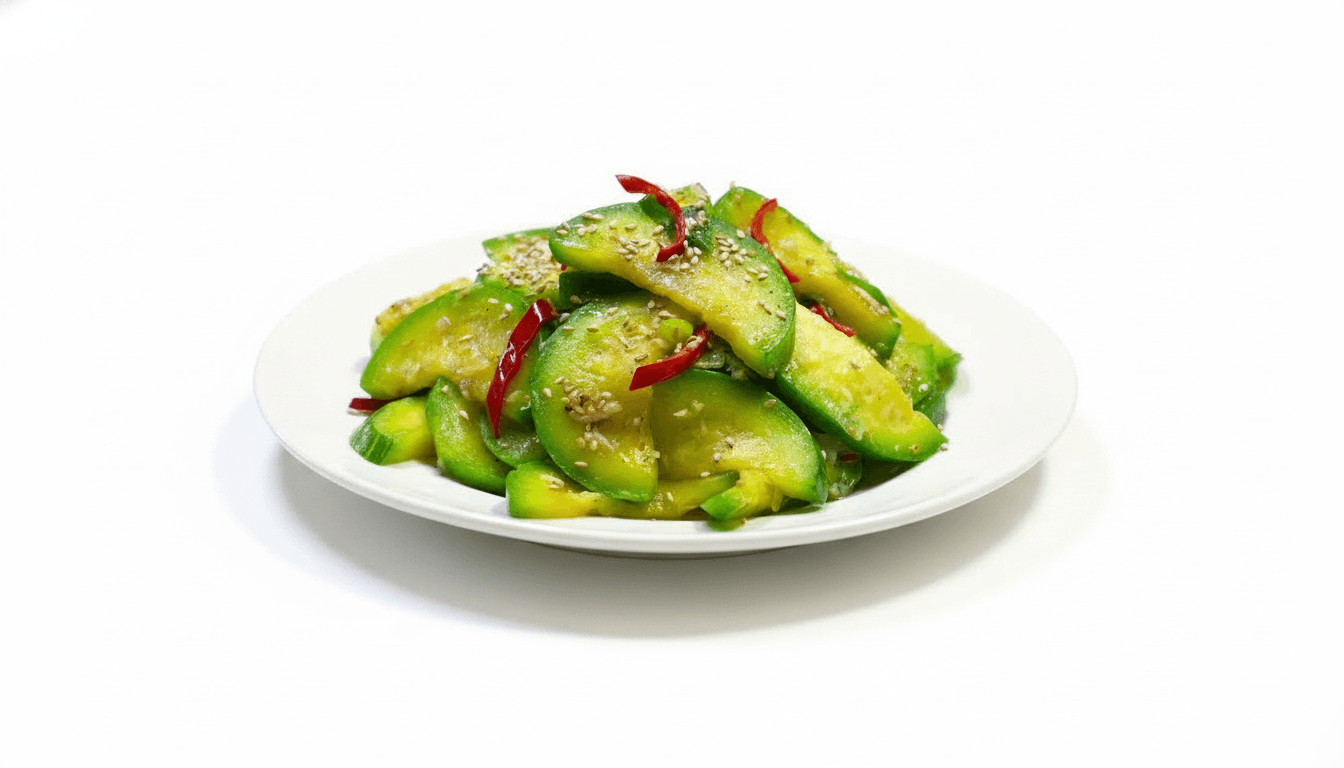
Hobak-bokkeum
호박볶음·(ho-bak-bok-keum)
The Everyday Babsang
It is the taste of a Tuesday night in a Korean-American household, the unassuming side dish a grandmother whips up while the rice cooker sings its final song. The secret to a proper hobak-bokkeum isn’t a complex sauce or high-heat pyrotechnics; it is patience and funky, fermented depth. By salting the squash before it ever sees the pan, you draw out the moisture that turns lesser stir-fries to mush, achieving that perfect, crisp-tender yield Koreans call salkang-salkang. Fortified with saeujeot—tiny, salted fermented shrimp that live indefinitely in your freezer—this is the un-Hollywood, deeply savory soul of the everyday babsang.
Before you start
Gather and prepare all ingredients before heating the pan.
Stir-frying happens fast, so having the vegetables sliced, the aromatics minced, and the shrimp chopped ahead of time is essential to prevent overcooking.
Ingredients
- Korean zucchini1 med
- saeujeot (Korean salted fermented shrimp)1 tbsp
- yellow onion1/2 med
- neutral cooking oil1 tbsp
- garlic1 tsp
- scallions2 med
- red chili pepper1/2 med
- toasted sesame oil1 tbsp
- toasted white sesame seeds1 tbsp
- water1 tbsp
Method
- 01
Cure the zucchini to draw out excess moisture and deeply season the flesh.
Place the sliced zucchini and chopped saeujeot in a mixing bowl, gently massaging the fermented shrimp into the squash until evenly coated, then let it sit on the counter for 10 to 15 minutes. Do not rinse the zucchini when the time is up; simply squeeze a handful gently to release excess water and discard the pooled liquid at the bottom of the bowl.
- 02
Bloom the aromatics in a hot pan.
Place a large skillet over medium-high heat with the neutral oil. Once shimmering, add the minced garlic and sliced onion, sautéing for about 30 to 45 seconds until fragrant but not browned.
- 03
Quickly stir-fry the cured squash just until the edges turn translucent.
Add the squeezed zucchini to the pan and toss constantly for 3 to 4 minutes while the center remains opaque and firm. If your stove runs violently hot and the pan looks dangerously dry, add exactly one tablespoon of water to create a brief burst of steam rather than adding more oil.
- 04
Finish with sesame and serve immediately to preserve the crisp-tender texture.
Turn off the heat the moment the squash reaches that perfect bite. Stir in the scallions, red chili pepper, toasted sesame oil, and crushed sesame seeds before transferring to a serving dish alongside a fresh bowl of rice.
Notes
Do not fear the fermented shrimp.
Saeujeot is the undisputed soul of this dish, providing an umami depth that salt or soy sauce simply cannot replicate; any raw, fishy aroma dissipates instantly as it hits the hot pan with the garlic.
Mexican grey squash is your best supermarket ally.
If you cannot find a true Korean aehobak at your local Asian market, seek out Mexican grey squash instead of massive, waterlogged dark green zucchinis, as its denser flesh closely mimics the original.
From Cook Korean in America.