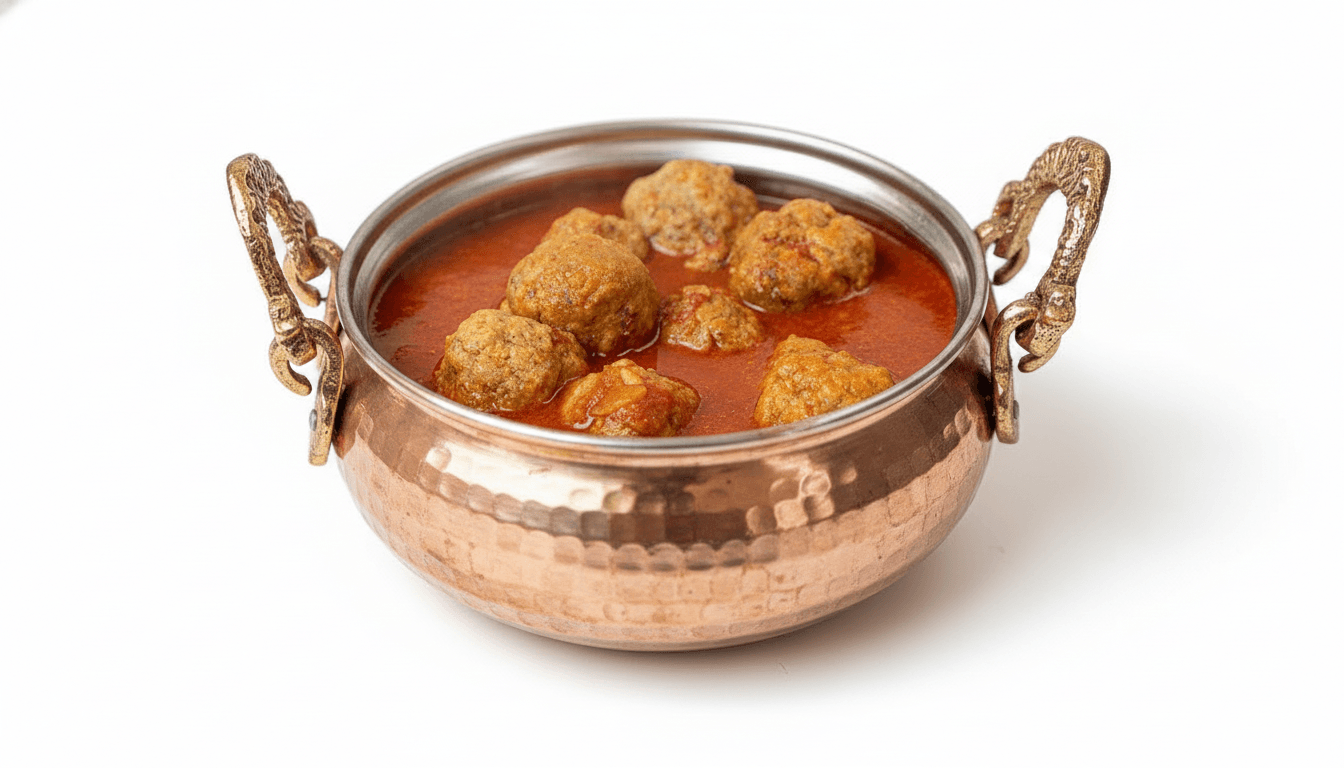
Gheymeh Rizeh Nokhodchi
قیمه ریزه نخودچی·(gheymeh ree-zeh no-khod-chee)
The Weeknight Khoresh (Stovetop Magic for Busy Parents)
If you ask a local in Isfahan what tastes like home, they won't point you toward labor-intensive restaurant fare. They point to Gheymeh Rizeh. It is a masterpiece of weeknight economy—tender, bite-sized meatballs bound by roasted chickpea flour, simmering in a vibrant, mint-laced tomato broth. The magic lies in a few grandmotherly mandates: perfectly lean meat, aggressively squeezed onions, and a violent kneading process. Scented with turmeric and loaded with potatoes, this is the unembellished, deeply comforting soul of the Persian domestic kitchen, translated seamlessly for a chaotic Tuesday night in America.
Before you start
Toast standard garbanzo bean flour if Persian roasted chickpea flour is unavailable.
Authentic Aard-e Nokhodchi is made from roasted chickpeas. If you are using raw garbanzo bean flour from a standard American supermarket, toast it in a dry skillet over medium-low heat for 3 to 5 minutes until it smells nutty, then let it cool completely before mixing it into the meat.
Ingredients
- very lean ground beef1 lb
- yellow onion1 med
- roasted chickpea flour1/2 cup
- dried mint1 tbsp
- kosher salt1 tsp
- ground black pepper1/2 tsp
- ground turmeric1/2 tsp
- neutral oil3 tbsp
- yellow onion1 large
- ground turmeric1 tsp
- tomato paste3 tbsp
- dried mint1 tbsp
- russet potato1 large
- boiling water4 cup
- fresh lemon juice1 tbsp
Method
- 01
Combine the meatball ingredients and knead them vigorously.
In a large bowl, mix the lean ground beef, the squeezed onion pulp, the roasted chickpea flour, 1 tablespoon of dried mint, salt, black pepper, and 1/2 teaspoon of turmeric. Wet your hands and knead the mixture for 5 to 8 minutes until it becomes cohesive, slightly paler in color, and sticky to the touch. This physical manipulation activates the proteins, ensuring the meatballs will not disintegrate in the broth.
- 02
Rest the meat mixture in the refrigerator to hydrate the chickpea flour.
Cover the bowl with plastic wrap and refrigerate for 30 minutes. This allows the chickpea flour to absorb residual moisture, making the meatballs much easier to roll.
- 03
Build the broth base by sautéing the diced onion and blooming the turmeric.
While the meat chills, place a large, wide pot over medium heat and warm the neutral oil. Add the diced large onion and sauté for 7 to 8 minutes until translucent and golden. Stir in 1 teaspoon of turmeric and cook for 30 seconds until fragrant.
- 04
Fry the tomato paste and bloom the remaining dried mint.
Add the tomato paste to the pot, stirring constantly for 2 to 3 minutes. This critical step cooks off the raw, metallic taste of canned tomatoes and turns the paste a deep, vibrant red. Stir in the remaining 1 tablespoon of dried mint, letting it toast in the hot oil for just 10 seconds.
- 05
Add the boiling water and potatoes to create the broth.
Carefully pour in the 4 cups of boiling water, scraping the bottom of the pot to dissolve the tomato paste into a smooth broth. Season with a pinch of salt and pepper, drop in the cubed potatoes, and bring the liquid to a vigorous, rolling boil.
- 06
Roll the chilled meat into small balls and drop them directly into the aggressively boiling liquid.
Pinch off small pieces of the meat mixture and roll them between your palms to form balls about the size of a large walnut. Drop them one by one into the boiling broth. Do not stir them immediately, and critically, do not cover the pot. Let them boil uncovered for 5 to 8 minutes. The rapid heat sears the exterior, locking their shape in place.
- 07
Simmer the stew gently until the sauce reduces and the potatoes are tender.
Once the meatballs have set and changed color on the outside, gently give the pot a stir. Reduce the heat to medium-low, cover the pot with a lid left slightly ajar, and simmer for 40 to 45 minutes until the sauce thickens and the potatoes are easily pierced with a fork.
- 08
Finish the dish with fresh lemon juice and serve warm.
Turn off the heat and stir in the fresh lemon juice to brighten the rich sauce. Taste and adjust the salt if necessary. Serve directly from the pot alongside warm flatbread or basmati rice.
Notes
The meat must be incredibly lean.
Do not use a standard 80/20 ground beef blend. The fat will quickly render and melt in the boiling liquid, leaving void spaces that cause the meatballs to collapse into a loose meat sauce. Seek out 90% or 93% lean beef.
Squeeze the grated onion dry.
Chickpea flour acts differently than Western breadcrumbs. If the raw, acidic onion juice is mixed into the meat, the hydration levels will be too high and the meatballs will turn to mush. You only want the sweet, fibrous pulp.
The rescue mission for loose meatballs.
If you are unsure about the structural integrity of your mixture, perform a test boil. Drop exactly one meatball into the boiling sauce. If it holds its shape after 3 minutes, proceed. If it begins to disintegrate, pull your raw meat mixture out, add an extra tablespoon of chickpea flour, and knead it for another 2 minutes.
From Cook Persian in America.