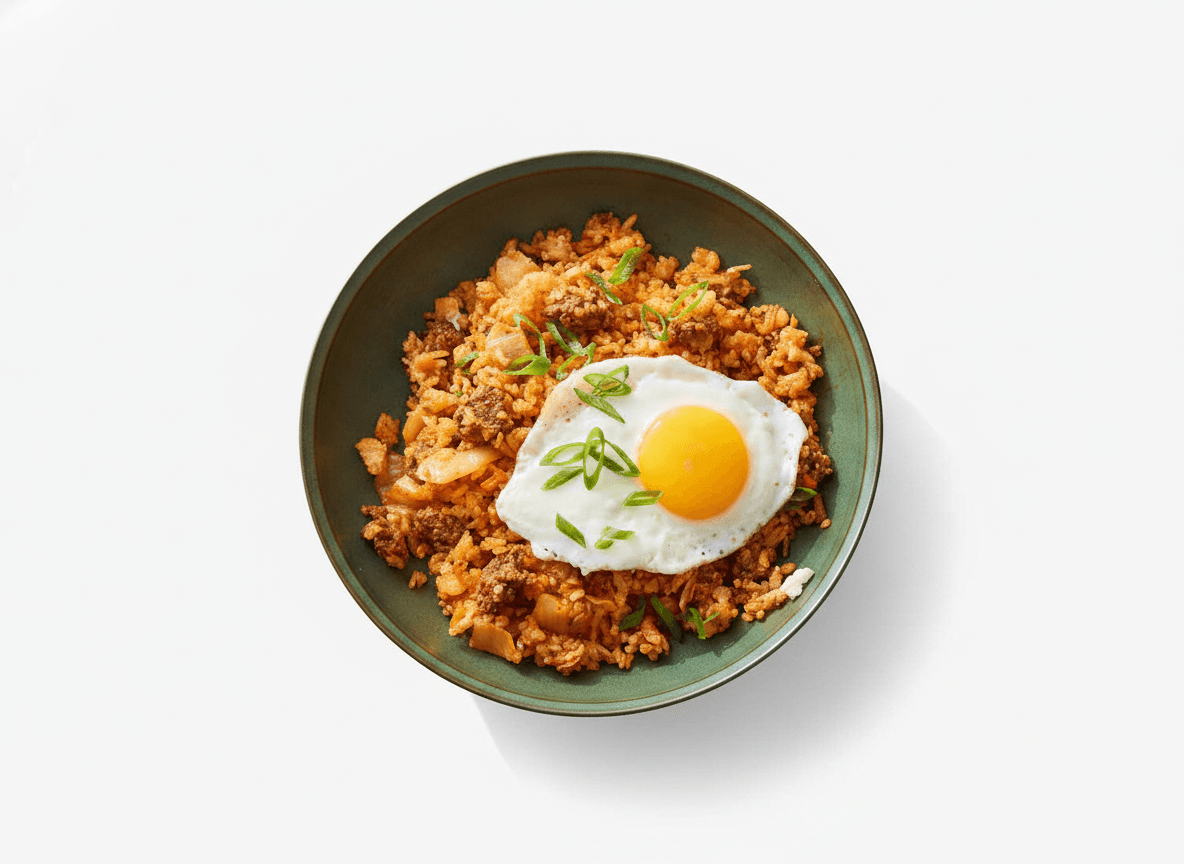
Gawi Kimchi Bokkeumbap
가위 김치볶음밥·(ga-wi kim-chi-bo-kkeum-bap)
Gyeran Bap & Quiet Comforts
Forget the fussy restaurant versions with kale and fancy proteins. Real kimchi fried rice—the kind your grandmother whipped up on a Tuesday—is born of pure utility and a pair of kitchen shears. By snipping aged, aggressively sour kimchi right in the bowl, you save the cutting board from red stains and preserve every precious drop of juice. It’s a masterpiece of technique over ingredients: rendering pork fat, extracting scallion oil, and scorching soy sauce directly on the hot metal to unlock a smoky, unapologetic depth that tastes exactly like home.
Before you start
Keep the cutting board clean by using scissors.
Place the sour kimchi directly into a mixing bowl or large measuring cup and aggressively snip it into bite-sized pieces with clean kitchen shears (gawi). This prevents stained boards and preserves the vital kimchi juices.
Ingredients
- shin-kimchi1 cup
- kimchi juice3 tbsp
- cold short-grain white rice2 cup
- Spam1/2 cup
- neutral oil2 tbsp
- scallions1/2 cup
- sugar1/2 tbsp
- Korean soy sauce1 tbsp
- Korean chili flakes1/2 tbsp
- toasted sesame oil1 tbsp
- eggs2 large
- toasted sesame seeds1 tsp
- roasted seaweed1 tbsp
Method
- 01
Render the meat and extract the scallion oil.
Place a large non-stick skillet or wok over medium heat. Add the neutral oil, diced Spam, and the white parts of the scallions, sautéing for 2 to 3 minutes until the fat renders and the kitchen smells intensely of savory alliums.
- 02
Caramelize the kimchi to drive off the moisture.
Add the snipped kimchi, sugar, and chili flakes to the pan. Stir-fry for 3 to 4 minutes without rushing; the kimchi must fry until the harsh sourness mellows, the water evaporates, and the cabbage turns a darker, rusty red.
- 03
Scorch the soy sauce on the bare pan to build smoky flavor.
Push all the ingredients to the edges to expose the hot center of the pan. Turn the heat to medium-high and pour the soy sauce directly onto the bare metal, letting it boil and sizzle for 3 to 5 seconds before tossing the kimchi mixture back into the center to mop it up.
- 04
Incorporate the cold rice and fry aggressively.
Reduce the heat to low, add the cold rice and kimchi juice, and gently chop the clumps apart with the side of a spatula so the grains separate without turning to mush. Once evenly coated, crank the heat back to high and stir-fry for 2 minutes until piping hot and slightly toasted.
- 05
Finish off the heat with sesame oil and scallion greens.
Turn off the heat, drizzle in the toasted sesame oil, and toss in the reserved green scallions so they soften slightly in the residual warmth without losing their bite.
- 06
Top with a runny fried egg and garnishes.
Divide the rice into bowls. Fry the eggs sunny-side up in a separate pan, and crown each bowl with a runny egg, a sprinkle of crushed seaweed, and toasted sesame seeds.
Notes
Your kimchi must be aggressively fermented.
If you only have fresh supermarket kimchi, fake the lactic tang by adding a teaspoon of rice vinegar when you add the soy sauce. If your kimchi is too old and makes your mouth pucker, simply double the sugar to balance it out.
Cold rice is absolutely mandatory.
Freshly cooked hot rice will turn into a mushy porridge when fried. Use day-old chilled rice, or drop commercially sealed, unheated microwavable Korean rice directly into the pan for perfectly separated grains.
Sneak in a pat of butter for a modern diaspora hack.
Swapping half the neutral oil for unsalted butter—or stirring a small pat in at the very end—adds a luxurious, rich dairy note that coats the palate and beautifully tames the spice.
From Cook Korean in America.