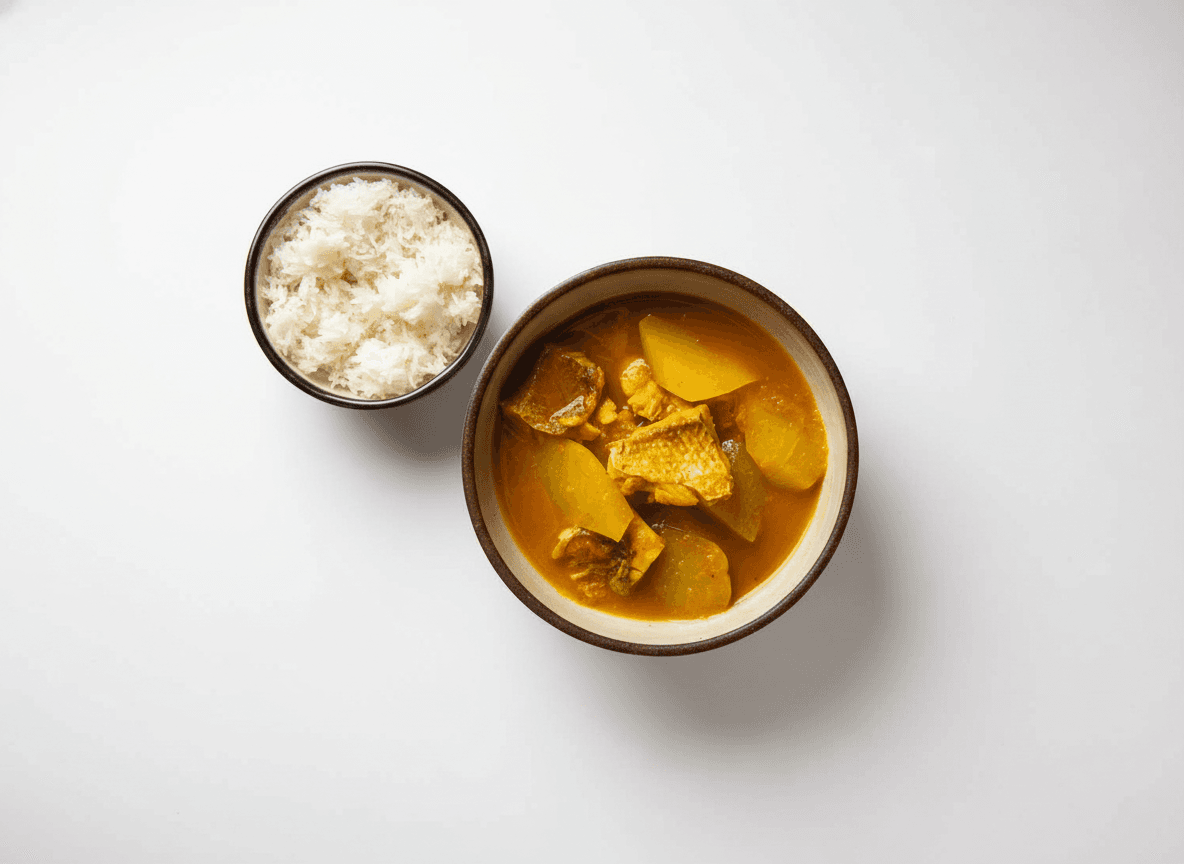
Gaeng Som Pla Sabarot
แกงส้มปลาสับปะรด·(gaeng som pla sa-ba-rot)
Sunday Heritage Simmers & Regional Thai Traditions
True Southern Thai cooking is a high-wire act of aggressive, unapologetic flavors. This isn't the mellow, coconut-heavy takeout curry of the suburban strip mall; it’s a violently vibrant, turmeric-stained broth that demands your attention. Built on a bracing foundation of tamarind and crushed chilies, it finds balance through the natural tart-sweetness of fresh pineapple and a profound umami depth. The secret to its pristine flavor lies entirely in the execution: you bring the broth to a rolling boil, drop in the fish, and you step away. It's an unwritten law of the grandmother's kitchen—stirring raw seafood means a muddy, compromised broth. Respect the method, source the fresh turmeric, and you'll reproduce the exact, pungent magic of the homeland on a weeknight.
Before you start
Process the curry paste aromatics.
In a food processor, combine the soaked dried chilies, fresh birds eye chilies, turmeric, shallots, garlic, and coarse salt. Pulse until broken down, adding a tablespoon of the chili soaking water to facilitate blending into a smooth, vibrant golden-orange puree.
Incorporate the shrimp paste.
Add the shrimp paste to the food processor last, pulsing just until incorporated. If you are using a heavy granite mortar and pestle instead of a machine, pound the ingredients in the exact same order until pulverized before mashing in the sticky shrimp paste.
Ingredients
- dried red chilies15 med
- fresh Thai birds eye chilies10 small
- fresh turmeric root1 tbsp
- shallots4 med
- garlic cloves6 med
- coarse sea salt1 tsp
- Thai shrimp paste1 tbsp
- firm white fish fillets1 1/2 lb
- fresh pineapple2 cup
- water or light unsalted stock4 cup
- tamarind concentrate4 tbsp
- premium fish sauce3 tbsp
- palm sugar1 tbsp
- fresh lime juice3 tbsp
Method
- 01
Boil the freshly made curry paste.
In a heavy-bottomed pot, bring the water or stock to a boil over medium-high heat. Whisk in the freshly blended curry paste, using a splash of hot water to rinse every last bit from your food processor or mortar, and boil aggressively for 3 to 4 minutes to cook out the raw edge of the garlic and fully dissolve the shrimp paste.
- 02
Simmer the pineapple.
Add the sliced pineapple and reduce the heat to a moderate simmer. Cook for 4 to 5 minutes to slightly soften the fruit, allowing it to absorb the savory broth while simultaneously leaching its sweet, tart juices into the pot.
- 03
Establish the flavor balance.
Stir in the tamarind concentrate, fish sauce, and palm sugar. Taste the broth carefully; it should deliver a sharp, tart punch supported by deep umami and a background whisper of sweetness. Adjust the tamarind or sugar as necessary depending on the natural tartness of your pineapple.
- 04
Execute the thermal shock.
Return the broth to a vigorous, rolling boil and gently drop the chunks of fish evenly into the pot. Do not stir, prod, or agitate the fish; touching raw seafood in hot broth releases enzymes that will instantly cloud the soup with a muddy, fishy odor. Cover the pot and boil undisturbed for 3 to 5 minutes.
- 05
Finish with volatile acidity.
Once the fish is completely opaque and cooked through, immediately remove the pot from the heat to prevent overcooking the delicate flesh. Squeeze the fresh lime juice directly into the hot broth to provide a bright, floral high-note that tamarind alone cannot achieve.
Notes
The non-negotiable nature of fresh turmeric.
Do not attempt to substitute powdered turmeric in this dish. The fresh rhizome provides a distinct earthy bitterness and the violently vibrant golden hue that defines authentic Southern Thai cuisine.
Selecting the right pineapple.
Seek out a fresh pineapple that is highly fragrant but still feels firm and slightly tart. Overripe, syrupy fruit will throw off the curry's sharp balance, and canned pineapple is entirely unacceptable.
From Cook Thai in America.