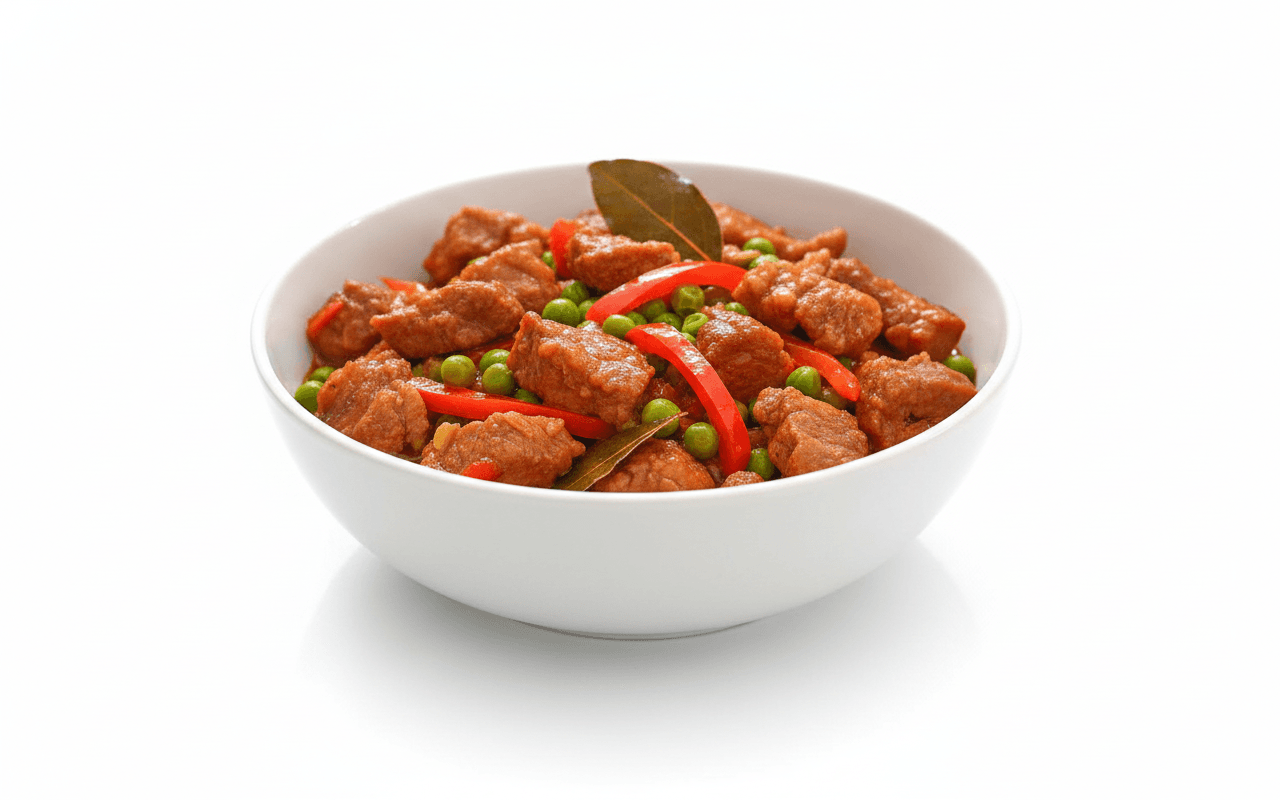
Filipino-Hawaiian Pork Guisantes
The Backyard Ohana Potluck: Scaling for the Gathering
In Hawaii, lunch on the sugar plantations meant cracking open a double-decker kau kau tin. Inside, a mountain of white rice waited for whatever savory, rich okazu the guy sitting next to you had brought to share. This is the beautiful collision of Filipino resourcefulness and local Hawaiian flavor—a deeply savory, working-class stew that relies on the magic of matching the briny depth of patis with the mellow salt of shoyu. It requires no obscure island produce and no pretension. Just one pot, cheap cuts of pork, and the patience to let it simmer down into the ultimate nostalgic comfort food.
Before you start
Make a large pot of steamed white rice.
Do this before you even start the pork. This dish is fundamentally a delivery system for rice, and you will want it ready the second the stew comes off the stove.
Ingredients
- pork shoulder or pork belly2 lb
- neutral cooking oil2 tbsp
- yellow onion1 med
- garlic5 clove
- plain tomato sauce8 oz
- tomato paste1 tbsp
- water or low-sodium chicken broth1 1/2 cup
- patis2 tbsp
- shoyu1 tbsp
- dried bay leaves2 whole
- frozen petite sweet peas1 1/2 cup
- sliced pimientos4 oz
- sugar1 tsp
- black pepper1 tsp
Method
- 01
Heat the oil in a large, heavy-bottomed pot over medium-high heat, then sauté the onions and garlic until translucent.
Push the aromatics to the edges and add the pork in an even layer. Leave it entirely alone for a few minutes to develop a serious, golden-brown crust. You want the fat to render and the edges to caramelize—this Maillard reaction is the absolute foundation of the stew's flavor.
- 02
Pour in the patis and shoyu, letting them aggressively sizzle and cook into the meat for about a minute.
This burns off the harsh, fishy funk of the patis and locks the umami directly into the pork fat. Once reduced, stir in the tomato sauce, tomato paste, water, and bay leaves.
- 03
Bring the liquid to a rolling boil, then immediately drop the heat, cover tightly, and simmer for 30 to 40 minutes.
Stir it occasionally so the bottom doesn't scorch. You are looking for the pork to become incredibly fork-tender and for the braising liquid to reduce into a thick, glossy, lip-smacking gravy. If it looks dry before the meat surrenders, add a splash of water.
- 04
Stir in the sugar, a heavy dose of black pepper, the frozen peas, and the pimientos with a splash of their juice.
Simmer uncovered for exactly 2 to 3 minutes more. Not a second longer. You just want to heat the vegetables through. Overcook them, and the peas will turn a depressing, mushy gray.
- 05
Remove from the heat and let the pot rest for 5 minutes before serving.
The gravy will thicken slightly as it settles. Serve this piping hot in deep bowls over a massive, unforgiving scoop of steamed white rice.
Notes
Brown the pork in batches if scaling up for a crowd.
If you overcrowd the pot when making a massive batch for a potluck, the meat will steam instead of sear. It takes longer, but browning in batches is entirely mandatory for that deep, authentic flavor.
Make it a day ahead.
Like all great working-class stews, this tastes profoundly better the next day after the tomato and pork fat have had a night to get to know each other in the fridge.
From Cook Hawaiian in America.