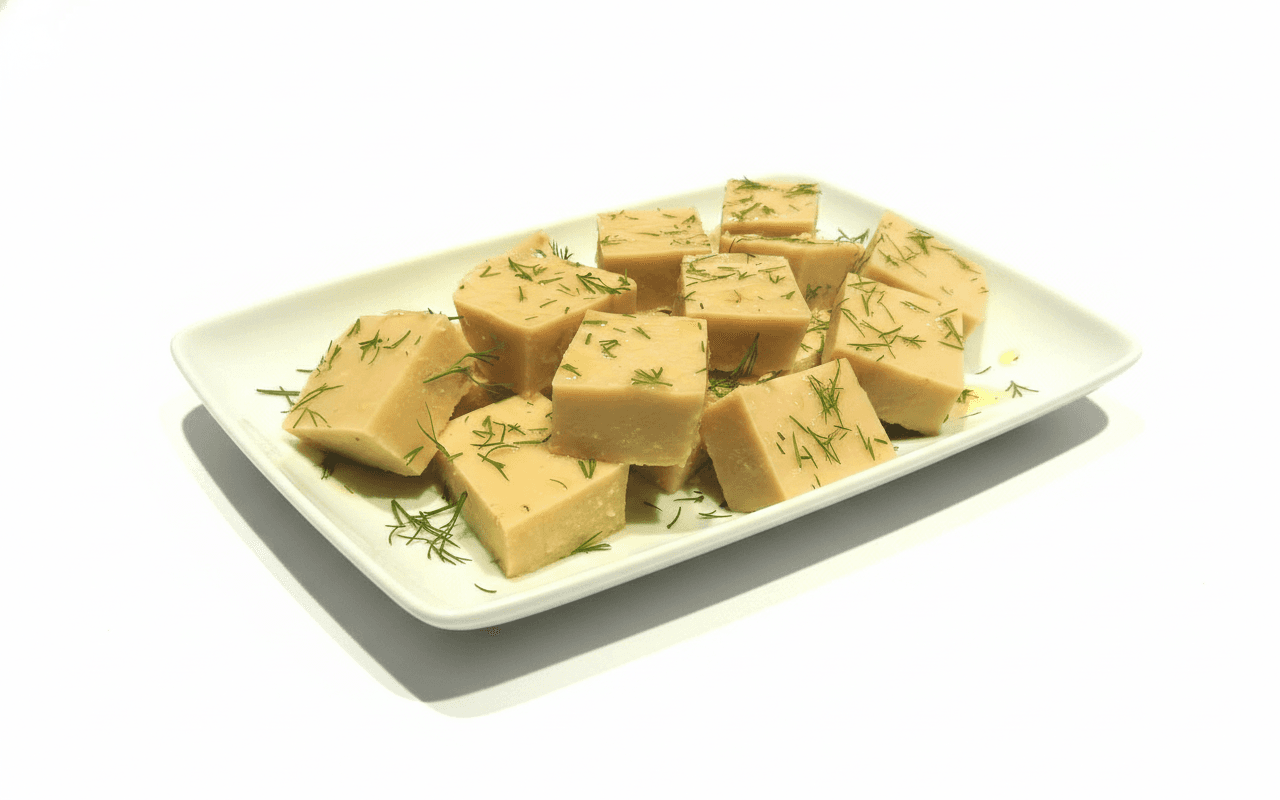
Fava
Meze & Muhabbet (The Evening Table)
In the taverns of Istanbul and the breezy coastal towns of the Aegean, the evening table doesn't truly begin until the fava arrives. This isn't a loose, warm dip. It's an elegant, savory block of pureed dried fava beans that melts like butter on the tongue. Our grandmothers used to soak the beans overnight and simmer them for hours, but the modern weeknight secret is the pressure cooker. It transforms this ancient, deeply comforting dish into a fast reality without sacrificing an ounce of its soul. The true magic lies in the tekmil—the crowning garnish of quick-cured red onions, fresh dill, and a heavy pour of your best extra virgin olive oil.
Before you start
Equipment check.
You will need an electric pressure cooker (like an Instant Pot) or a standard stovetop pressure cooker, an immersion blender, and a shallow glass dish (like a 9x9 Pyrex) for setting the fava.
Ingredients
- dried split peeled fava beans2 cup
- yellow onion1 large
- extra virgin olive oil1/2 cup
- granulated sugar1 tbsp plus 1/2 tsp
- kosher salt2 tsp
- hot water4 1/2 cup
- fresh dill1/4 cup
- red onion1/2 small
- white wine vinegar1 tsp
- lemon1 med
Method
- 01
Build the savory foundation.
Set your pressure cooker to the sauté function and heat 1/3 cup of the olive oil. Add the diced yellow onion, 1 tablespoon of the sugar, and 1 1/2 teaspoons of the salt, cooking for 5 to 7 minutes until the onions are completely soft, translucent, and just beginning to turn golden. This neutralizes any harsh raw onion flavor.
- 02
Pressure cook the beans.
Stir in the rinsed fava beans to coat them in the onion oil for about a minute, then pour in the hot water. Secure the lid, cook on high pressure for 20 minutes, and allow the pressure to release naturally for 10 minutes.
- 03
Blend into a silky puree.
Open the pot and stir in half of the fresh dill. Use an immersion blender to puree the mixture until completely smooth. It should look like a thick soup right now, not a stiff paste—it will firm up drastically as it cools.
- 04
Set the fava in a glass dish.
Pour the hot puree into a shallow glass dish lightly coated with olive oil and smooth the top. Drizzle a few drops of oil over the surface to prevent a skin from forming, press plastic wrap directly against the puree, and chill in the fridge for at least two hours or overnight.
- 05
Cure the red onions for the garnish.
While the fava sets, combine the diced red onion, the remaining 1/2 teaspoon of sugar, the remaining 1/2 teaspoon of salt, and the vinegar in a small bowl. Massage the onions with your fingers for thirty seconds, then set aside for fifteen minutes to draw out their harsh bite and turn them sweet and bright pink.
- 06
Garnish and serve.
Use a wet knife to cut the firm fava into squares or diamond shapes, then carefully transfer them to a platter. Crown the dish generously with the cured red onions, the remaining fresh dill, a heavy glug of your remaining extra virgin olive oil, and a squeeze of fresh lemon just before eating.
Notes
Sourcing the right beans.
You must use dried split, peeled fava beans—usually labeled 'Habas Peladas' or found in Middle Eastern markets. Do not use unpeeled dried fava beans, as their thick skins will refuse to break down and ruin the silky texture.
Do not skip the sugar.
Adding sugar is non-negotiable in Turkish olive oil dishes (zeytinyağlılar). It balances the natural astringent earthiness of the dried legumes and amplifies the savory umami of the aromatics.
From Cook Turkish in America.