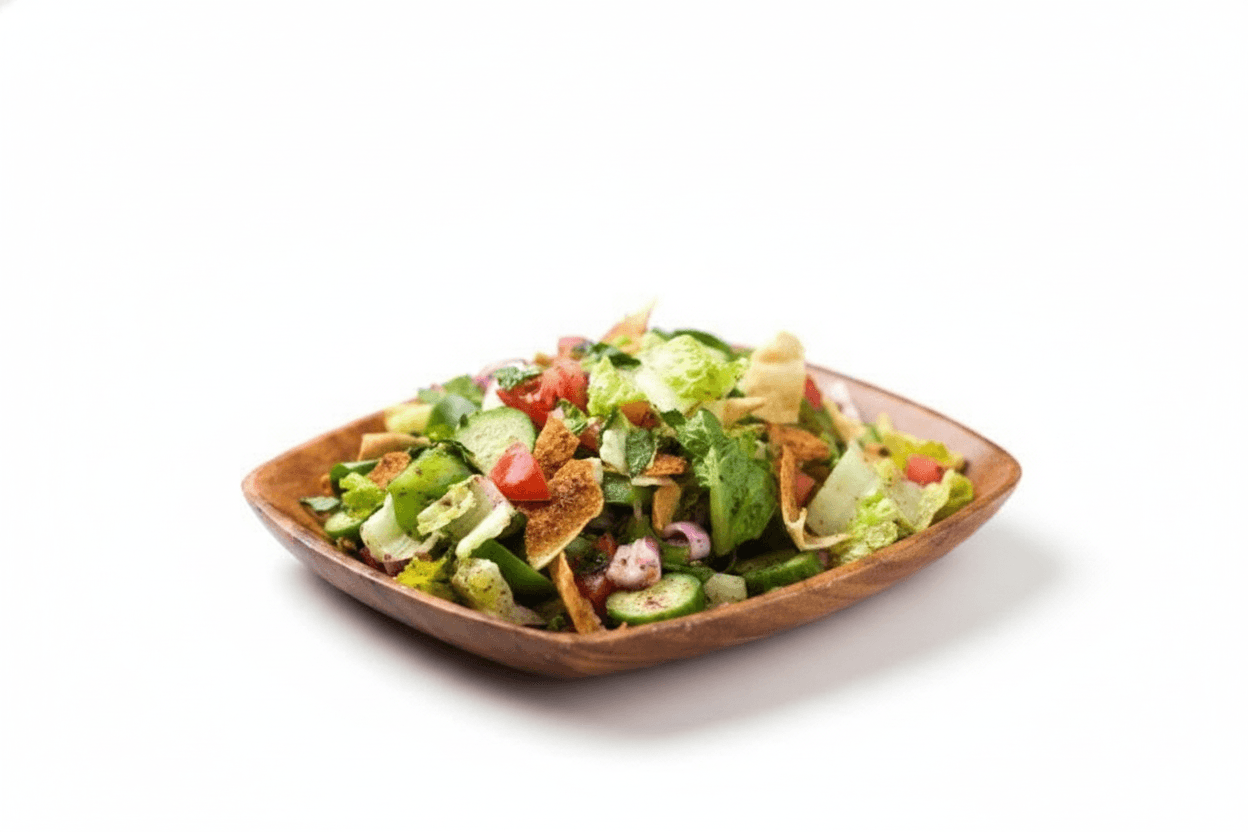
Fattoush
فتوش·(fat-toosh)
The Sunday Feast: Mezze & Mashewe
Tabbouleh is the meticulous showpiece, but fattoush is the loud, unapologetic, rustic cousin. Born in the mountain villages as a peasant's trick to use up yesterday's flatbread, this is the definitive taste of the Lebanese home table, stripped of any fake fusion. It hits every sensory note: the fierce crunch of baked pita, the hydration of roughly chopped garden vegetables, and a dressing that will ruin you for all other salads. That dressing is a dark, emulsified punch in the mouth of fresh lemon, astringent sumac, and the deep, sweet-sour complexity of pomegranate molasses. Toss it together at the exact second before serving, and it is perfectly, aggressively delicious.
Before you start
Prep components ahead for a sixty-second weeknight assembly.
Bake the pita chips on Sunday and store them in an airtight bag. Pre-mix the dressing in a jar and keep it in the fridge. Chop the sturdy vegetables in the morning so you can simply toss everything together at dinner.
Ingredients
- Lebanese-style thin pita bread2 med
- extra virgin olive oil3 tbsp
- ground sumac1 tsp
- kosher salt1/2 tsp
- extra virgin olive oil1/3 cup
- fresh lemon juice1/4 cup
- pomegranate molasses2 tbsp
- garlic cloves2 large
- ground sumac1 tsp
- dried spearmint1 tsp
- kosher salt1 tsp
- black pepper1/4 tsp
- romaine lettuce1 large
- Persian cucumbers3 med
- firm tomatoes3 med
- red radishes5 med
- scallions4 med
- green bell pepper1 small
- flat-leaf Italian parsley1 cup
- fresh mint leaves1/2 cup
- baby arugula1 cup
Method
- 01
Crisp the pita in a hot oven until deeply blistered.
Preheat the oven to 400°F. Brush both sides of the split pita halves generously with olive oil, then sprinkle evenly with sumac and salt. Bake for 8 to 12 minutes until deeply golden. Let them cool completely, then shatter them with your hands into rustic, bite-sized crackers.
- 02
Aggressively emulsify the dressing.
In a glass jar with a tight-fitting lid, combine the olive oil, lemon juice, pomegranate molasses, garlic paste, sumac, dried mint, salt, and pepper. Shake it violently until the molasses dissolves and you are left with a thick, unified, dark-red emulsion that makes your mouth pucker.
- 03
Chop the vegetables coarsely to prevent a soggy salad.
In a wide serving bowl, combine the romaine, cucumbers, tomatoes, radishes, scallions, bell pepper, parsley, fresh mint, and the arugula. Do not chop them too small; fattoush requires a coarse, rustic 'khishin' chop so the vegetables hold their crunch and release less water.
- 04
Dress and toss the salad immediately before serving.
Timing is everything. Just before you carry the bowl to the table, pour the dressing over the vegetables and toss gently. Add the shattered pita chips and give it one final toss so the bread is coated in the tart dressing but still fiercely crunchy.
Notes
Never substitute the core flavor trinity.
Authentic fattoush relies entirely on ground sumac and real pomegranate molasses (dibs rumman). Do not use regular molasses or pomegranate juice, which lack the required syrupy tartness.
Mimic traditional purslane with peppery greens.
Traditional Lebanese recipes mandate purslane (baqleh), a lemony, fleshy weed rarely found in American supermarkets. Baby arugula or watercress perfectly replicates its necessary peppery bite.
From Cook Lebanese in America.