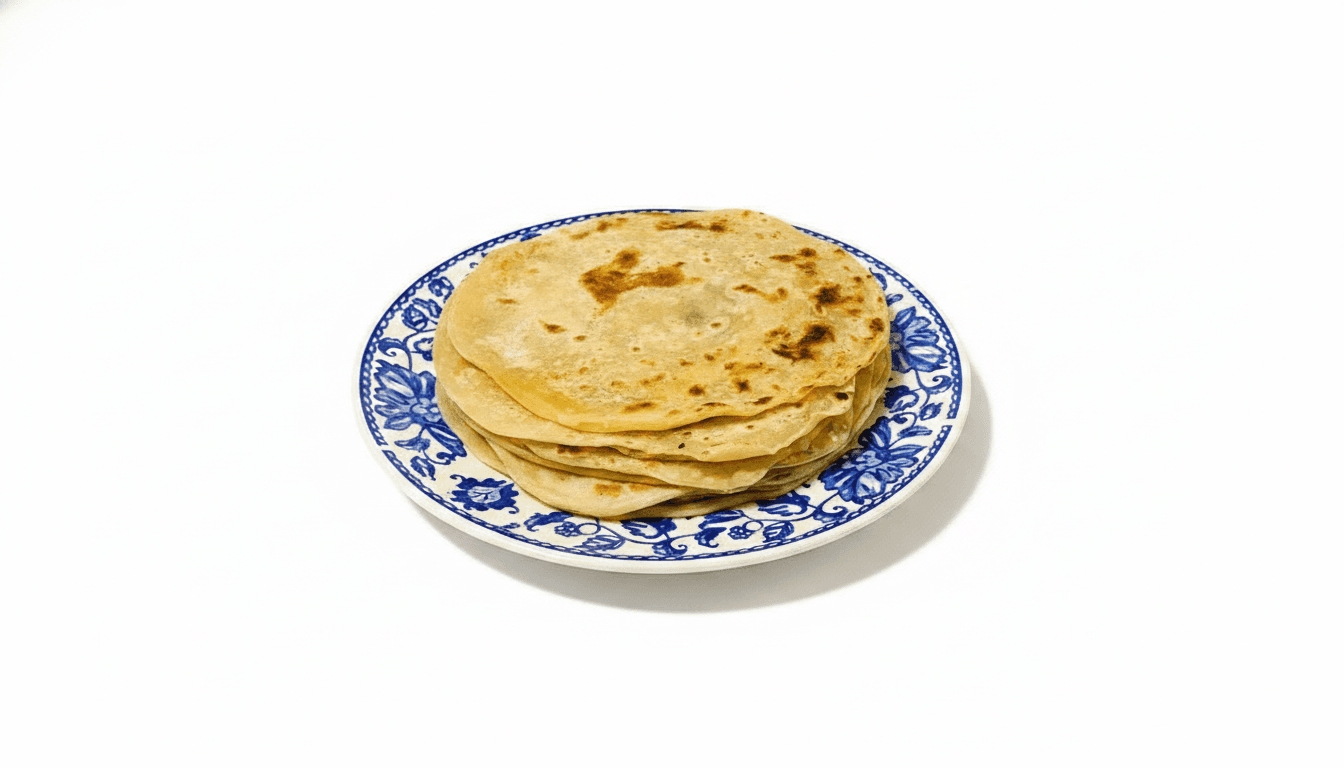
Fatira
ፋጢራ·(fah-tee-rah)
Qurs: The Slow Saturday Morning
When you wake up missing the sounds and smells of your parents' kitchen, this is the remedy. Real Ethiopian grandmothers don't complicate fatira with yeast or hours of proofing. The secret is an unleavened dough, a mandatory twenty-minute rest to relax the gluten, and the alchemy of niter kibbeh. Stretched paper-thin with oiled hands and folded into flaky layers, it sizzles in the pan until golden, binds to a savory egg, and demands a heavy pour of floral honey. It requires almost no active time and delivers an undeniable taste of home.
Ingredients
- unbleached all-purpose flour3 cup
- fine sea salt1 tsp
- granulated sugar1 tsp
- warm water1 cup
- neutral vegetable oil6 tbsp
- Niter Kibbeh4 tbsp
- eggs4 large
- salt1/4 tsp
- black pepper1/4 tsp
- raw honey1/4 cup
Method
- 01
Mix the flour, salt, and sugar with the warm water and two tablespoons of oil to form a shaggy dough, then knead vigorously for five to seven minutes.
The dough should transition from sticky and rough to perfectly smooth, soft, and elastic.
- 02
Divide the dough into four equal balls, coat them thoroughly in oil to prevent a dry skin from forming, and let them rest covered on a plate for twenty minutes.
Do not skip this. The resting period relaxes the gluten network so the dough stretches willingly instead of snapping back.
- 03
Coat a wide stretch of counter and your hands with oil, then gently press and pull one dough ball outward from the center.
Leave the rolling pin in the drawer. Slide your oiled fingers underneath the edges and pull until the dough is paper-thin and translucent. Small tears will hide in the folds.
- 04
Brush one tablespoon of melted niter kibbeh across the stretched dough, then fold it into thirds vertically and horizontally to form a neat, multi-layered square.
Fold the top third down, the bottom third up, then the left side in and the right side over. Repeat this process with the remaining dough balls.
- 05
Heat a large cast-iron skillet over medium heat, place one folded dough square in the pan, and cook for two to three minutes until the bottom is beautifully golden and speckled with dark, crispy bubbles.
- 06
Flip the flatbread, immediately pour one lightly whisked and seasoned egg over the top, and flip the entire bread over again so the egg cooks face-down against the hot iron.
Cook for thirty to forty-five seconds just until the egg is set and fused to the crispy pastry, then remove to a cutting board. Repeat the cooking process for the remaining fatira.
- 07
Cut the fatira into smaller squares while piping hot and drizzle generously with raw honey.
The heat will melt the honey down into the flaky, buttery crevices. Serve immediately alongside strong Ethiopian coffee or spiced black tea.
Notes
On Niter Kibbeh.
If you cannot find this Ethiopian spiced clarified butter at a local market or in your mother's fridge, melt high-quality ghee and steep it for five minutes with a pinch of ground cardamom and fenugreek to replicate the profile.
Make it ahead.
For a weeknight dinner timeline, the dough can be mixed, oiled, and refrigerated overnight. Let it sit at room temperature for fifteen minutes before stretching to take the chill off.