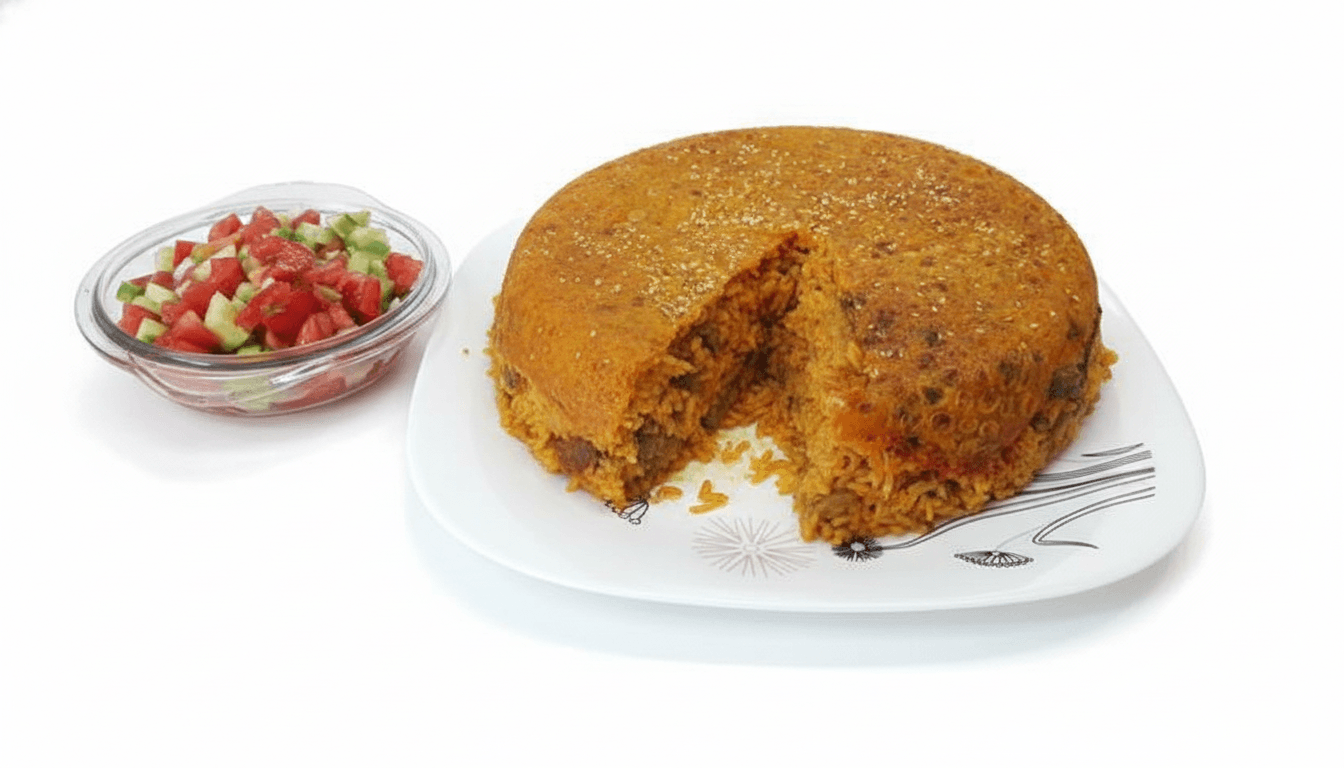
Express Loobia Polo Mayeh
لوبیا پلو·(loo-bee-yah po-lo ma-yeh)
The Modern Mehmooni (Weekend Feasts and Ta'arof)
Traditionally, Loobia Polo requires soaking, parboiling, draining, and a minor miracle to get on the table. Not today. This is the weeknight holy grail of the diaspora kitchen, built on the wisdom of the Caspian coast grandmothers who swear by the one-pot absorption method known as kateh. By marrying a deeply spiced, rendered beef and green bean base—which you can batch and freeze on a Sunday—with imported basmati, you summon the intoxicating scent of saffron and cinnamon to a random Tuesday night. No shortcuts on flavor, just absolute respect for your time.
Before you start
Batch and freeze the Mayeh.
The true weeknight secret to this dish is tripling the meat, bean, and tomato base (the Mayeh) on a Sunday. Freeze it in batches. Come Thursday night, you just drop a thawed block into rinsed rice, add water, and turn on the stove.
Properly bloom the saffron.
Never toss dry saffron threads directly into a dish. Grind a pinch in a mortar and pestle with a single crystal of sugar, then steep it in two tablespoons of hot water to fully release its color and aroma.
Ingredients
- extra-long grain Basmati rice2 cup
- kosher salt1 tbsp
- neutral cooking oil3 tbsp
- yellow onion1 large
- 80/20 ground beef3/4 lb
- fresh green beans1 lb
- tomato paste2 tbsp
- turmeric1 tsp
- ground cinnamon1 tsp
- black pepper1/2 tsp
- edible rose petal powder1/2 tsp
- liquid bloomed saffron1/4 tsp
Method
- 01
Sauté the onions until translucent and golden.
Heat the oil in a large, heavy-bottomed non-stick pot over medium heat. Do not let the onions burn; they need to remain soft and sweet.
- 02
Render the beef with the foundational spices.
Add the ground beef, turmeric, and black pepper. Break the meat apart constantly with a wooden spoon, letting it fry until deeply browned and the animal fats fully render.
- 03
Sweat the green beans to release their internal moisture.
Add the chopped green beans and cook for exactly five minutes. You aren't blistering them; you're just gently dehydrating them so they act like sponges for the rich sauce.
- 04
Fry the tomato paste to eliminate its raw, metallic bite.
Push the meat and beans to the edges to create a well. Drop the tomato paste directly into the rendered fat in the center and fry for two minutes until it darkens to a brick-red, then mix it all together.
- 05
Marry the rice and the base with the golden water ratio.
Fold the rinsed rice directly into the pot. Pour in hot water until it sits exactly two centimeters—about the height of your first finger joint—above the surface of the rice and meat. Add the salt, cinnamon, and rose petal powder.
- 06
Execute the Kateh boil.
Bring the pot to a vigorous, uncovered boil over medium-high heat. Wait until the water evaporates just below the surface of the rice and you hear the gentle crackle of fat frying at the bottom of the pot.
- 07
Steam undisturbed under a towel-wrapped lid.
Drizzle the bloomed saffron water evenly over the rice. Wrap the lid in a clean kitchen towel to catch condensation, seal the pot tightly, and drop the heat to the absolute lowest setting. Steam for 45 minutes without lifting the lid.
- 08
Fluff and serve.
Remove from the heat, take off the lid, and gently fluff the rice with a large spatula without mashing the grains. Serve immediately alongside plain yogurt and pickled vegetables.
Notes
Respect the finger-joint rule.
The biggest failure point of the Kateh method is soggy rice (shafteh). Because the meat and vegetables retain moisture, you need strictly less water than a standard Western rice ratio. Trust the two-centimeter measurement.
The cinnamon stick swap.
If you find your finished rice looks muddy instead of a vibrant red-gold, swap the ground cinnamon for a whole stick during the boiling phase to keep the starchy water clear, and remove it before serving.
From Cook Persian in America.