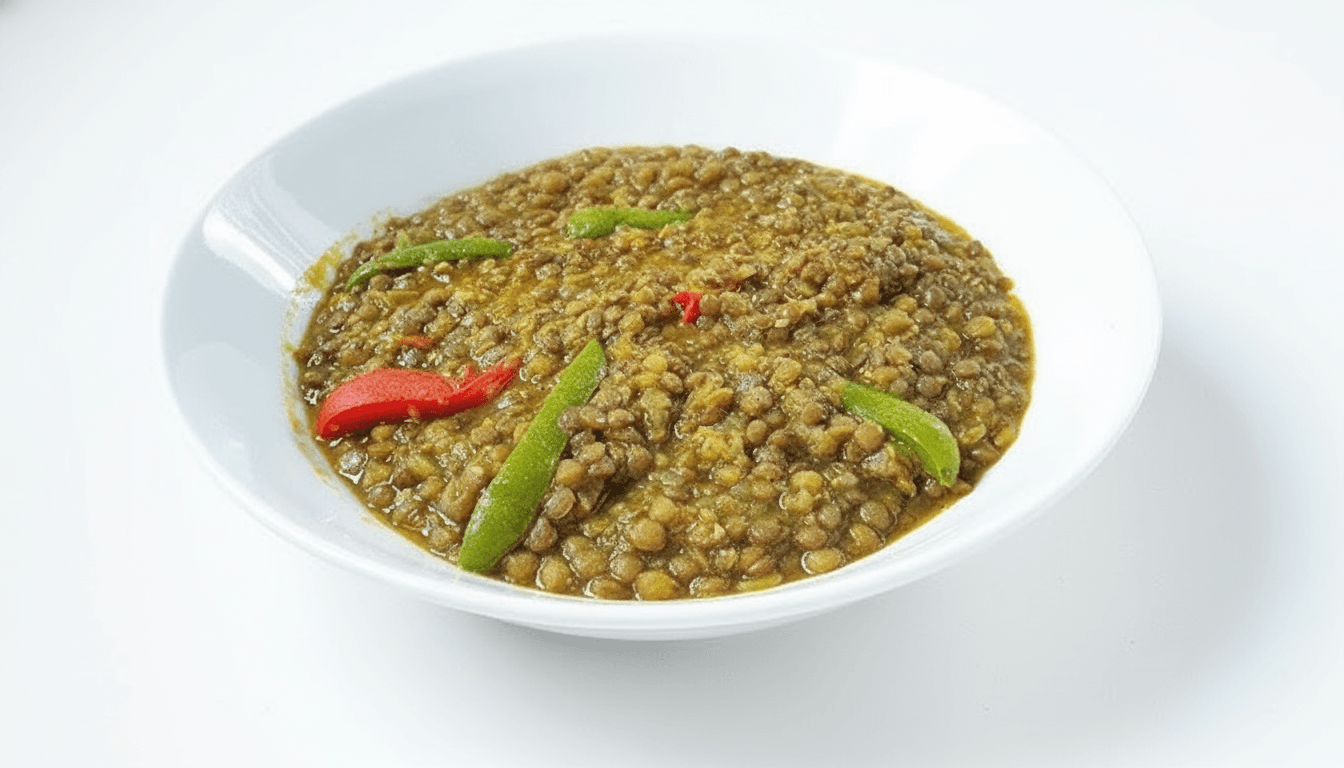
Defen Misir
ድፍን ምስር·(defen misir)
The Grandmother's Fridge: Batch-Cooked Foundations
The secret to an authentic Ethiopian stew isn't rushing the process; it's knowing the hard work was already done on Sunday. By relying on a batch-cooked kulet—onions dry-sweated into a dark, sweet, patient paste—this deeply earthy, berbere-spiced brown lentil stew comes together in the time it takes to boil the legumes. It is the uncompromising, exact taste of the homeland, reverse-engineered for a busy weeknight.
Before you start
Puree six large red onions in a food processor to begin the Kulet foundation.
True Ethiopian flavor relies on onions cooked down until they practically disappear. Doing this on a weeknight is nearly impossible, so build a batch on Sunday. A food processor replicates the traditional fine hand-dicing in seconds.
Dry-sweat the onions without oil over medium-low heat.
Place the pureed onions in a dry pot. Stir frequently for 30 to 40 minutes. Do not rush this. They will release their water and eventually collapse into a dark, sweet paste.
Fry the paste with fat and spices.
Add 1/2 cup of Niter Kibbeh (or oil) and 1/2 cup of Berbere spice to the pot. Stir and fry for 15 minutes, adding splashes of water to prevent burning. Let it cool, then store in a jar in the fridge for up to two weeks, or freeze in ice-cube trays for instant use.
Ingredients
- whole brown lentils1 cup
- water or low-sodium vegetable broth3 1/2 cup
- batch-cooked berbere kulet1 cup
- Niter Kibbeh or neutral vegetable oil2 tbsp
- fresh ginger1 tsp
- garlic3 med cloves
- salt1/2 tsp
- Mekelesha spice blend1/4 tsp
- fresh jalapeño1 med
Method
- 01
Boil the lentils until tender but structurally intact.
In a medium saucepan, bring the rinsed lentils and 3 cups of the water to a boil. Reduce the heat, cover, and simmer for 25 to 30 minutes. Drain any excess liquid. Boiling them separately ensures they don't scorch your precious kulet base while they soften.
- 02
Wake up the aromatics.
Heat a heavy-bottomed pot or Dutch oven over medium heat. Melt the Niter Kibbeh or oil, then add the minced garlic and grated ginger, sautéing for just 60 seconds until highly fragrant.
- 03
Incorporate the foundation.
Add 1 cup of your batch-cooked berbere kulet to the pot. Stir to combine with the aromatics, letting the paste heat through and bubble gently for 2 to 3 minutes.
- 04
Simmer and marry the flavors.
Fold the cooked, drained lentils into the spicy kulet. Add the remaining 1/2 cup of water or broth to loosen the stew to your desired consistency. Reduce the heat to low, cover, and let it simmer for 10 minutes so the lentils can absorb the deep flavors of the berbere and caramelized onions.
- 05
Apply the finishing touches.
Remove the lid and stir in the salt, the Mekelesha spice, and the sliced jalapeños. Cook for 2 more minutes. The jalapeño isn't just for heat; it provides a fresh, bright, grassy crunch against the earthy stew.
Notes
The Mekelesha substitution.
Mekelesha is a traditional finishing blend meant to preserve delicate aromatic oils. If you don't have it on hand, a tiny pinch of ground cardamom and clove makes an excellent weeknight substitute.
Leveraging the pressure cooker.
Modern diaspora cooks enthusiastically utilize the Instant Pot to save time. Sauté your aromatics and kulet, add raw washed lentils and broth, then seal and cook on high pressure for exactly 12 minutes.