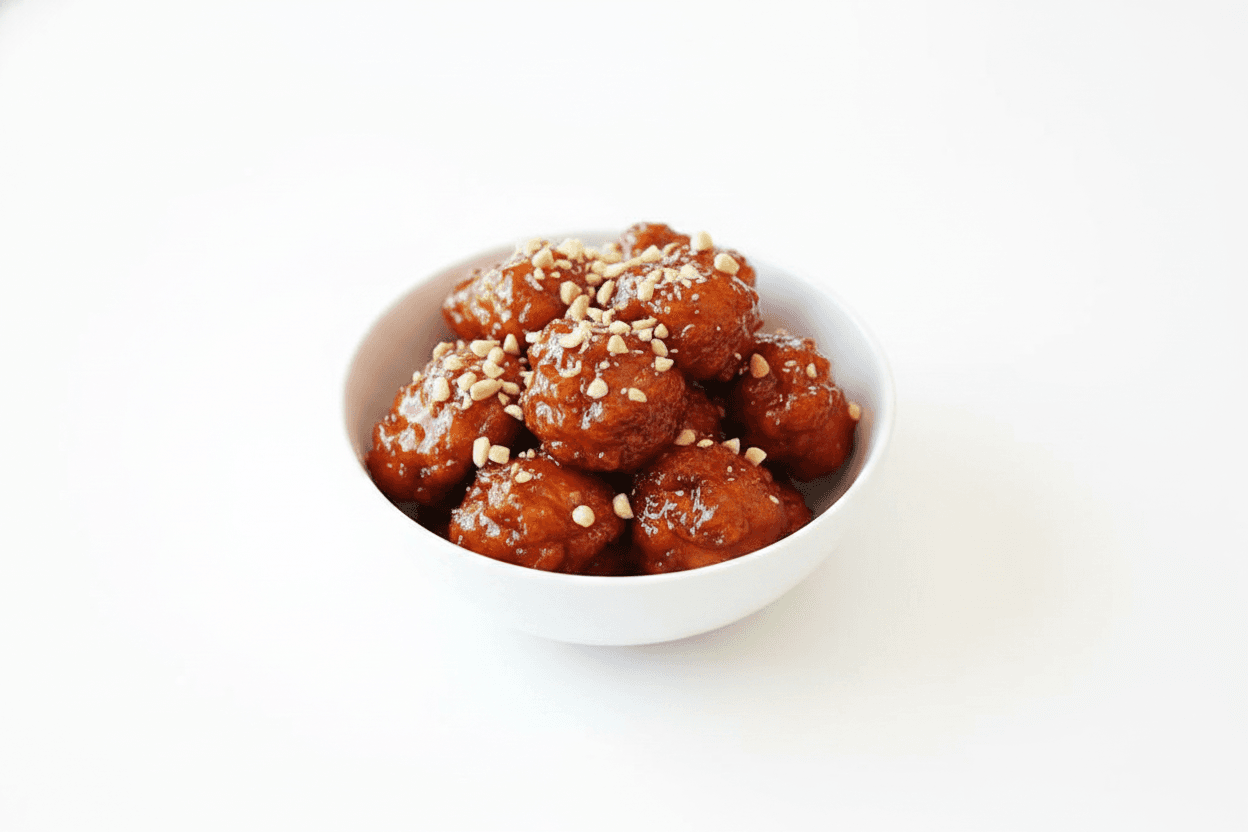
Cup-Dakgangjeong
컵닭강정·(keop-dakgangjeong)
After-School Bunsikjib
For any Korean kid, the smell of hot frying oil and sweet garlic means one thing: dakgangjeong. While older generations chase the fiery, heavily fermented heat of the traditional markets, the youth crave the bunsikjib version sold in paper cups outside schools. Street vendors knew the secret was cutting spicy gochujang with standard American ketchup to create a sweet, tangy glaze that's impossible to stop eating. We're keeping it ruthlessly authentic where it counts: neutralizing the gamey poultry with a milk soak and using pure potato starch for a shatteringly crisp, double-fried crust that holds its crunch under the syrup.
Before you start
Neutralize the chicken.
Place the chicken pieces in a bowl, pour the milk over them, and let sit for 20 to 30 minutes to draw out any gamey, bloody odors. Rinse lightly and pat completely dry.
Prevent the rice cake explosion.
Never throw raw, cold rice cakes directly into a deep fryer, as the trapped steam will cause them to violently pop and splash boiling oil. Soften them in hot tap water for 10 minutes, then drain and pat them bone dry.
Ingredients
- boneless skinless chicken thighs1 1/2 lb
- whole milk1/2 cup
- kosher salt1 tsp
- black pepper1/2 tsp
- potato starch1 cup
- neutral frying oil1 qt
- Korean cylinder rice cakes1 cup
- ketchup4 tbsp
- light corn syrup4 tbsp
- soy sauce2 tbsp
- gochujang1 tbsp
- brown sugar1 tbsp
- garlic1 tbsp
- ginger1/2 tsp
- rice vinegar1 tbsp
- roasted peanuts1/4 cup
- sesame seeds1 tbsp
Method
- 01
Pan-fry the rice cakes.
In a small non-stick skillet, heat a tablespoon of oil over medium heat and lightly toast the dried rice cakes for 3 to 4 minutes until blistered and slightly crispy, then set aside.
- 02
Coat the chicken in pure starch.
Toss the dried chicken with the salt and pepper. Place the potato starch in a large ziplock bag, add the chicken, seal, and shake vigorously until every piece is heavily dusted and feels completely dry to the touch.
- 03
Perform the first fry.
Fill a heavy-bottomed pot with 2 inches of neutral oil and heat to 340°F. Fry the chicken in batches for 5 to 6 minutes until lightly golden, then remove to a wire rack to rest for 5 minutes, allowing internal steam to migrate to the surface.
- 04
Lock in the crunch with a second fry.
Increase the oil heat to 375°F and plunge all the chicken back in for 2 to 3 minutes until deeply golden, blistered, and shatteringly crisp.
- 05
Build the bunsikjib glaze.
In a large, wide skillet, combine the ketchup, corn syrup, soy sauce, gochujang, brown sugar, garlic, ginger, and vinegar. Stir constantly over medium heat until the sauce bubbles rapidly and thickens into a glossy, sticky syrup, about 2 to 3 minutes.
- 06
Toss and garnish.
Turn off the heat and immediately tumble the hot chicken and pan-fried rice cakes into the skillet, tossing vigorously until every piece is coated in the crimson glaze. Serve immediately, showered with the crushed peanuts and sesame seeds.
Notes
Respect the corn syrup.
Light corn syrup is an exact functional substitute for traditional Korean mulyeot. Do not swap it for honey or regular sugar; it is chemically necessary to give the dakgangjeong its signature candy-like sheen and sticky texture.
From Cook Korean in America.