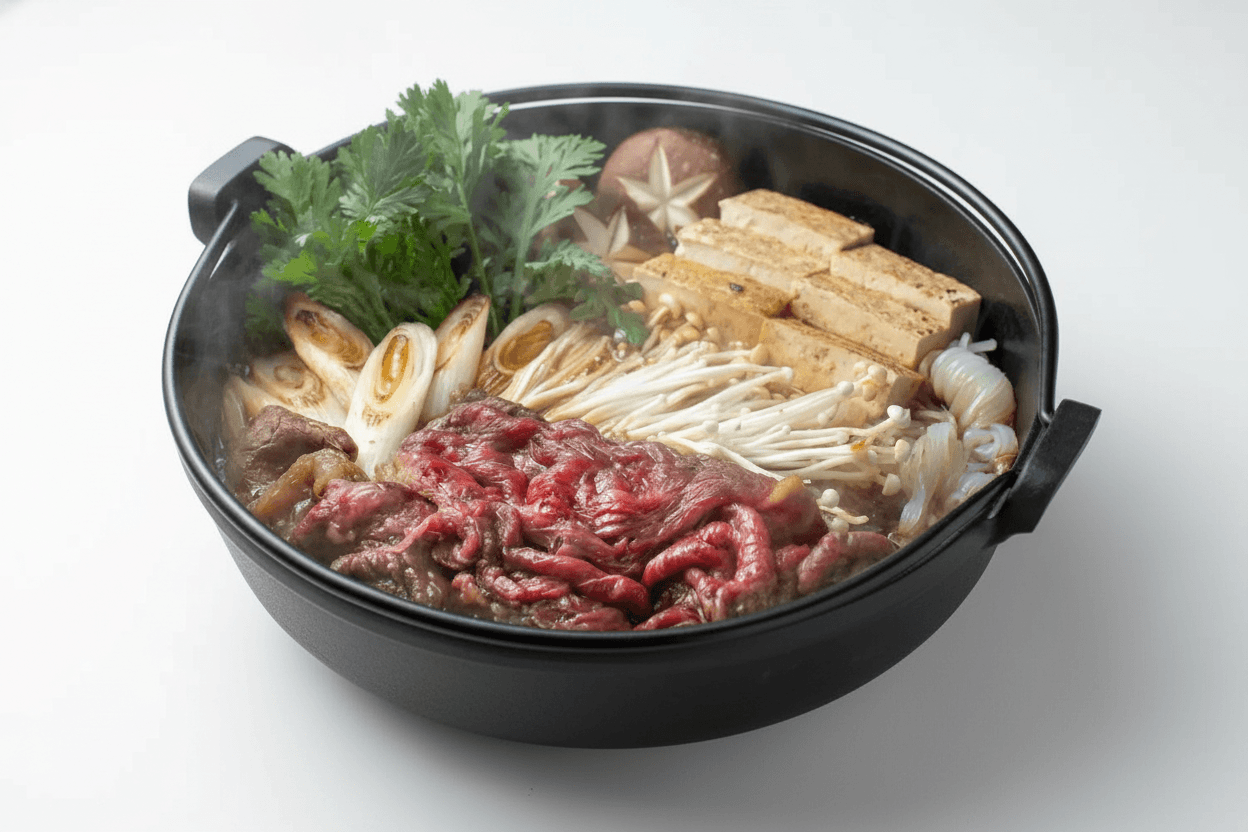
Classic Sukiyaki
すき焼き·(su-ki-ya-ki)
Weekend Teppan & Hot Pots
In Japan, sukiyaki is the ultimate communal meal—a payday celebration or a bulwark against a harsh winter night. You don't need a specialized burner or aristocratic Wagyu to capture the magic. The secret Japanese home cooks actually rely on is a simple mathematical ratio for the simmering sauce and a little bit of patience. We use the Eastern Kanto style of a pre-made broth, but borrow a grandmother's trick from the West: searing the aromatics and the first slices of beef in rendered fat to build a foundation before the liquid hits the pan. It is deeply nostalgic, utterly authentic, and surprisingly easy to pull off on a Tuesday night in a standard cast-iron skillet.
Before you start
Make the golden ratio warishita sauce.
Combine the sake and mirin in a small saucepan. Bring to a rolling boil over medium heat for 2 minutes to evaporate the sharp alcohol bite. Lower the heat, stir in the soy sauce, and bring to a gentle simmer. Turn off the heat entirely, add the sugar, and stir gently until completely dissolved. Set aside.
Ingredients
- sake1/2 cup
- mirin1/2 cup
- soy sauce1/2 cup
- light brown sugar3 tbsp
- thinly sliced ribeye1 lb
- beef fat1 tbsp
- leek1 large
- Napa cabbage1/2 med
- firm tofu300 g
- shirataki noodles200 g
- shungiku1 bunch
- shiitake mushrooms1 pack
- enoki mushrooms1 pack
- pasteurized eggs4 large
Method
- 01
Melt the beef fat in a wide cast-iron skillet over medium heat.
As the fat melts, use chopsticks to rub it all over the bottom of the pan to create a slick, flavorful coating.
- 02
Sauté the leek slices until the edges are deeply charred and fragrant.
Push the charred leeks to the side of the skillet to make room for the meat.
- 03
Lay down a few large slices of beef in a single layer and sear for just ten to fifteen seconds.
You want the bottom lightly browned. Once flipped, pour about half of your prepared warishita sauce directly over the seared beef and leeks where it will sizzle and bubble aggressively.
- 04
Arrange the remaining ingredients neatly into distinct zones in the simmering sauce.
Place the parboiled shirataki noodles in their own corner, and place the remaining raw beef on the exact opposite side of the pan. This is critical: the calcium in the noodles will ruin the texture of the meat if they touch.
- 05
Simmer gently and top with the greens right before serving.
Let the cabbage, mushrooms, and tofu simmer until the cabbage releases its water, perfectly diluting the salty sauce. Lay the delicate greens on top to wilt.
- 06
Serve the skillet directly at the center of the table.
Pluck hot morsels of beef and vegetables from the skillet and dip them briefly into your bowl of cool, beaten raw egg before eating immediately.
Notes
Pasteurized eggs offer the authentic experience without the anxiety.
Dipping scorching hot, salty-sweet beef into a cold, raw egg is the defining sensory experience of sukiyaki. Using pasteurized eggs in the shell eliminates the salmonella risk.
Never throw away the leftover broth.
The remaining dark liquid is an incredibly complex elixir infused with beef fat and caramelized soy. Toss in pre-cooked thick udon noodles to simmer for a few minutes, or pour it over white rice the next day.
From Cook Japanese in America.