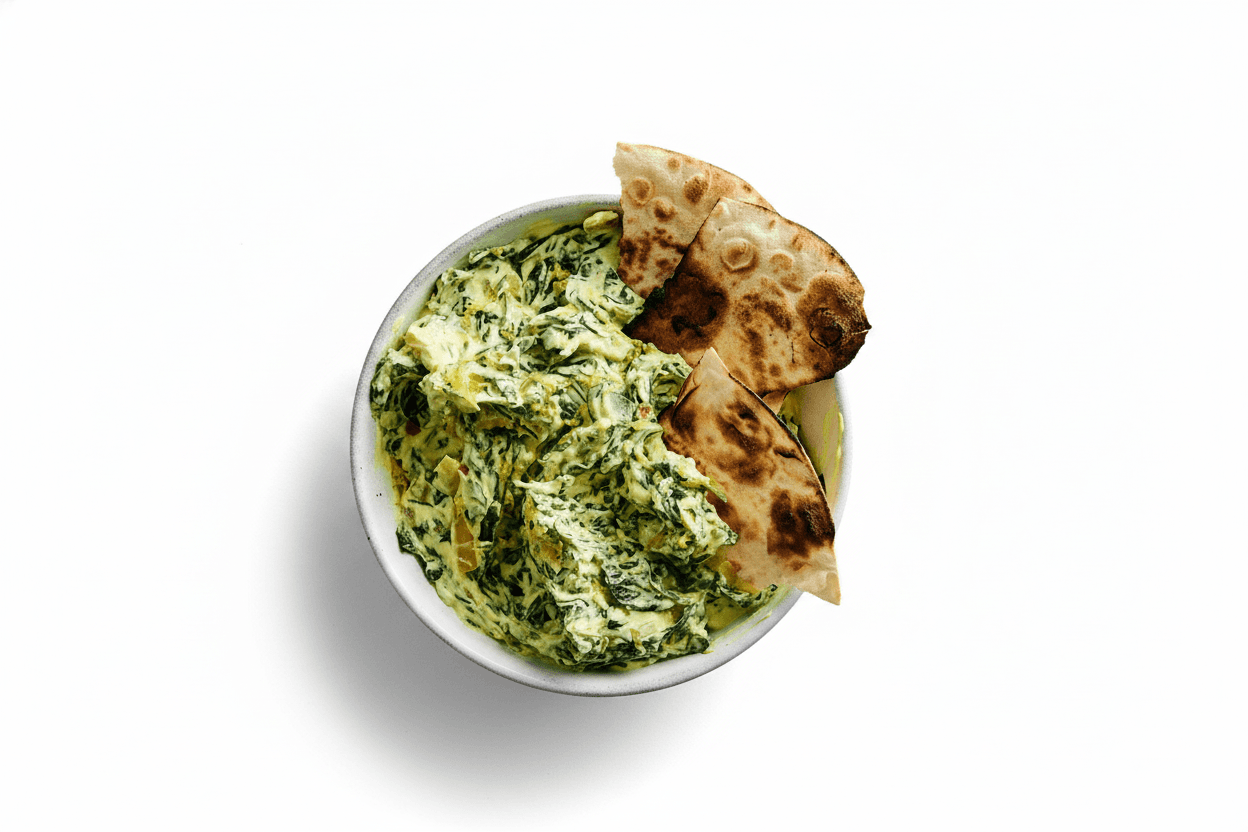
Borani Esfenaj
بورانی اسفناج·(boo-rah-nee es-feh-naj)
The Modern Mehmooni (Weekend Feasts and Ta'arof)
Dating back to the Safavid Empire, this isn't some sad, watery supermarket spinach dip. It's an ancient culinary alchemy of just three foundational elements: high-fat strained yogurt, garlic, and fresh spinach. In diaspora households from Ohio to California, it brings the unmistakable scent of the homeland to the weekend spread. The secret a Persian grandmother would teach you isn't a rare spice, it's uncompromising technique. You must cook the water entirely out of the spinach, mash it fiercely by hand rather than tossing it into a food processor, and never, ever rush the chilling process.
Before you start
Plan for the chilling phase.
Borani Esfenaj is not meant to be eaten immediately upon mixing. The 2-hour minimum stint in the refrigerator is non-negotiable for homogenizing the sharp garlic and tangy yogurt into a unified flavor.
Ingredients
- baby spinach1 lb
- full-fat plain Greek yogurt2 cup
- cloves garlic3 large
- yellow onion1 med
- extra-virgin olive oil3 tbsp
- walnuts1/2 cup
- kosher salt1 tsp
- freshly cracked black pepper1/2 tsp
- dried mint1 pinch
Method
- 01
Create the foundational Piaz Dagh.
Heat the olive oil in a wide skillet or pot over medium heat. Add the sliced onion and fry patiently for 12 to 15 minutes until deeply golden brown, sweet, and slightly crispy at the edges. Remove half of the onions from the pan and set them aside for garnishing later.
- 02
Sauté the garlic and wilt the spinach without adding water.
To the remaining onions in the pan, add the grated garlic and sauté for 30 seconds until fragrant, taking care not to brown it. Begin adding the fresh spinach in handfuls. Do not add water; the spinach will release its own juices immediately as you gently toss it.
- 03
Evaporate all residual liquid and aggressively hand-mash the greens.
Once the spinach has wilted, keep the pan uncovered over medium heat until absolutely all the liquid pooling at the bottom has completely evaporated. Turn off the heat and use a potato masher to crush the spinach right in the pan for a minute or two, breaking down the stringy fibers.
- 04
Stir in the walnuts and let the mixture cool completely to room temperature.
Fold the chopped walnuts into the hot, mashed spinach, then step away. If you mix warm spinach into cold yogurt, the dairy will curdle and split, ruining the texture of the final dish.
- 05
Fold in the yogurt and enforce a strict resting period.
Transfer the cooled spinach mixture to a bowl and fold in the thick Greek yogurt, kosher salt, and black pepper until beautifully unified. Cover the bowl and refrigerate for a minimum of 2 hours to allow the raw garlic bite to mellow and the flavors to bloom.
- 06
Garnish with the reserved onions and serve.
Spread the chilled Borani Esfenaj into a shallow bowl, creating a few swirls with the back of a spoon. Top with the reserved golden Piaz Dagh, a sprinkle of dried mint, and serve alongside warm flatbread like pita or lavash.
Notes
Respect the zero-water rule.
Boiling spinach waterlogs the leaves and dilutes their flavor. The traditional technique relies entirely on the water naturally present in the greens to wilt them down. Any residual liquid left in the pan will seep out later, causing the yogurt to weep.
Ditch the food processor.
Traditional cooks use a flat-bottomed meat masher called a goosht-koob. A standard American potato masher breaks down the cellular structure just enough to integrate smoothly with the yogurt while retaining a distinct, rustic bite that a blender would destroy.
Yogurt fat matters.
Authentic Persian cooking demands Maast-e Chekideh, a dense, strained yogurt with the whey removed. Full-fat Greek yogurt is the perfect supermarket substitute, but using non-fat or thin plain yogurt will result in a watery mess.
From Cook Persian in America.