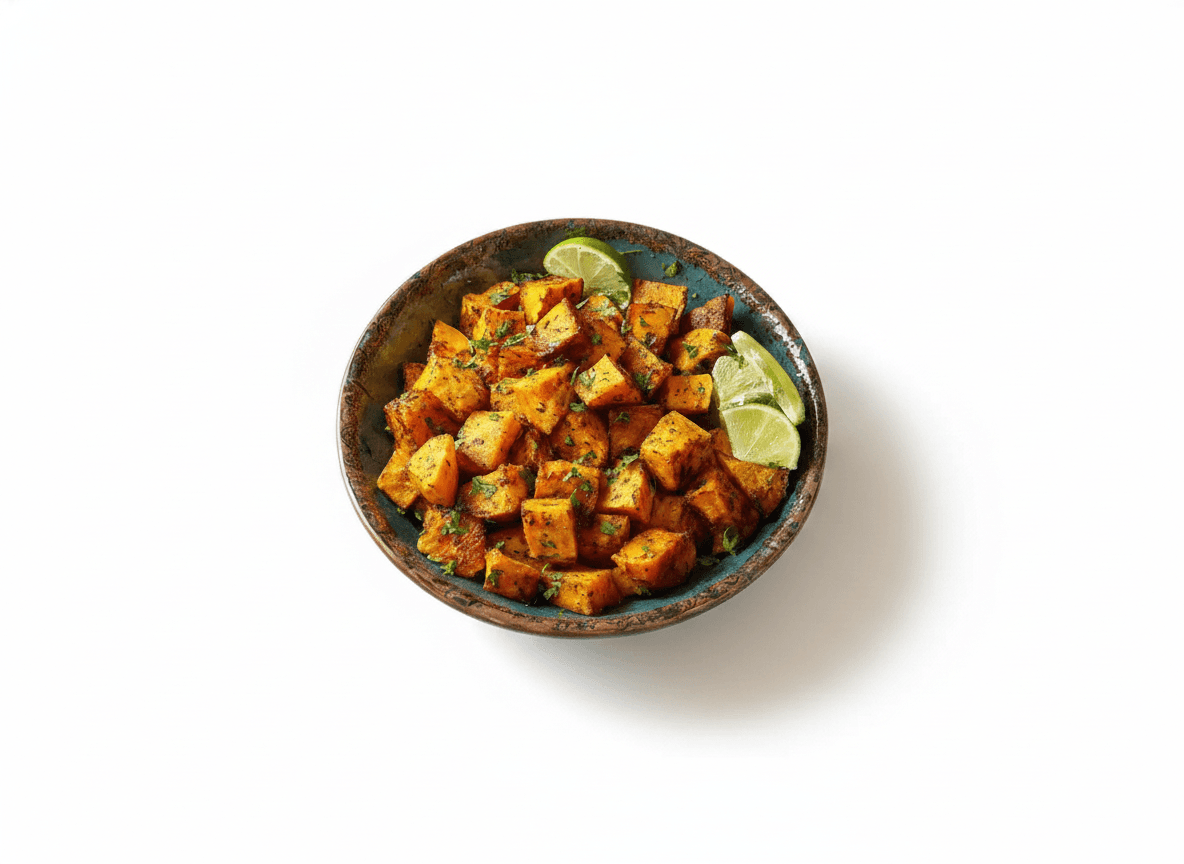
Boniato Hervido con Mojo
(boh-NYAH-toh air-VEE-doh kohn MOH-hoh)
Viandas & Sides (The Supporting Cast)
If you grew up in a Cuban household, the smell of garlic hitting hot oil means dinner is imminent. But here is the secret that separates authentic island cooking from generic internet recipes: mojo is not a monolith. The sauce you pour over a starchy, earthy boniato isn't the cumin-heavy sour orange marinade you use for roast pork. It is a completely different beast—pure lime, oceans of garlic, and thinly sliced onions lightly softened in hot oil. It is a sharply acidic, deeply savory hit meant to cut right through the dense comfort of the boiled root. Track down the real white-fleshed tuber, treat the garlic with respect, and let the sizzle do the talking.
Before you start
Protect the boniato from oxidation.
Boniato flesh turns gray very quickly when exposed to air. Have a large bowl of cold water ready; as you peel and chop the tubers, drop the chunks immediately into the water to keep them perfectly white until you are ready to boil.
Ingredients
- boniatos2 lb
- kosher salt1 tbsp
- granulated sugar1 tsp
- fresh lime juice1 tsp
- extra-virgin olive oil1/3 cup
- garlic8 med cloves
- yellow onion1 med
- fresh lime juice1/3 cup
- kosher salt1 tsp
Method
- 01
Prepare the boiling water.
Fill a large pot with enough water to cover the boniatos by at least an inch. Add the tablespoon of salt, the sugar, and the teaspoon of lime juice—a grandmother's trick to keep the potatoes stark white and enhance their earthy flavor—and bring to a rolling boil.
- 02
Boil the boniato.
Drain your submerged sweet potato chunks and carefully drop them into the boiling water. Reduce the heat slightly to maintain a vigorous simmer, cooking for 15 to 20 minutes until they are easily pierced with a fork but still holding their shape.
- 03
Tame the alliums.
About five minutes before the boniato is done, heat the olive oil in a small skillet over medium-low heat. Add the minced garlic and watch it closely; you want it to sizzle gently to a pale gold. If it turns dark brown, it will be hopelessly bitter, so throw it out and start over.
- 04
Soften the onions.
Once the garlic is light gold, toss in the thinly sliced onions. Cook for just one to two minutes, stirring constantly. You aren't trying to caramelize them, just soften them slightly—a technique called amortiguar—to remove their raw bite while keeping a bit of crunch.
- 05
Create the sizzle.
Pull the skillet completely off the heat and immediately pour in the third-cup of lime juice and the remaining teaspoon of salt. It will vigorously spit and bubble, creating a fleeting emulsion that releases an incredible aroma into your kitchen.
- 06
Dress and serve immediately.
Thoroughly drain the tender boniatos and transfer them to a platter while they are still steaming hot. Pour the hot mojo over the top, tossing gently so the starchy potatoes absorb the rich, acidic oil.
Notes
Finding the right sweet potato.
Do not use the bright orange sweet potatoes typical of American Thanksgiving casseroles. You want a Cuban boniato, which has purplish-tan skin and stark white flesh, possessing a much starchier, chestnut-like texture. If you can't find one, a Japanese sweet potato is your best substitute.
The diaspora fallacy.
Many generic recipes treat mojo as a monolith, prescribing the cumin-heavy sour orange marinade meant for pork to root vegetables. Authentic vianda mojo relies purely on fresh lime juice, zero spices, and hot oil.
Breakfast leftovers.
If you have leftover boniato the next day, smash the chunks slightly and pan-fry them in hot oil until deeply golden and crispy. Serve alongside fried eggs.
From Cook Cuban in America.