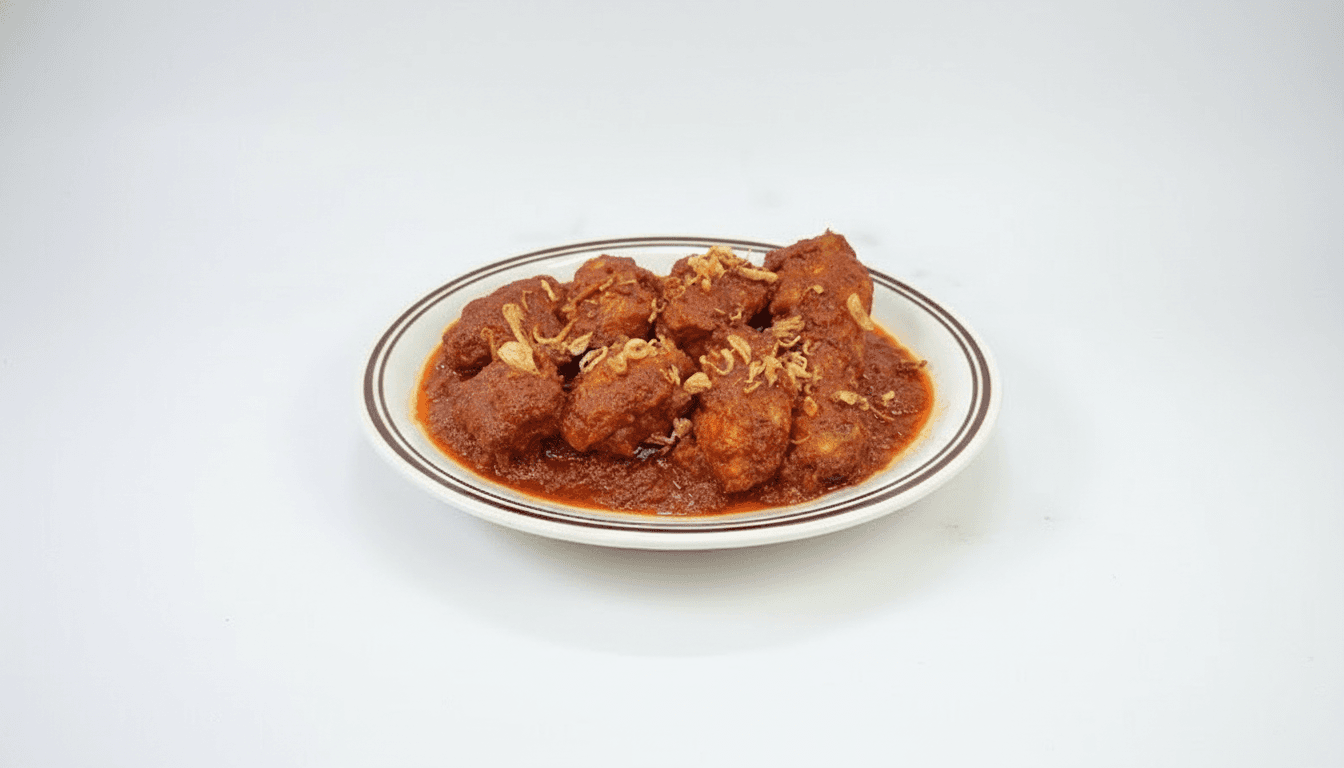
Ayam Bumbu Bali
(ah-yahm boom-boo bah-lee)
The Blueprint of Bumbu: Foundational Spice Pastes
Long before you walked into the kitchen, the sharp, pungent aroma of frying chilies, garlic, and sweet shallots announced exactly what was for dinner. Despite the name, Ayam Bumbu Bali isn't from the island of Bali; it's an East Javanese family staple—a rich, crimson chicken braise swimming in a sweet, spicy, and tangy bumbu merah. Forget the Westernized shortcuts that tell you to boil raw poultry in a simmering liquid. The secret to that authentic, nostalgic texture is a quick par-fry first, creating a firm, caramelized surface for the sticky glaze of kecap manis and tamarind to cling to. We've traded the traditional flat stone ulekan for a food processor to save your Tuesday night, but we never compromise on cooking the spice paste down until the oil separates, because that is exactly where the magic lives.
Before you start
Wash the chicken to remove the raw poultry scent.
Place the chicken pieces in a large bowl, massage with the fresh lime juice and one teaspoon of kosher salt, and let sit at room temperature for 10 minutes before patting completely dry with paper towels.
Ingredients
- bone-in skin-on chicken pieces3 lb
- fresh lime juice1 tbsp
- kosher salt2 tsp
- neutral oil1/2 cup
- shallots8 med
- garlic5 med clove
- mild red chilies5 large
- Thai bird's eye chilies4 small
- unsalted macadamia nuts4 med
- fresh ginger1 med
- Roma tomato1 med
- roasted shrimp paste1/2 tsp
- fresh galangal1 med
- lemongrass1 med
- makrut lime leaves4 med
- Indonesian bay leaves2 med
- Kecap Manis3 tbsp
- tamarind paste1 tbsp
- dark brown sugar1 tbsp
- water1 1/2 cup
Method
- 01
Process the aromatics into a smooth red paste.
In a food processor, combine the shallots, garlic, red chilies, bird's eye chilies, macadamia nuts, ginger, tomato, and shrimp paste with two tablespoons of the neutral oil, processing until the mixture becomes a vibrant, smooth red paste.
- 02
Par-fry the chicken in batches to render the fat and firm the skin.
Heat the remaining oil in a heavy-bottomed Dutch oven over medium-high heat and fry the chicken pieces for 3 to 4 minutes per side so the skin turns golden and structurally sound, then remove to a paper towel-lined plate.
- 03
Sauté the spice paste until the harsh raw smell cooks out and the oil separates.
Pour out all but three tablespoons of oil from the pot, lower the heat to medium-low, and cook the blended paste for 5 to 8 minutes, stirring frequently until the color deepens to a brick red and the oils physically pool at the edges.
- 04
Bloom the whole herbs and aromatics in the separated oil.
Toss in the smashed galangal, knotted lemongrass, makrut lime leaves, and Indonesian bay leaves, stirring for another minute or two until their essential oils release and perfume the kitchen.
- 05
Return the chicken to the pot with the braising liquids and simmer covered.
Add the par-fried chicken back into the pot, pour in the water, and stir in the Kecap Manis, dissolved tamarind, brown sugar, and remaining teaspoon of salt, bringing everything to a gentle boil before reducing the heat to low, covering, and simmering for 20 minutes.
- 06
Uncover and reduce the liquid into a thick and glossy glaze.
Remove the lid, increase the heat slightly to medium, and cook uncovered for another 10 to 15 minutes, stirring occasionally until the liquid reduces by eighty percent and clings beautifully to the meat.
Notes
Do not skip the par-fry.
Boiling raw chicken in a blended sauce results in flabby skin and a cloudy, diluted sauce. Taking eight minutes to fry the chicken first renders the fat out of the skin, stabilizes the structure of the meat, and leaves highly-flavored chicken fat in the pan to fry your spice paste.
Master the sweet and sour balance.
The intense heat of the chilies and savory shallots are balanced by a precise tug-of-war between the molasses-like sweetness of the sweet soy sauce and the fruity acidity of the tamarind. If your finished sauce tastes flat, it simply needs a splash more tamarind or a pinch more sugar to wake it up.
Cook the langu out of your paste.
The single most important skill in Indonesian cooking is sautéing the blended bumbu until the water evaporates, the harsh raw smell vanishes, and the oils physically separate and pool at the edges of the paste.