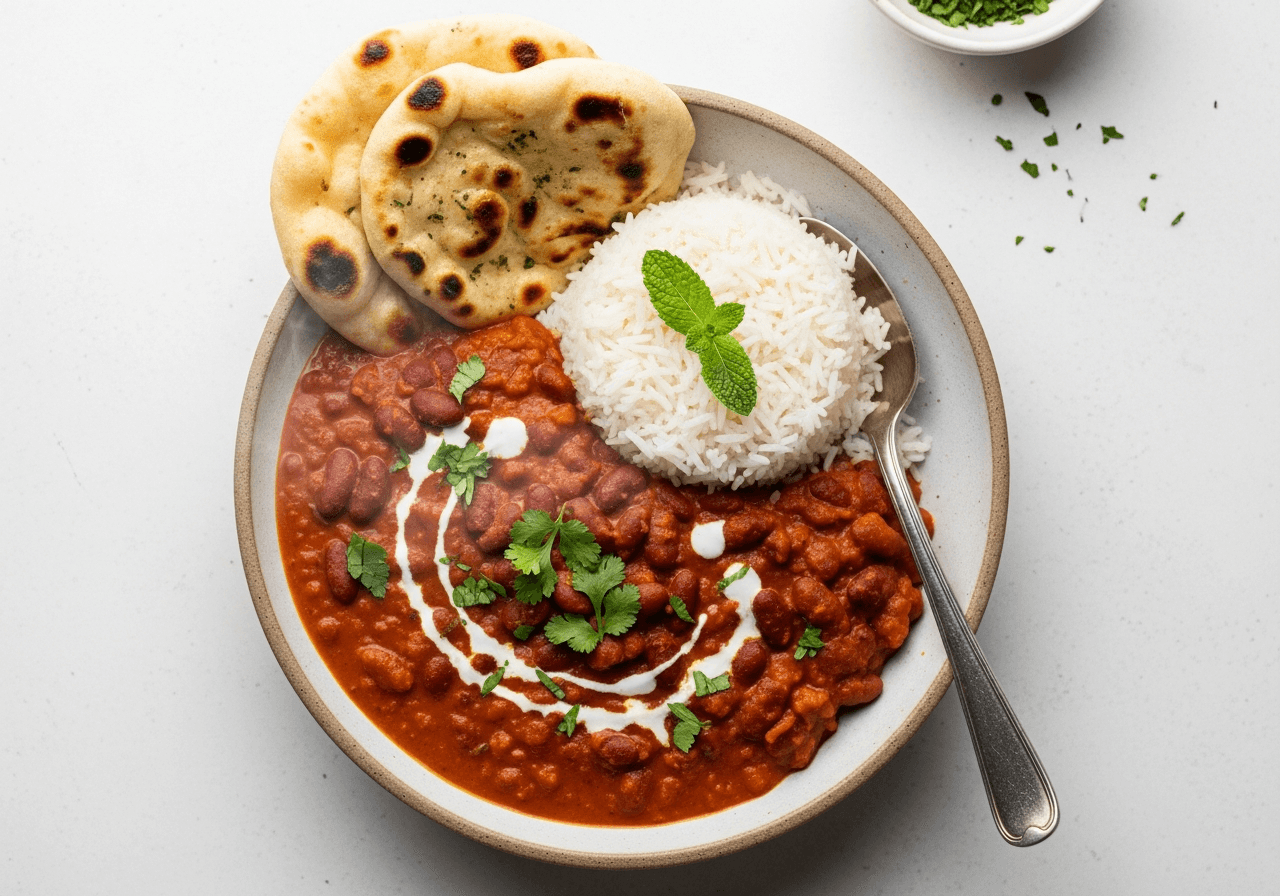
30-Minute Punjabi Rajma Masala
पंजाबी राजमा मसाला·(pun-jah-bee rahj-mah muh-sah-lah)
The American-Desi Pantry: Techniques, Tools, and Sourcing
If you grew up in a North Indian household, the rhythmic hiss of a pressure cooker on a Sunday afternoon meant one thing: rajma was on the stove. When kids leave home, this is the dish they crave most. Modern internet shortcuts tell you to dump heavy cream into the pot for a thick gravy—a bastardization that would horrify any Punjabi grandmother. Authentic texture isn't born from dairy; it’s coaxed from the beans themselves through the sacred, unhurried art of pan-frying the aromatics and aggressively mashing a handful of the legumes against the pot. Engineered for a Tuesday night using canned beans, this recipe bypasses the overnight soak without sacrificing a single drop of its nostalgic, fiercely authentic soul.
Ingredients
- light red kidney beans or pinto beans30 oz
- neutral oil2 tbsp
- cumin seeds1 tsp
- bay leaf1 large
- black cardamom pod1 large
- yellow or red onion1 large
- ginger-garlic paste1 tbsp
- serrano or jalapeno pepper1 med
- crushed canned tomatoes1 cup
- coriander powder1 tbsp
- Kashmiri red chili powder1 tsp
- cumin powder1/2 tsp
- turmeric powder1/4 tsp
- water1 1/2 cup
- kosher salt1 tsp
- kasuri methi1 tbsp
- garam masala1 tsp
- ghee1 tbsp
- fresh cilantro1/4 cup
- lemon1/2 med
Method
- 01
Bloom the whole spices in hot fat.
Place a heavy-bottomed pot or Dutch oven over medium-high heat and add the neutral oil. Once shimmering, drop in the cumin seeds, bay leaf, and crushed black cardamom pod, letting them sizzle and pop for 15 to 20 seconds to release their essential oils.
- 02
Caramelize the onions with absolute patience.
Add the finely chopped onions and a pinch of salt, sautéing on medium heat for 8 to 10 minutes until they achieve a deep, rich golden brown. Rushing this step leaves the onions pale and raw, resulting in an unpleasantly sweet and structurally weak curry.
- 03
Incorporate the ginger, garlic, and chili.
Once the onions are properly browned, stir in the ginger-garlic paste and the slit green chili. Cook for exactly 1 minute until the raw garlic smell disappears.
- 04
Build and fry the masala.
Pour in the crushed tomatoes followed immediately by the coriander, Kashmiri chili, cumin, and turmeric powders. Stir frequently and cook this mixture down for 5 to 7 minutes until the magic moment of oil separation occurs—the paste will darken, clump together, and tiny droplets of oil will shimmer around the edges.
- 05
Simmer the beans and deploy the grandma mash.
Add the thoroughly rinsed beans to the pot along with the water and kosher salt, stirring well to combine, and bring to a gentle boil. Take the back of a ladle and aggressively mash about 10 to 15 percent of the beans directly against the side of the pot to release their internal starches into the liquid, then lower the heat to a simmer, cover, and let bubble for 10 minutes.
- 06
Finish with kasuri methi and ghee.
Remove the lid to reveal a thick, glossy gravy clinging to the beans, and turn off the heat. Crush the dried kasuri methi between your palms directly into the pot, then gently stir in the garam masala and the ghee.
- 07
Garnish and serve.
Top with freshly chopped cilantro and a generous squeeze of lemon juice, serving piping hot in deep bowls alongside steamed basmati rice and thinly sliced raw red onions.
Notes
Select the right canned beans.
Traditional Punjabi homes use Chitra rajma, a soft, speckled bean. Dark red kidney beans have tough skins; light red kidney or pinto beans mimic the traditional creamy texture far better.
Wash your canned beans.
Canned bean liquid is often metallic and overly salty. Rinsing them thoroughly gives the gravy a clean slate so the spices can infuse from the outside in.
From The Suburban Spice Box.